IN Brief:
- IDFA identifies more than US$15 billion in dairy manufacturing projects planned or under way through 2030.
- The programme covers more than 85 projects in 23 states across milk, cheese, cultured dairy and other products.
- The total represents identified investment plans and active projects, not expenditure already completed.
The International Dairy Foods Association (IDFA) has counted more than US$15 billion in dairy processing projects either planned or under way across the United States through 2030. More than 85 investments span 23 states and cover factory construction, plant extensions, production lines and equipment modernisation. The figure combines commitments by individual businesses at different stages of delivery; it is neither expenditure already completed nor a single national capacity target. Processing plants for milk, cheese, cultured products, powders and frozen desserts require different combinations of utilities and machinery.
Milk and cream plants account for approximately $5.63 billion of the reported project value, followed by cheese at $3.76 billion. Yoghurt and other cultured products represent around $3.07 billion, butter and powders $1.86 billion, and ice cream about $745 million. These are investment amounts rather than standardised production measures. A new powder dryer, cheese line or yoghurt fermentation area has different plant requirements, and the total includes projects replacing old equipment as well as those intended to increase throughput. No single percentage increase in national dairy output can be inferred from those categories.
New York accounts for around US$2.8 billion of the pipeline, ahead of Texas at US$1.7 billion and Wisconsin at US$1.4 billion, with Idaho and Iowa also among the largest state totals. A location must connect raw milk supplies with plant utilities, skilled labour, wastewater treatment and customers. Before milk reaches a pasteuriser or fermentation vessel it is typically sampled, received and held chilled; downstream packaging, refrigeration and despatch capacity must then match the rate of production. A factory extension that overlooks those supporting stages can leave its new equipment underused.
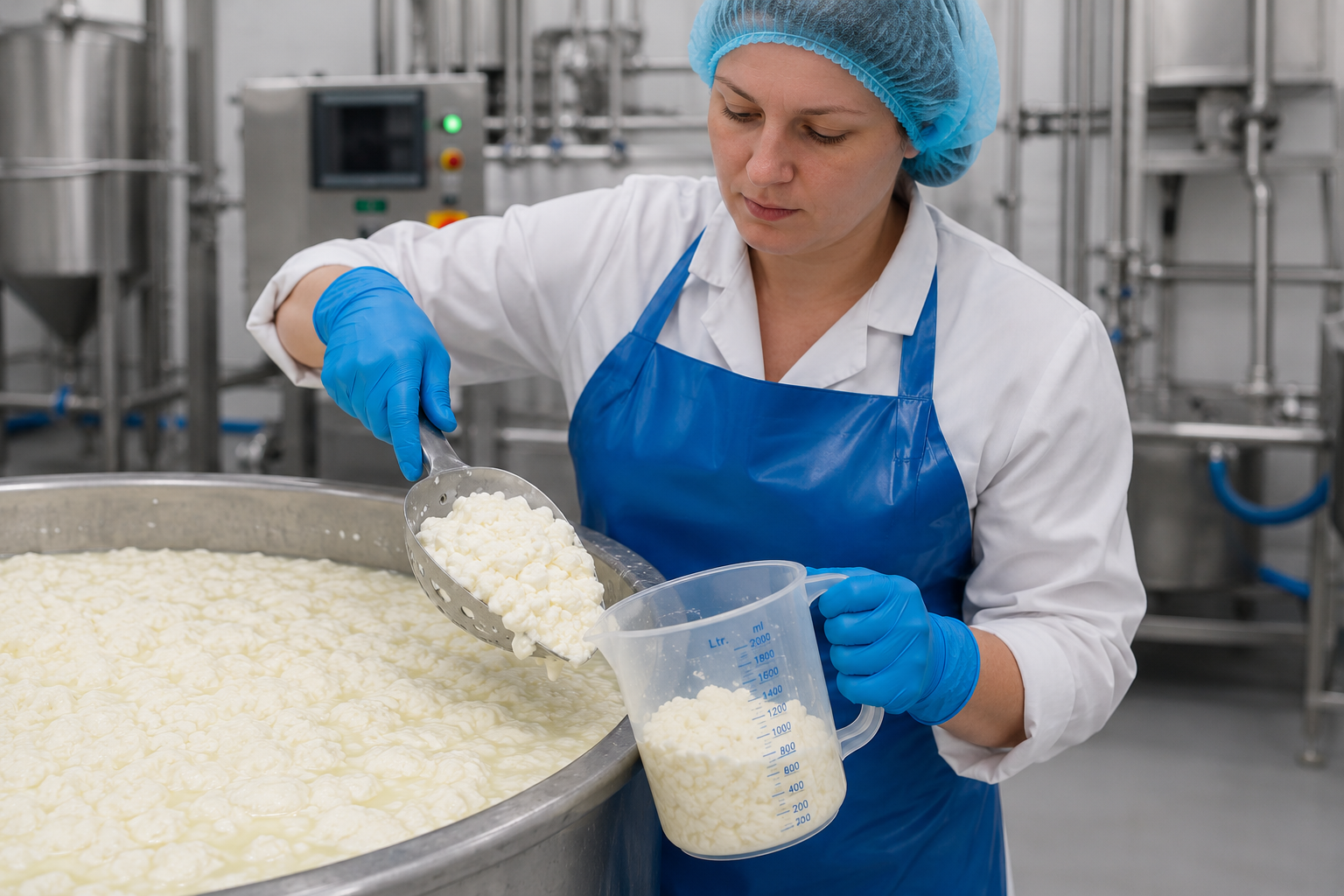
The equipment specification depends on the product being made. Fluid milk normally passes through controlled heat treatment and standardisation before filling, with homogenisation where required. Cheese plants add coagulation, curd cutting, whey drainage and, for relevant varieties, maturation. Yoghurt production requires closely regulated fermentation before cooling and filling. Each pathway carries different demands for vessels, heat exchangers, clean-in-place systems and packaging machinery, so investment value cannot be converted directly into an equivalent volume of finished dairy products.
Product mix can dictate where a factory needs to spend its capital. A cheese line has to handle coagulation, curd and whey separation, moulding and, for some varieties, maturation. Concentrated dairy ingredients may need membrane filtration, evaporation or drying, with their own cleaning and water-balance requirements. More capacity at milk reception cannot deliver more finished product if a dryer, refrigeration system or packaging line remains the bottleneck. Investment programmes therefore need to match the full process route, including coproduct treatment, rather than merely add the largest available piece of equipment.
Delivery schedules vary throughout the IDFA project pipeline. Equipment already being installed may reach commissioning relatively soon, whereas factories awaiting permits, finance or construction remain several steps from commercial production. Commissioning itself requires process validation, staff training and verification of the plant’s food safety controls before dependable output is reached. A project replacing worn equipment may improve efficiency or reliability without adding nameplate capacity. The total capital figure therefore describes the investment pipeline rather than the volume of additional milk that processors can handle today.
Employment projections anticipate 5.6% growth in dairy-product manufacturing between 2025 and 2035, compared with 0.6% across US manufacturing. Those figures forecast employment rather than count jobs created by the listed projects. New dairy facilities may use automated process controls, packaging systems and material handling, changing the composition of the workforce required to run them. Operators, maintenance teams, food safety specialists and engineers remain necessary, especially where a plant has complex cleaning routines or several processing routes running at different times.
Energy, water and effluent costs also shape the amount and type of processing capacity that can be added. Pasteurisation and cleaning need heat; chilled storage and freezing need refrigeration; concentrated milk ingredients may require membranes, evaporation or spray drying. Heat recovery and improved controls can lower consumption per unit, but their performance depends on the process design and operating load. A factory may devote substantial investment to these systems simply to maintain reliable output or comply with site requirements, making expenditure an imperfect proxy for increased production.
Across a network of roughly 1,200 dairy manufacturing sites supplied by nearly 24,000 farms, individual projects will enter service on different timetables and with different product mixes. Measurable progress will depend on completed construction, qualified process lines and the throughput operators actually achieve. The investment tally exceeds US$15 billion, but no common national capacity increase follows from it: expansion at a cheese plant, a powder dryer and a fluid-milk bottling line cannot be added together as a single unit of output.