IN Brief:
- Doric FPD is consulting on the proposed closure of its Farrington Road factory in Burnley, potentially affecting 71 workers.
- The manufacturer makes cake boards, greaseproof paper liners and bespoke folded board packaging for food producers and retailers.
- Parent Culpitt cites sustained losses and rising material and labour costs; no final closure decision or date has been set.
Doric FPD is consulting employees over a proposal to close its food packaging factory on Farrington Road in Burnley, Lancashire, potentially affecting all 71 positions at the site. The company has made clear that closure is not a final decision. The proposal follows sustained losses at the operation and rising costs for materials and labour, according to its parent, Culpitt.
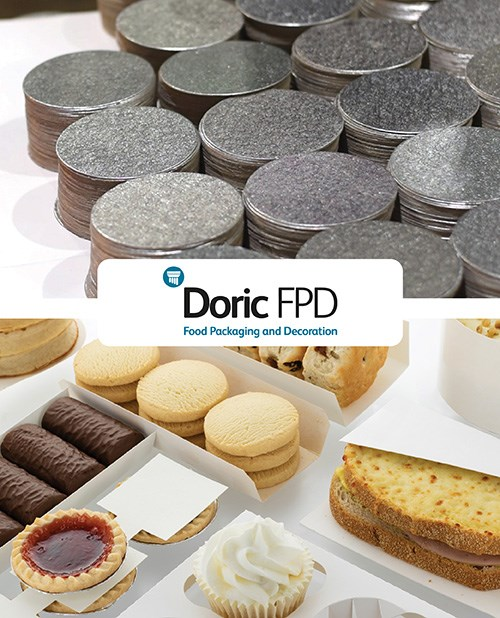
The factory specialises in converting paperboard and other packaging materials into products used by bakeries, food manufacturers and retail suppliers. Its output includes cake boards, cake drums, cake collars, greaseproof paper liners, folded card components and packaging inserts. The proposed closure would therefore concern a specialist food packaging manufacturing operation, rather than a bakery or a consumer-facing cake business.
Ahmed Rafique, a director of Culpitt, has said the company is working with employees and their representatives to explore ways of avoiding, reducing or mitigating proposed redundancies. The process includes selecting representatives and then a collective consultation expected to last at least 30 days. A final outcome may not be known until later in the year, and the business has not announced a date for ending production.
Doric FPD has supplied the food industry from Burnley for decades. On its company website, it describes more than 50 years of UK cake board production, including foil-covered boards for everyday bakery lines and heavier boards for celebration cakes. The company also supplies industrial plant bakeries, supermarkets, wholesalers and food manufacturers, with products distributed from Burnley to customers in Britain, Europe and the United States.
Its production capabilities extend from board cutting and finishing to made-to-order packaging. Die-cutting equipment is used to turn flat sheets into repeatable shapes, while roller press operations support manufacture of particular board and card products. The resulting components perform different functions on food lines: cake cards provide a presentation base, greaseproof sheets line industrial baking tins, and folded inserts or trays help separate, support and protect products during packing and transport.
The packaging components form part of each customer’s product specification. Board dimensions, thickness, coating, grease resistance and food-contact suitability have to match the finished food and the machinery that handles it. A cake board must support a product without bending, while a liner cut to the wrong size can interfere with handling on a baking line. Bespoke cutting tools also affect how readily an order can be moved between packaging converters.
Doric’s custom cake drums include heavy boards around 12mm thick, alongside lighter cake cards and paperboard packs for sweet and savoury products. A converter handling this range must match cutting and finishing processes to batch size and specification, with its own-label and bulk supply arrangements adding different order requirements. The site’s customer relationships span industrial bakeries, wholesalers and manufacturers whose pack dimensions are tied to established production routines.
Culpitt’s wider UK businesses include producers of baking cases and cake decorations, and those operations are outside the Burnley consultation. The proposal concerns Doric FPD’s Farrington Road factory rather than the parent group’s entire manufacturing network. Existing customers may have to assess supply arrangements if closure ultimately goes ahead, but no transfer of production or withdrawal of individual product ranges has been announced.
The site’s losses have continued over a number of years, with material and labour costs reducing its ability to generate cash. Paperboard conversion is exposed to changes in input prices because board and sheet materials account for a substantial part of the finished component. Labour remains necessary for custom runs, finishing, quality checks and packing alongside mechanised cutting operations. Culpitt has not announced revised prices, a site-level restructuring plan or a final production timetable.
Doric FPD lists BRCGS packaging certification and food-safe materials among its operational credentials, reflecting the requirements placed on components used with edible products. Any change to manufacturing arrangements would need to preserve customer specifications, approved materials and supply continuity. Customers using bespoke inserts and boards may also need to account for tooling and order lead times when reviewing their packaging procurement, should the proposal eventually proceed.
The consultation allows the workforce to put forward alternatives before a decision is reached. Rafique has indicated that employees’ knowledge of the operation may contribute ideas for improving its sustainability and that some roles could potentially continue in different arrangements. Neither the potential number of retained positions nor the eventual operating model has been established.
Employee representatives and management will consider alternatives during the collective consultation before Culpitt determines the site’s future. The potential loss of 71 positions and the scope for retaining any work will depend on that process. Until a decision is taken, Burnley’s specialist packaging operation remains under a closure proposal rather than an announced shutdown.