IN Brief:
- Solidus has introduced Futurline Heat&Eat, fibre-based modified-atmosphere trays for chilled and frozen ready meals.
- The company says the trays can use up to 90% less plastic than conventional plastic MAP trays and contain more than 90% recovered fibre.
- Standard tray-sealing compatibility, removable barrier film and microwave, oven and air fryer suitability form the supplier’s application proposition.
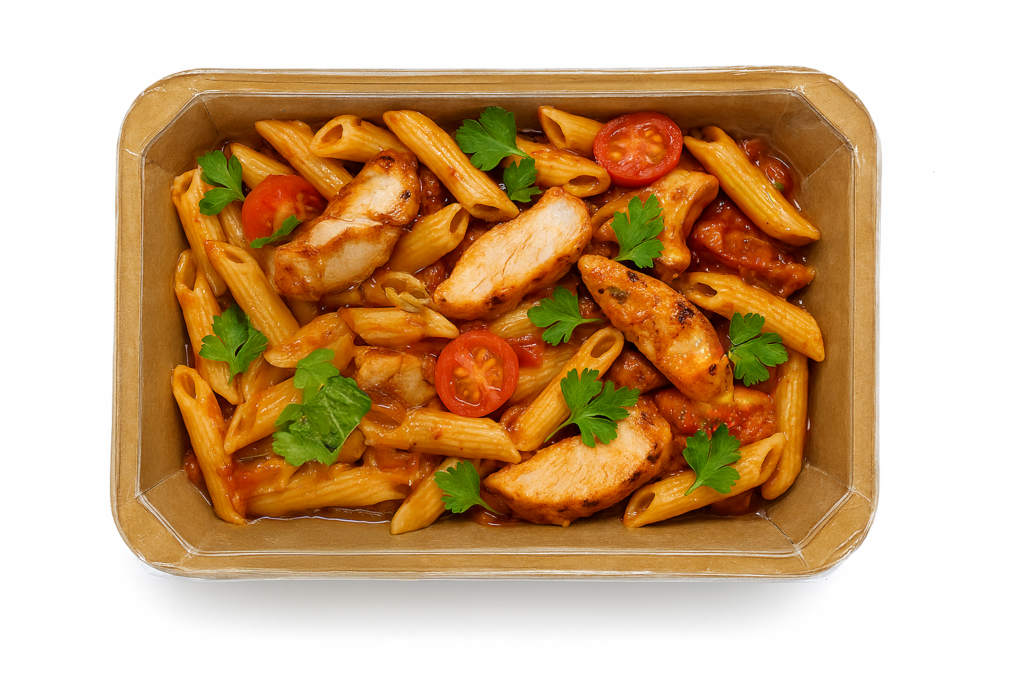
Solidus has introduced Futurline Heat&Eat, a fibre-based tray range designed for modified-atmosphere packaging of ready meals. The product combines a barrier-sealed pack for chilled and frozen distribution with a tray intended to withstand preparation in a microwave, conventional oven or air fryer. The manufacturer is positioning the range as an alternative to plastic modified-atmosphere trays used by meal producers.
The trays are made from solid board containing more than 90% recovered fibre. Solidus says the format uses up to 90% less plastic than conventional plastic MAP trays, while retaining a separate barrier film to preserve the protective atmosphere around the food. The material reduction therefore comes primarily from replacing the plastic tray body with fibre board, with the final pack still combining more than one material.
Modified-atmosphere packaging controls the gas environment inside a sealed container for chilled ready meals to support the required product quality and shelf life. The lidding film and tray flange must form a reliable seal, with the packaging maintaining its shape and integrity during factory handling, chilled storage, distribution and display. The fibre structure therefore has to work with the barrier layer as a complete pack, not simply replace the body of a plastic tray.
Solidus says Futurline Heat&Eat is compatible with standard tray-sealing equipment, enabling manufacturers to evaluate a fibre-based format without immediately replacing an entire packing line. Its product information describes testing of seal integrity, gas retention, handling resistance and performance on customer equipment. Trays must also pass the normal checks for flange geometry, lidding material compatibility, sealing temperature and dwell time if production lines are to run at their intended rate.
Meals can remain in the tray through chilled or frozen distribution and then be heated in a microwave, conventional oven or air fryer. Those appliances expose packaging to different heating patterns and temperatures, so the board structure, barrier materials and any printed surfaces need to suit the specified preparation method. Solidus markets Futurline Heat&Eat for all three uses, with product-specific cooking instructions determined by the finished meal and its tested packaging configuration.
The company has focused on the needs of prepared food production, where a tray may hold a sauce-rich dish, pasta, vegetables or a complete meal. Resistance to moisture becomes important when food is held in the pack for an extended period, while board stiffness affects stacking, denesting and movement through sealing machinery. Moisture-resistant solid board is one of the construction features Solidus identifies for cold chain handling and transport.
The barrier film is designed to peel away from the tray after use. This permits the fibre body to be collected with paper and cardboard where local recycling services accept it, while the film can enter an appropriate plastic collection stream where available. Effective separation depends on clear disposal information and a film that consumers can remove without leaving material attached to the board.
The solid board can be produced using FSC- and PEFC-certified materials, while Solidus points to food-contact suitability and manufacture under FSSC 22000 requirements. Its surface can also carry offset printing, allowing brand and product information to be applied to the tray. Printed graphics must coexist with food-contact and heating requirements, particularly where decoration is close to areas exposed during preparation.
A packaging change on a running ready-meal line calls for checks on denesting, filling, flange geometry and sealing performance. The new tray has to retain its dimensions as it moves through equipment, with the lidding seal maintaining the protective atmosphere before dispatch. Producers also need to establish shelf life for their specific recipe and storage conditions. Those trials determine line settings and throughput when a new material replaces an established tray.
A successful change may also alter purchasing and logistics arrangements. Fibre trays and plastic trays can differ in stacking density, handling behaviour and physical weight, affecting pallets, storage and equipment adjustments. Solidus describes the new range as suitable for retail and foodservice applications, including prepared dishes and instant meals designed to receive hot water or milk. Individual pack designs will still be selected around the intended food and distribution channel.
The range is now available for chilled and frozen ready-meal applications, including retail and foodservice formats. Solidus reports compatibility with established tray-sealing technology but has not announced a named factory conversion or a universal line speed figure. Manufacturers can evaluate the format by testing sealing conditions, distribution performance and the finished meal’s heating instructions under their own operating parameters.
Futurline Heat&Eat brings fibre-board construction into a packaging format that must handle protective gases, cold storage and direct heating. For Solidus, the technical proposition combines those functions with a peelable barrier film and recovered-fibre content. Adoption on industrial lines will depend on matching the tray and lidding system to each food product, sealing machine and heating application.