IN Brief:
- The German corrugated packaging industry has introduced COSI 1.0 to establish a common interface for production machinery data.
- Its four application areas cover performance, setup, maintenance, and quality, using MQTT communications with TLS encryption.
- The specification includes JSON schemas, common terminology, and implementation checks, with future adoption dependent on machinery and software suppliers.
The Verband der Wellpappen-Industrie (VDW), Germany’s corrugated packaging industry association, has introduced COSI 1.0, a common technical interface intended to improve the exchange of production data between machinery from different manufacturers and factory information systems.
The Corrugated Standard Interface was developed with packaging converters, machinery manufacturers, and industrial software providers, with support from the European Federation of Corrugated Board Manufacturers, FEFCO. Its initial specification covers machine performance, setup, maintenance, and quality information.
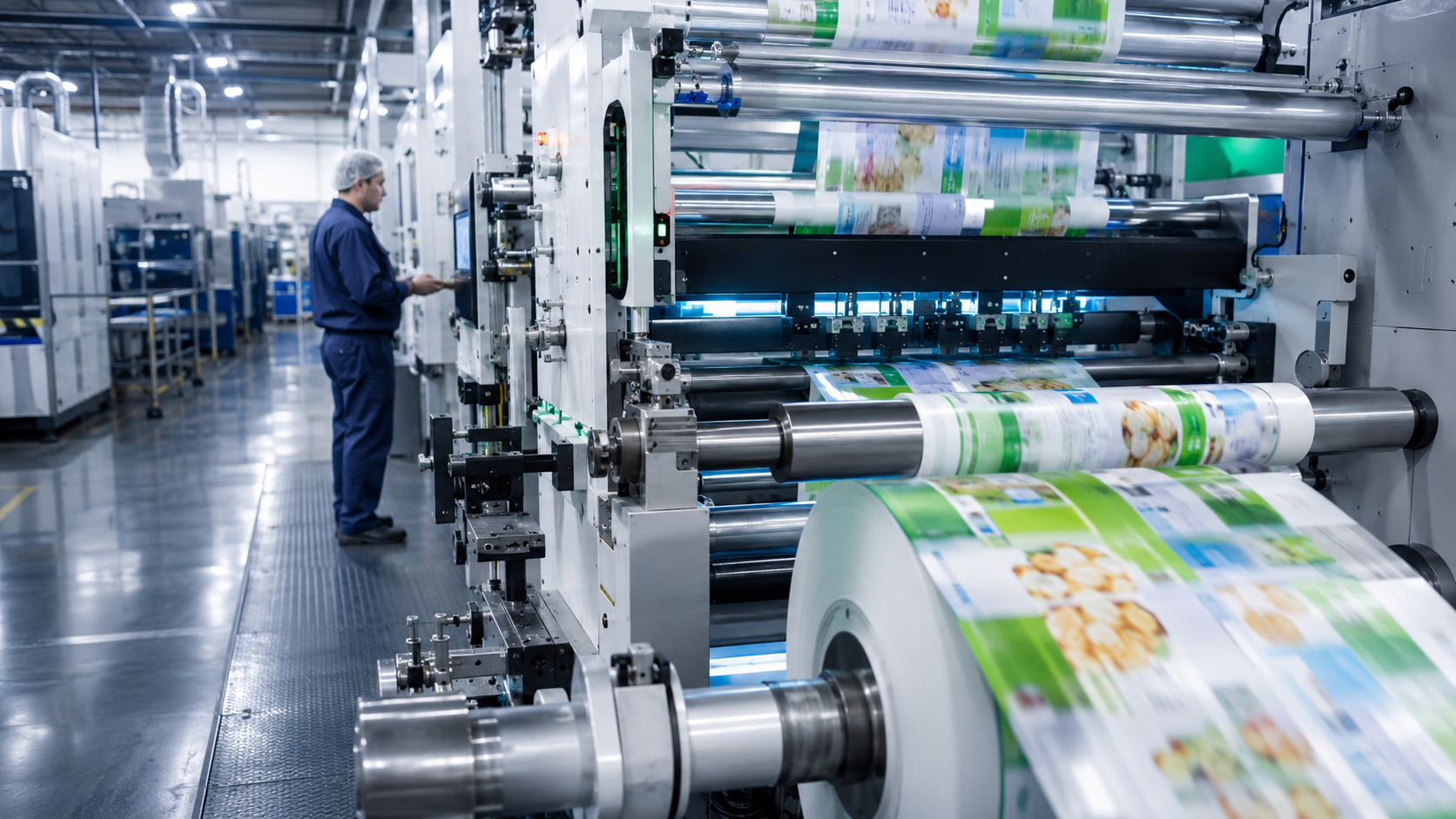
Corrugated packaging plants commonly use equipment supplied by several manufacturers. A factory may operate corrugators, printing machinery, die-cutters, folder gluers, and materials handling systems with different control platforms and data structures, complicating efforts to gather consistent information across production.
Machine controllers can provide data about operating conditions, but the format, terminology, and accessibility of that information often vary between suppliers. Connecting equipment to central monitoring or management software may consequently require separate interfaces and custom mapping of data fields.
Those differences can make it difficult to compare production performance across machinery even where the underlying measurements describe similar operations. A recorded production speed, for example, must be interpreted according to the relevant unit, machine state, product configuration, and measurement method.
COSI 1.0 establishes a common structure for exchanging selected information. It specifies how data should be described and communicated rather than replacing a machine’s programmable controller or the software responsible for operating the equipment.
The specification uses Message Queuing Telemetry Transport, or MQTT, as its communications protocol. MQTT provides a lightweight mechanism for exchanging messages between connected systems, while Transport Layer Security, or TLS, is used to protect the information during transmission.
According to VDW, the intended arrangement is for machine information to be communicated securely within the factory network to the company’s production IT systems. The standard also provides mandatory and voluntary data elements, allowing businesses to control which information is made available through the interface.
This distinction is important because production records can contain commercially sensitive information. Operating speeds, machine utilisation, customer-specific settings, and downtime patterns may reveal details about a packaging manufacturer’s capabilities and production activities.
The first application area, performance, covers information used to evaluate machine operation. Consistent data can help production software compare performance across equipment and analyse the operating speeds associated with different products and processing conditions.
Such comparisons depend on the definition of the measurements and the availability of reliable data. A production rate alone does not establish how efficiently a machine is operating unless it is considered alongside relevant factors such as planned speed, production time, stoppages, and the quantity of acceptable output.
COSI’s setup category addresses parameters associated with preparing equipment for a production job. Corrugated converting machinery frequently handles different board grades, dimensions, printed designs, and die-cutting requirements, creating variation in the adjustments needed between orders.
Recording setup information consistently can allow a factory to examine why similar jobs require different preparation times. Machine settings, job characteristics, and the sequence of adjustments can then be evaluated against production records, although the interface itself does not automatically alter equipment settings or eliminate changeovers.
The maintenance category provides a common way to communicate information that may indicate changes in equipment condition. VDW identifies vibration and power consumption measurements as examples that can reveal developing faults before a machine suffers an obvious loss of performance.
Condition monitoring requires those measurements to be interpreted against the machine’s normal operating behaviour. Changes in load, material characteristics, production speed, or mechanical condition can all influence sensor readings, so a maintenance decision cannot be based on a single measurement without appropriate context.
Predictive monitoring applications may use repeated observations to identify patterns associated with component deterioration. However, the publication of a common data standard does not establish that every participating machine has the necessary sensors or that predictive maintenance software is already deployed across participating factories.
Quality forms the fourth application area. The specification allows information originating from corrugated board production, including measurements associated with sheet flatness, to be related to problems identified during subsequent converting operations.
Examples include material waste and variation in printing quality. Distortion in a corrugated sheet can affect how it travels through a converter, while differences in material properties or machine registration may influence the quality of a finished printed box.
Connecting observations across production stages can help investigators identify whether defects recur under particular operating conditions. The reliability of that analysis depends on accurate measurement, consistent definitions, and sufficient information to distinguish a process fault from variation in incoming materials.
VDW has published supporting technical documentation covering JSON schemas for the four message categories, a glossary of standard terminology and permitted values, and definitions for message envelopes and payloads. Naming conventions, measurement units, qualifiers, and a compliance checklist provide additional implementation guidance.
The specification was developed between June 2025 and October 2026. Participating organisations include BHS Corrugated, BOBST, DS Smith Packaging Deutschland, EMBA Machinery, FEFCO, Fosber, Klingele, Koenig & Bauer, Mitsubishi Heavy Industries EMEA, Mondi, and several other machinery, packaging, and software businesses.
Although COSI was developed for the corrugated industry as a whole, its applications extend to packaging converters supplying food and beverage manufacturers. Corrugated cases are widely used to protect packaged foods during handling, warehousing, and transportation, and their dimensional accuracy can influence performance on automated packing lines.
Converters producing food and beverage cases may handle frequent changes in board specifications, print designs, box dimensions, and delivery requirements. More consistent production information can support investigations into waste, machine settings, and quality variation, provided the relevant equipment and software implement the interface.
Implementation remains a separate step from publication of the specification. Machinery suppliers must support the required data structures, and packaging businesses must establish connections to their production systems, appropriate information security arrangements, and procedures for using the resulting data.
VDW intends to update COSI as industry requirements develop, with technical feedback accepted through the working group’s published channels. The initial release establishes a common basis for machine data exchange; measurable improvements in factory performance will depend on adoption and the applications developed around it.