IN Brief:
- Kamson has commissioned Sidel Aseptic Combi Predis equipment in Jiangsu, China.
- The system combines hydrogen peroxide preform decontamination with blowing, filling, and capping.
- No Kamson-specific line speed, investment total, or measured efficiency improvement has been published.
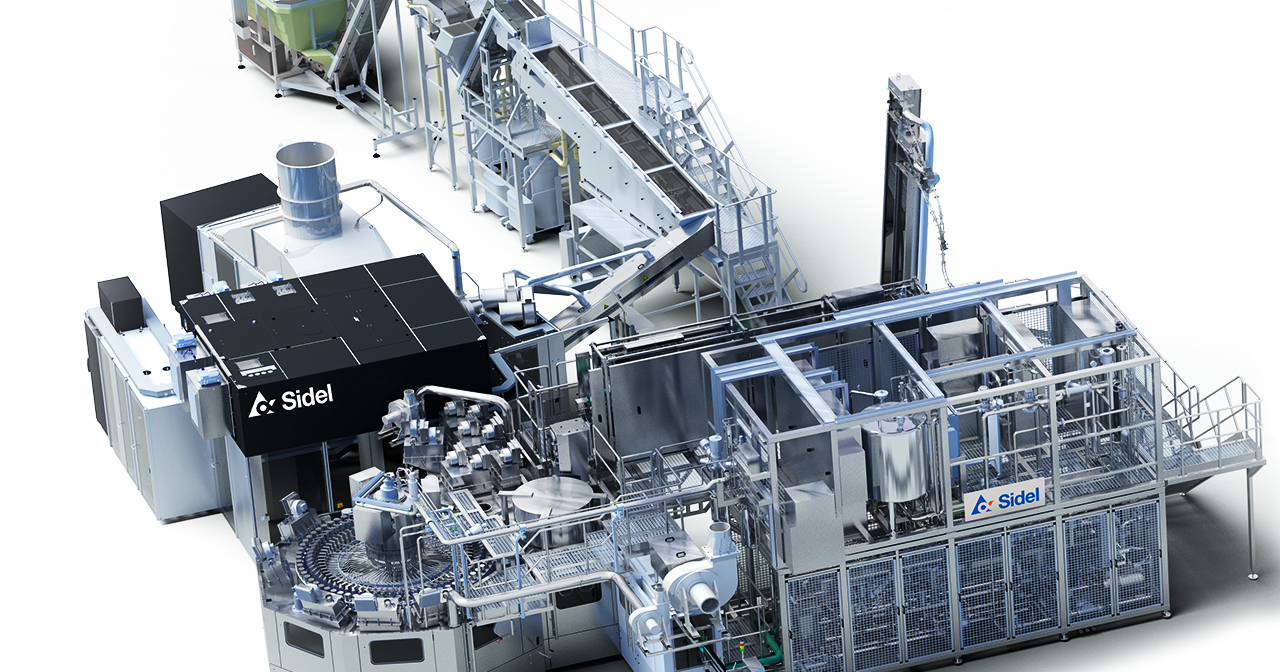
Sidel has commissioned an integrated aseptic PET line at Jiangsu Kamson Beverage, part of China’s Mulanka Group, for production across juices, teas, coffees, protein drinks, and other sensitive beverages. Announced on 17 November, the installation uses Aseptic Combi Predis to combine dry preform decontamination, bottle blowing, filling, and capping. Kamson operates within a group with two beverage production sites in Jiangsu province.
The line gives Kamson a production route for multiple beverages and container formats without separating bottle sterilisation and aseptic filling into independent processes. Frequent changes of formulation or pack size affect cleaning schedules, line settings, and validation, particularly when recipes vary in acidity or solids. Kamson describes increased production flexibility, although Sidel has not disclosed the site’s rated bottles-per-hour output, capital expenditure, or measured changeover savings.
Predis decontaminates PET preforms before they pass through the heating oven and are blow moulded into bottles. It uses a controlled hydrogen peroxide treatment at the preform stage, with heating contributing to the process before the container enters the protected blowing and filling environment. Decontamination at this earlier stage differs from methods that wash or sterilise a fully formed bottle after blowing, and changes which machine surfaces and transfer stages require aseptic protection.
Sidel integrates preform decontamination, blow moulding, filling, and cap treatment in its Aseptic Combi Predis system. The supplier describes reduced use of water and sterilising chemicals compared with some wet bottle-rinsing processes and says the configuration avoids separately sterilising the blow moulder. These are capabilities attributed to the technology, not verified site-level savings: measured peroxide consumption, water use, energy demand, and operating costs at Kamson have not been published.
The filling stage must maintain product and container hygiene after sterilisation, including appropriate controls over closures and the surfaces near the filling path. Contactless filling reduces opportunities for contact contamination, but it does not remove the need for cleaning, environmental monitoring, process checks, and microbiological validation. The result depends on the complete product, bottle, closure, and line configuration rather than on an equipment description alone.
The range of drinks included in Kamson’s programme adds formulation and process complexity. Juice, tea, coffee, and protein-containing beverages can differ in acidity, solids, sensitivity to oxygen, and susceptibility to microbiological spoilage. A line handling several such products needs defined recipes for processing, filling, and changeover, together with effective controls against carryover between runs. Product compatibility, thermal or other upstream treatment, and shelf-life validation remain separate from bottle-forming capability; Sidel has not provided product-specific sterilisation parameters or shelf-life results for Kamson. Changes between drink types may also demand verification of the upstream product-treatment step, the hold conditions of any sterile intermediate vessels, and the cleaning status of transfer pipes. A recipe containing protein or suspended solids can create different fouling behaviour from a clear tea, so production planning needs to account for validated cleaning and product-change procedures. These are established aseptic production considerations rather than evidence of a problem at Kamson; no site-specific product-change protocol has been disclosed.
Aseptic PET production can support ambient distribution for sensitive drinks without placing every formulation into a traditional hot-fill package. Preform decontamination before blowing can also influence container design and material usage by avoiding some of the stresses imposed by hot filling. However, the suitability of the approach depends on beverage chemistry, container geometry, and the validated process. No Kamson-specific lightweighting benefit or shelf-life extension has been quantified, and performance figures from other installations cannot be transferred to this line.
Sidel manufactures and supports its lower- and medium-speed Predis offering locally in China, drawing on engineering and spare-parts capabilities built around its Beijing operations. Its Kamson reference describes design, installation, commissioning, and validation work. Localisation may improve access to technical support and components, but neither company has published savings in installation cost, maintenance downtime, or spare-parts lead time for this project.
A separate recent agreement with China Resources Beverage covers equipment for a different customer and should not be combined with Kamson’s commissioning figures. In Kamson’s case, the installation is already operating; the announced development is an implemented aseptic production line rather than a prospective order. That distinction leaves the company’s reported flexibility gains credible as an operational assessment while limiting any attempt to quantify them without plant data.
Kamson and Sidel have not reported the number of SKUs in regular production, line speed, overall equipment effectiveness, or the split of output between the group’s two sites. Aseptic processing also requires validated controls for each beverage formulation before its shelf life and intended distribution conditions can be established. The installation confirms that dry preform treatment and integrated aseptic filling are in service at Kamson; measurable productivity gains remain undisclosed.