IN Brief:
- Barry Callebaut has opened a relocated and expanded Chocolate Specialties factory in Baramati, Maharashtra.
- The 6,000m² facility produces baked and soft inclusions for industrial food manufacturers.
- The investment expands the company's Indian specialities capabilities alongside its existing chocolate manufacturing operations.
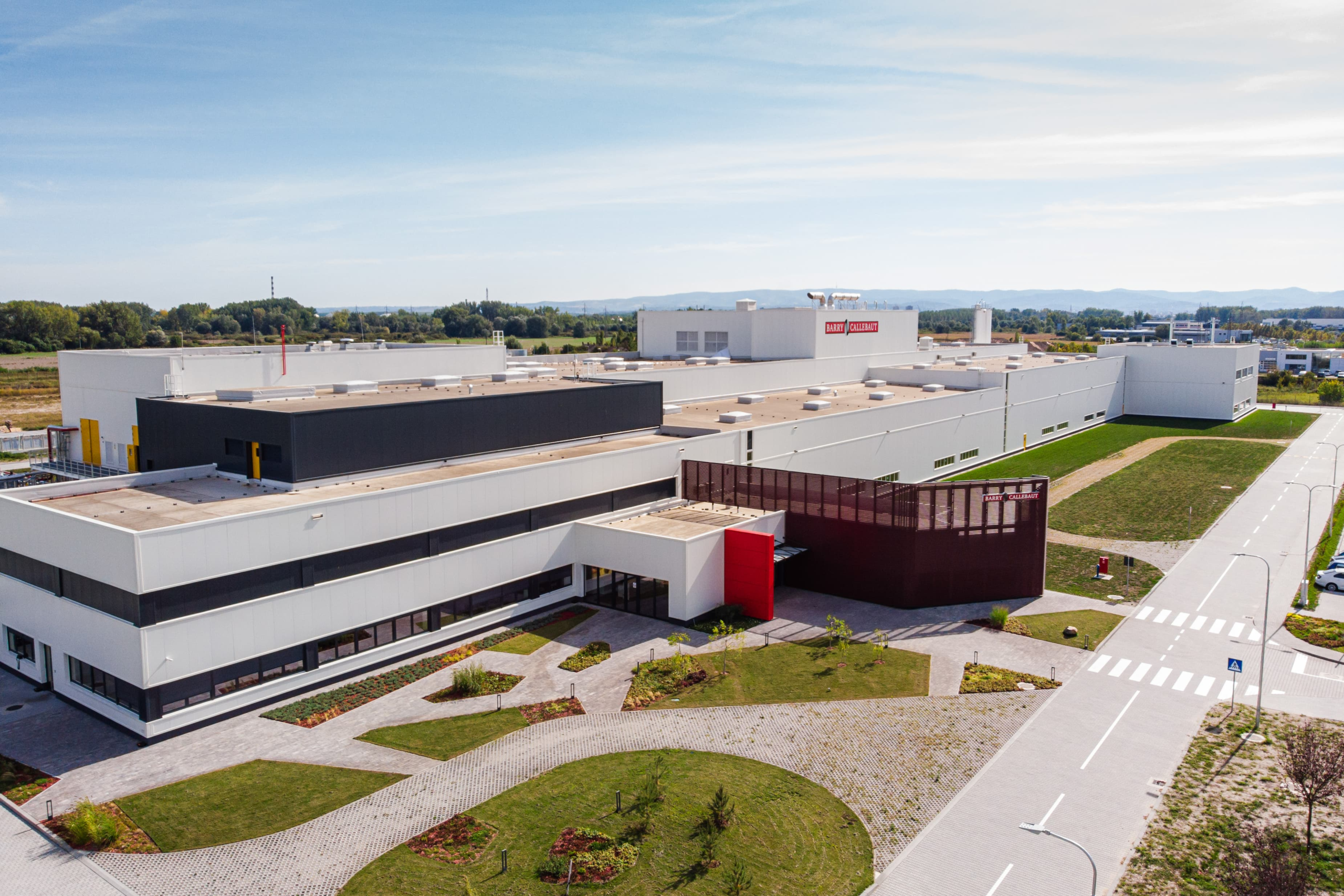
Barry Callebaut has opened a relocated and expanded Chocolate Specialties factory in Baramati, India, extending its production capabilities for ingredients used in confectionery, bakery, ice cream and dessert manufacturing.
Inaugurated on 20 November, the 6,000m² facility is located in Maharashtra, approximately 250 kilometres southeast of Mumbai. It will produce baked and soft inclusions, broadening the range of speciality ingredients that the company can manufacture in India for customers across the Asia Pacific region.
The factory is situated minutes from Barry Callebaut’s existing chocolate production operation in Baramati, which opened in 2021. The new specialities facility therefore expands an established manufacturing location while providing dedicated capabilities for ingredients incorporated into other manufactured foods.
Baked and soft inclusions are used to introduce particular flavours, textures and visual characteristics into finished products. Applications include bakery goods, confectionery, chocolate, ice cream and desserts, where the performance of an inclusion depends on the conditions encountered during manufacturing and storage.
The company has not disclosed the capital expenditure associated with the new facility or its planned annual output. It has also not identified the number of additional employees or published a detailed list of the production equipment installed.
The opening nevertheless establishes a larger dedicated operation for ingredients that require different manufacturing and handling characteristics from conventional chocolate. While bulk chocolate production concentrates on preparing material for moulding, coating or other applications, inclusions must be manufactured to specifications determined by the finished product into which they will be incorporated.
Chocolate and confectionery inclusions can take different forms, including particles, pieces and softer preparations designed to deliver a particular eating experience. Their dimensions, composition and physical properties influence how they behave when introduced into another food product.
Bakery applications can expose inclusions to elevated temperatures during production. The suitability of a particular ingredient depends on the temperature profile, processing time, moisture conditions and whether it is intended to retain a defined shape or change during baking.
An ingredient designed to remain visually distinct after baking may need different characteristics from one intended to soften or disperse within the surrounding product. Manufacturers must therefore assess inclusion performance against the complete formulation and operating conditions rather than relying solely on the ingredient’s initial appearance.
Ice cream presents another set of requirements. Inclusions may be introduced during freezing or downstream filling, where product temperature, viscosity and mixing conditions influence their distribution through the finished dessert.
Components intended to retain a particular texture must also remain suitable throughout frozen storage. Changes in moisture distribution and temperature can affect the physical properties of an inclusion, making the intended storage conditions part of its specification.
Confectionery production introduces further demands involving mixing, depositing, moulding and coating equipment. Ingredient size and consistency can influence dosing accuracy and the movement of material through mechanical handling systems.
When inclusions are introduced into a finished product at controlled rates, fluctuations in particle size or flow behaviour can affect product weight and distribution. Maintaining consistent ingredient characteristics is therefore important to the performance of the customer’s manufacturing process.
The production of speciality inclusions may also involve different handling requirements from those used for bulk chocolate. Finished pieces can be vulnerable to breakage, sticking or changes in texture, depending on their composition and the temperature and humidity conditions encountered during storage and transport.
Packaging and handling systems must consequently be selected according to the characteristics of the ingredient. The equipment needed to move a free-flowing particulate product may differ from that required for softer inclusions, while the risk of product damage can influence conveying and transfer arrangements.
Barry Callebaut’s development of its specialities portfolio builds on expertise acquired through its purchase of D’Orsogna in 2017. That transaction expanded the group’s position in speciality ingredients and decorations used by industrial food manufacturers.
The relocated Baramati operation extends those capabilities within India, allowing the company to serve regional customers through a broader manufacturing network. Its proximity to existing chocolate operations creates opportunities for coordination, although the company has not disclosed shared utilities, integrated production arrangements or common logistics systems.
India has become an important location within Barry Callebaut’s Asia Pacific business. The company established a sales office and Callebaut Chocolate Academy in Mumbai in 2007 before expanding into manufacturing and other activities.
Its subsequent investments include the Baramati chocolate factory opened in 2021, a greenfield chocolate production facility in Neemrana inaugurated in 2025, and Global Business Services operations established in Hyderabad during the same year.
The company describes its Indian presence as five sites covering chocolate and speciality ingredient manufacturing, customer innovation, sales and business services. The number encompasses different operational functions and should not be interpreted as five chocolate factories.
Vamsi Mohan Thati, President Asia Pacific at Barry Callebaut, has linked the latest investment to demand for products offering different formats, flavours and textures. The group expects the Baramati expansion to strengthen its ability to support product development across regional markets.
Barry Callebaut’s internal research suggests that the broader bakery and speciality food ingredients market could expand by approximately 5–6% annually over the coming years. The figure is a company projection rather than an independently established rate of future growth.
Changes in demand can influence the range of ingredients required by industrial food manufacturers. Product developers may introduce inclusions to differentiate existing formulations or create additional varieties while retaining much of the established manufacturing process.
Such changes still require validation on production equipment. Introducing an inclusion can affect mixing, depositing, filling and sealing operations, depending on the ingredient’s dimensions and physical characteristics and the way it interacts with the surrounding product.
Ingredient suppliers must also maintain consistent specifications over successive deliveries. Industrial customers depend on predictable performance when production schedules, packaging weights and finished-product characteristics have already been established.
Manufacturing ingredients closer to customers can alter the organisation of supply, particularly where products require controlled handling or where orders involve several formulations. The commercial advantages depend on production costs, order volumes, logistics and the ability to meet customer specifications reliably.
Barry Callebaut operates 58 production facilities internationally and recorded annual sales of approximately CHF 12.2bn in its 2025/26 financial year. Its activities span cocoa processing, chocolate manufacturing, coatings, fillings, decorations and alternative confectionery ingredients.
The Baramati opening adds a dedicated regional operation for speciality ingredients within that wider manufacturing network. Further disclosure of production capacity, equipment configuration and customer volumes would provide a clearer measure of the investment’s industrial scale as the expanded facility develops its commercial output.