IN Brief:
- Innovia Films has expanded the capabilities of its Propafilm BOPP portfolio using existing LISIM manufacturing technology.
- The films are available in thicknesses from 15 to 60 micrometres, with adjustable orientation and functional surface characteristics.
- The expanded portfolio supports packaging downgauging and polypropylene-based structures, subject to application-specific performance and recyclability requirements.
Innovia Films has expanded the capabilities of its Propafilm packaging portfolio using Linear Motor Simultaneous Stretching (LISIM) technology, offering greater control over film orientation, thermal behaviour and material thickness for flexible packaging applications.
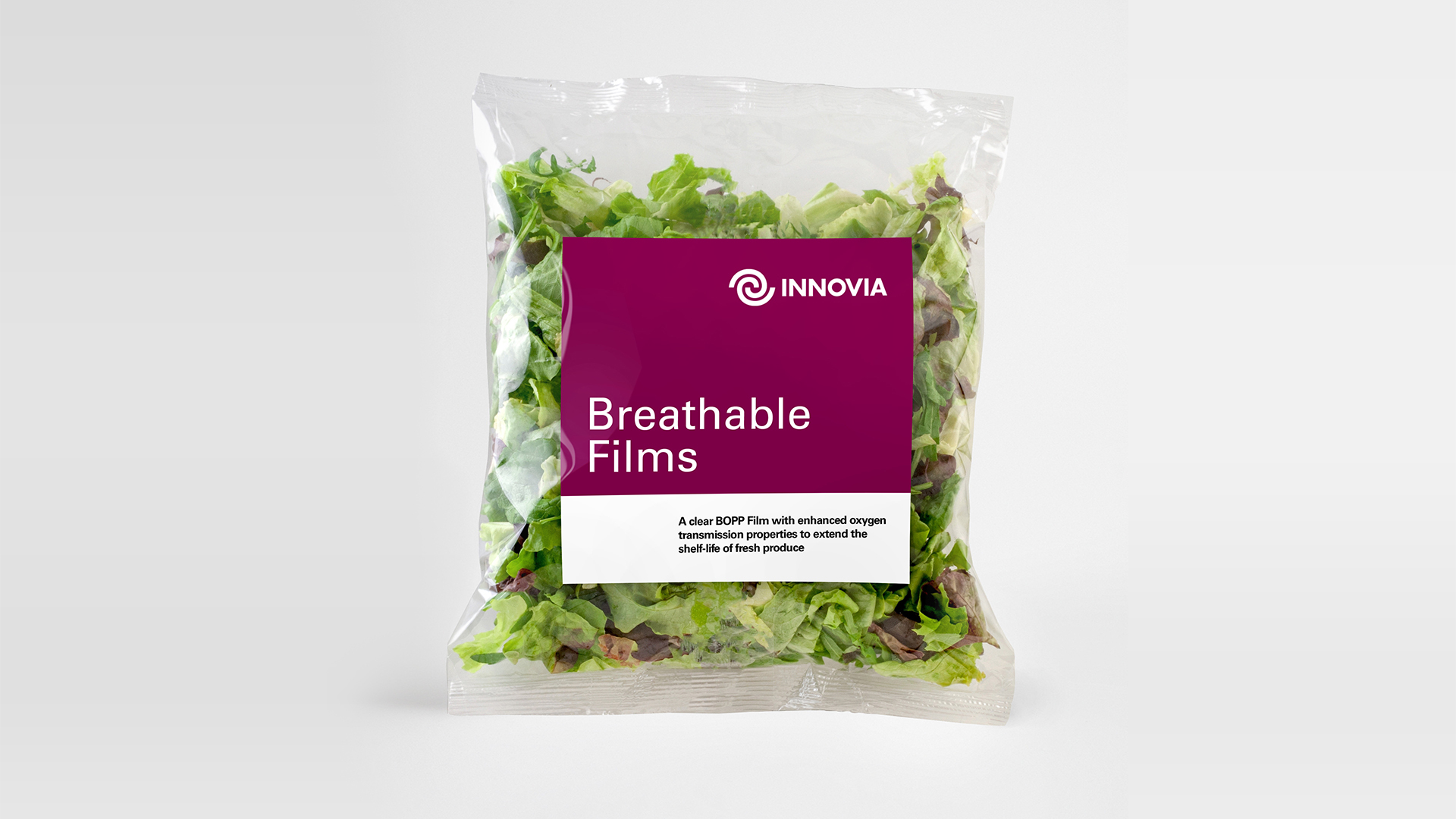
The development, announced on 19 November, extends the range of properties available from the company’s biaxially oriented polypropylene (BOPP) manufacturing platform. Films are available in thicknesses from 15 to 60 micrometres, with performance characteristics that can be adjusted through the stretching process.
Innovia says the technology supports the production of films with improved thermal stability, controlled shrinkage and functional surface characteristics. These properties can influence how a material performs during printing, lamination, heat sealing and subsequent use in food packaging.
LISIM is not a newly installed production technology for Innovia. The company previously introduced the system at its German manufacturing operation, and the November announcement concerns the expanded capabilities and commercial applications of its Propafilm range.
Biaxially oriented polypropylene is widely used in flexible food packaging because its mechanical and optical properties can be adjusted to meet different converting and product protection requirements. Film orientation changes how the polymer structure responds to mechanical loads, temperature and other conditions encountered during manufacturing.
In conventional sequential orientation, polypropylene film is generally stretched first in the machine direction and then across its width. Each operation changes the film’s dimensions and influences its physical properties, with the final material characteristics determined by the processing conditions and polymer composition.
LISIM uses linear motor technology to control stretching in both directions simultaneously. This gives the film manufacturer greater flexibility in selecting orientation ratios and stretching patterns, allowing properties to be adjusted for different applications without depending exclusively on changes to the underlying polymer formulation.
The distinction is relevant where packaging requires a particular balance between stiffness, strength and dimensional stability. Altering orientation can improve one characteristic while changing another, making the choice of stretching conditions part of the material design process.
Films used on high-speed packaging lines encounter repeated mechanical loads as they pass through unwinding, tension control, forming and sealing operations. Materials that stretch, distort or shrink unexpectedly can affect registration, package dimensions and the accuracy of sealing equipment.
Thermal behaviour is particularly important when a packaging process includes heated jaws, sealing elements or other equipment that raises the temperature of the film. The material must remain stable enough to maintain the intended package geometry while forming reliable seals under the specified operating conditions.
Innovia identifies adjustable thermal resistance and controlled shrinkage as capabilities of its enhanced film platform. The company has not published a universal set of improvements applicable to every grade, meaning that performance must be assessed against the particular film specification selected.
The 15–60 micrometre thickness range also supports packaging downgauging, in which a thinner material is used to perform the functions previously delivered by a heavier film. Reducing thickness lowers the quantity of polymer used for an equivalent packaging area, provided the finished structure continues to meet its mechanical and protective requirements.
That condition is important because a reduction in film thickness can affect puncture resistance, stiffness, handling and sealing behaviour. A downgauged material must be evaluated through the complete converting and filling process rather than assessed solely on its nominal thickness or laboratory strength measurements.
Packaging rejection rates are another consideration. A thinner film that performs adequately during routine operation but produces more damaged packs or sealing failures may reduce material weight without delivering the intended improvement in manufacturing efficiency.
Innovia says the enhanced Propafilm range includes films offering functionality comparable with certain uncoated BUBBLE-produced materials. The comparison indicates that LISIM provides another means of achieving specified film characteristics, although the company has not disclosed complete comparative datasets for every application.
Functional skin technologies form part of the expanded portfolio. These surface layers can improve printability and may reduce the need for additional coatings, depending on the printing process, ink system and final packaging structure.
Printing performance depends on the interaction between the substrate surface and the materials applied during conversion. Adhesion, surface energy, curing behaviour and resistance to subsequent handling all contribute to the suitability of a film for a particular printing application.
Reducing the need for separate coatings can simplify some packaging constructions, but the benefits are application-specific. Barrier properties, sealability and the requirements of any laminated structure must still be considered before eliminating a component from the packaging specification.
Innovia is also positioning the technology within the development of polypropylene-based packaging structures intended to support recyclability. Using compatible materials can reduce some of the difficulties associated with recovering packaging composed of several different polymer families.
However, the recyclability of a finished pack is determined by more than the polymer used for its principal film. Adhesives, inks, coatings, barrier layers and other components can influence sorting and reprocessing, while local collection infrastructure determines whether the format is accepted into the relevant recycling stream.
Manufacturers must also maintain the barrier properties required by the food product. Moisture protection, oxygen transmission and other characteristics are influenced by the complete packaging structure and the conditions under which it is stored and distributed.
The company’s recent developments include Propafilm CHBM, a metallised BOPP film introduced for selected foil replacement applications. That product addresses specific barrier and laminate requirements, while the November development concerns broader control over the properties achievable through the LISIM manufacturing process.
Peter Sikabonyi, General Manager of Innovia Films Germany, has linked the investment in LISIM technology with the ability to produce films tailored to different customer requirements. The company intends to use the platform to support packaging performance while reducing material consumption where suitable specifications can be established.
Commercial validation will depend on trials covering the complete package, including converting efficiency, seal performance, mechanical resistance and product protection. The expanded Propafilm portfolio gives converters more material characteristics to select from, but the suitability of each grade will ultimately be established by its performance under the conditions of the intended packaging operation.