IN Brief:
- Approved food establishments in Great Britain will need revised health and identification marks from 1 March 2028.
- The new format will include the UK(GB) country designation and EU suffix, replacing existing marking arrangements.
- Proposed early adoption provisions will give manufacturers additional time to change packaging artwork, printing systems, and labelling procedures.
Food processors handling products of animal origin in Great Britain will need to change their health and identification marks under new requirements accompanying the UK–EU sanitary and phytosanitary agreement, with the revised format becoming mandatory from 1 March 2028.
The Department for Environment, Food and Rural Affairs (Defra) has confirmed that approved establishments will need to use the country designator UK(GB) and the EU suffix on relevant marks. The changes will apply to qualifying products irrespective of whether they are sold domestically or exported.
The requirements affect establishments handling meat, dairy products, fish, egg products, and other foods of animal origin where official health or identification marks are required. They form part of the planned regulatory alignment between Great Britain and the EU, but their implementation will involve changes to packaging materials, printing arrangements, and production documentation.
Health and identification marks have different functions within the food control system. Health marks are associated with official inspection requirements for specified meat products, while identification marks establish that products of animal origin have been handled in an approved establishment operating under the applicable hygiene legislation.
Identification marks normally contain a country designation and the approval number of the establishment responsible for the product. Their format is prescribed by legislation, allowing businesses and competent authorities to identify the relevant establishment when examining product documentation or investigating food safety concerns.
The new format will consist of the country designation UK(GB), the establishment’s approval number, and the suffix EU. Government guidance provides an illustrative arrangement using the establishment code 1234, demonstrating the information that will be required within the revised mark.
Existing Great Britain rules permit health and identification marks using the country name United Kingdom or specified abbreviations, without the new EU suffix. The incoming framework will replace those arrangements for products manufactured after the relevant requirements become applicable.
The change will affect establishments whose approval information is incorporated into printed packaging, labels, or marking systems. Manufacturers will need to establish which product formats carry the existing marks and determine how the revised information must be introduced into each production process.
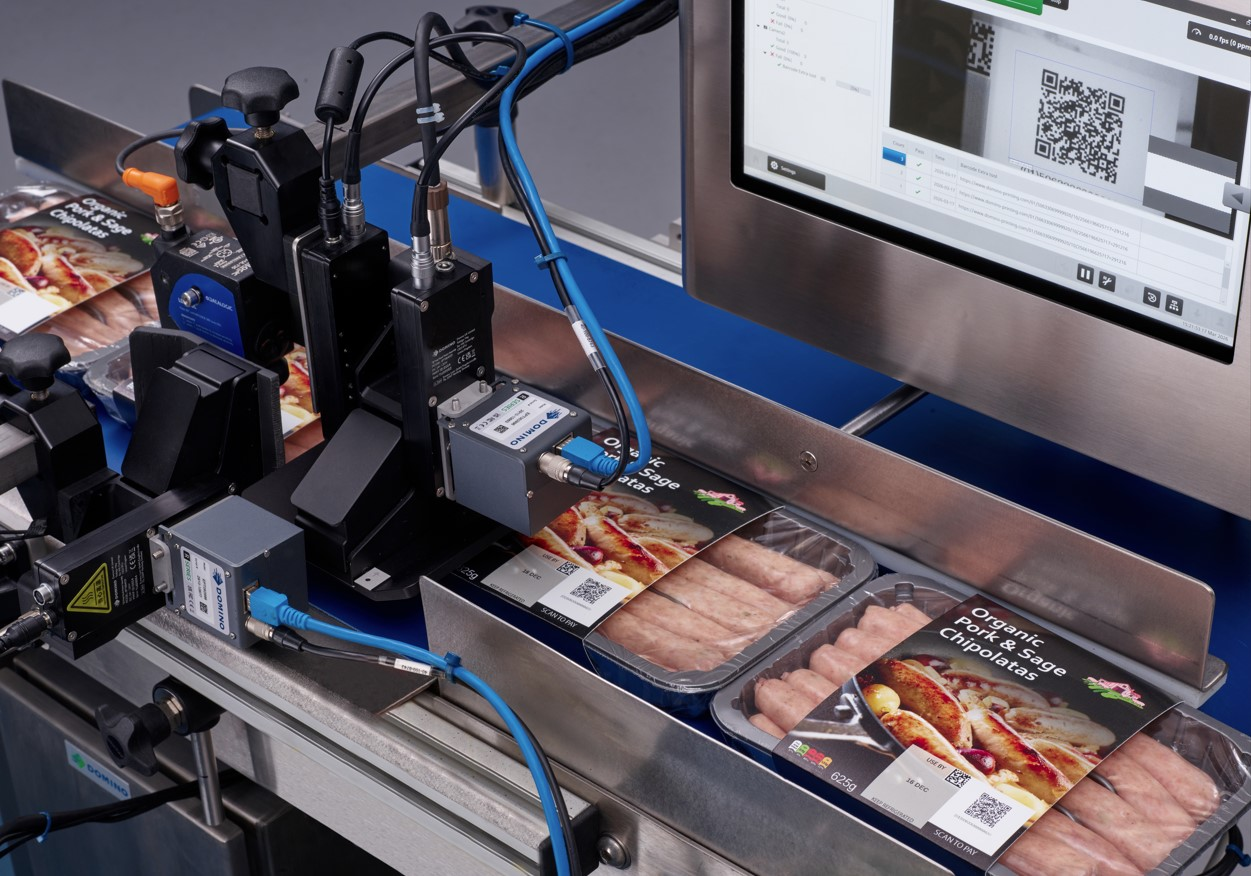
Where identification marks are printed directly onto packaging materials, changing the required format may involve revising approved artwork and supplying new files to packaging converters. Printed films, cartons, labels, and other components may require different production preparations depending on the printing technology and the way the mark is incorporated into the design.
Manufacturers using variable data printing equipment may be able to change the relevant information through an electronic template. However, any amendment must still be checked for accuracy, legibility, and consistency with the product specification and the requirements applying to the establishment.
Preprinted packaging introduces additional stock management considerations. A manufacturer purchasing large quantities of printed packaging may hold materials produced weeks or months before they are required on the line, while suppliers may need sufficient notice to update artwork, approve proofs, and prepare subsequent production runs.
The lead time required will depend on the printing process, the number of packaging formats involved, and the availability of suitable materials. Businesses supplying several customers or producing multiple pack sizes may need to coordinate changes across a substantial number of individual packaging specifications.
Production lines must also maintain the correct association between the product and the establishment identified by the mark. A change in the printed designation does not alter the requirement to apply accurate approval information or to operate the underlying traceability and food safety controls.
The new format will not remove obligations concerning hygiene, establishment approval, or product identification. It changes the prescribed information used within an existing regulatory marking system, rather than replacing the system with a general consumer label.
To provide additional preparation time, the government intends to introduce legislation permitting the revised marks to be used before 1 March 2028. A targeted consultation on the necessary food and feed legislation is planned, including provisions designed to support early adoption.
The proposed flexibility would allow businesses to begin changing packaging and labelling arrangements ahead of the compulsory application date. This could reduce the need for several manufacturers and packaging suppliers to make the same changes within a short period immediately before implementation.
Early adoption remains subject to legislation. Publication of the November guidance does not itself authorise businesses to replace existing marks with the new format before the necessary legal provisions take effect.
Government guidance confirms that the existing Great Britain marks will remain permitted until 1 March 2028. From that date, the new requirements will apply, subject to the final legislation and any specific transitional arrangements.
Food and feed already placed on the Great Britain market before the application date may continue to be sold or used domestically until stocks are exhausted, even if they do not meet the newly aligned EU requirements. This provision is intended to reduce disruption and avoid unnecessary waste during the transition.
Those products cannot enter the EU market unless they comply with the applicable rules. Businesses using the transitional provisions will therefore need to distinguish qualifying existing stock from newly produced goods and ensure that products intended for export carry the required markings.
The treatment of finished products must also be distinguished from unused packaging materials. Permission to continue selling qualifying food already on the market does not automatically authorise manufacturers to apply obsolete printed packaging to newly produced goods after the new marking requirements become compulsory.
Manufacturers planning packaging inventories will consequently need to consider product shelf life, material ordering schedules, existing printed stock, and the availability of updated packaging. The government’s proposed early adoption arrangements are intended to give businesses more flexibility in managing that change.
Quality assurance systems may also need updating. Product specifications, label verification instructions, packaging approval procedures, and records used during internal audits must accurately reflect the requirements in force when the relevant goods are produced.
Separate labelling changes are planned for qualifying goods moving from Great Britain to Northern Ireland. Under the agreement, the vast majority of goods using the Northern Ireland Retail Movement Scheme will no longer require individual or box-level Not for EU labels from March 2028.
Certain retail fish and wine products are excluded from those simplified arrangements, and additional guidance will follow. The government is also working on arrangements for traders holding existing stocks of products carrying the current Not for EU markings.
These provisions have different purposes from the revised health and identification marks. The latter establish the prescribed identification of approved establishments, whereas Not for EU labels have been used to identify goods moving under specific arrangements between Great Britain and Northern Ireland.
Businesses handling products subject to both requirements will need to assess the changes separately. Removal of a Not for EU label does not remove an obligation to display a health or identification mark where one is required under food hygiene legislation.
The technical requirements for health and identification marking continue to derive from the applicable food hygiene framework, including Regulation 853/2004 and the provisions governing approved establishments. The revised UK(GB) designation will align Great Britain’s marking format with the arrangements established under the Common SPS Area.
Further legislation and sector guidance will determine how the transition is implemented, particularly where early use of the new format is permitted. Approved establishments will need to confirm those provisions before changing production materials or marking procedures.
The November guidance establishes both the intended marking format and the March 2028 implementation date, allowing manufacturers to identify the packaging and production systems likely to require modification. The next regulatory milestone will be publication of the proposed legislation permitting early use, followed by the final requirements governing the transition from existing marks.