IN Brief:
- Coca-Cola, Carlsberg Britvic, and Princes Group have raised concerns over the proposed PET safeguard.
- The Trade Remedies Authority recommends an annual import quota of 192,963 tonnes with a 65% duty above applicable allocations.
- The consultation closed on 22 November, and the government has not yet announced a final decision.
Coca-Cola, Carlsberg Britvic, and Princes Group have raised concerns over a proposed safeguard duty on UK imports of polyethylene terephthalate (PET), adding opposition from major beverage manufacturers to a measure intended to protect domestic resin production. Their concerns, reported on 25 November, follow the closure of the Trade Remedies Authority’s consultation three days earlier.
The Trade Remedies Authority (TRA) provisionally recommended an annual tariff-rate quota of 192,963 tonnes, with a 65% duty on imports exceeding the applicable allocation. The investigation began in August following an application from Alpek Polyester UK, which operates the country’s virgin PET manufacturing plant near Redcar.
The regulator’s provisional assessment found that rising imports had caused serious injury to domestic production. Packaging businesses and the British Plastics Federation raised concerns about the proposal earlier this month, as detailed in previous coverage of the investigation. The latest intervention extends that opposition to some of the largest purchasers of beverage packaging in the UK.
The Food and Drink Federation’s analysis, reported alongside the manufacturers’ concerns, puts annual import volumes almost 116,000 tonnes above the proposed duty-free quota. The potential cost exposure will depend on actual import demand, the availability of domestic material, and how much resin enters the country within the individual allocations proposed by the TRA.
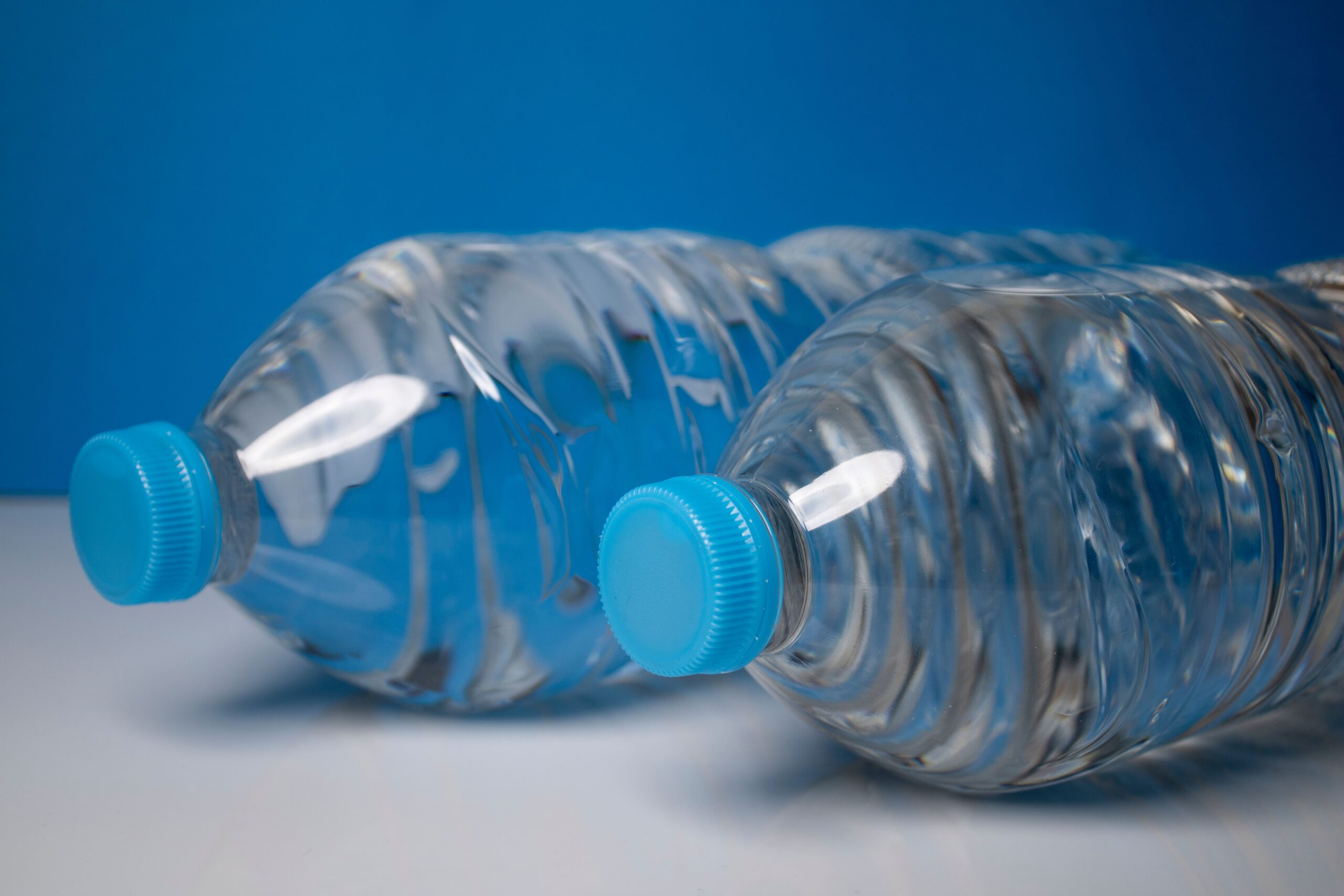
PET is used extensively in drinks bottles, but its food packaging applications also include trays and other rigid containers. Beverage bottle manufacture commonly starts with injection moulding a preform from dried resin. The preform is reheated and stretched inside a mould, orienting the polymer in a way that contributes to the strength and barrier properties of the finished bottle.
Material costs can reach beverage manufacturers through several purchasing routes. Some plants buy preforms and blow their own bottles immediately before filling, reducing the need to transport empty containers. Others purchase completed bottles from converters. In both cases, the cost of resin is reflected in the economics of the finished packaging, even where the beverage producer is not the importer responsible for paying the duty.
Material substitution is constrained by the requirements of the conversion process. Resin used for carbonated beverage bottles must offer suitable viscosity and processing characteristics, while the finished containers must withstand internal pressure and retain carbon dioxide throughout their intended shelf life. A new supplier or grade may require trials on existing equipment, followed by testing of the resulting containers for dimensional stability and mechanical performance.
Lightweight bottle designs can be particularly sensitive to variation in wall thickness and material distribution. Uneven reheating or stretching can produce local changes in thickness, affecting resistance to pressure and the loads placed on containers during filling, stacking, and transportation. Qualification of alternative feedstock must therefore consider the performance of the finished package as well as the nominal resin specification.
The quota structure itself could affect procurement planning. Allocations differentiated by country of origin and import period would require buyers to account for shipment lead times and the volume of material already entering the UK. Importers may face a substantial change in landed cost if a consignment arrives after the relevant quota has been exhausted.
Holding more inventory could reduce exposure to short-term disruption, but would tie up working capital and require additional storage. Conversely, relying on just-in-time deliveries would leave converters more exposed to changes in quota availability or shipping schedules. The relative cost of these approaches will vary with purchase volumes and the flexibility of contractual arrangements between resin suppliers, converters, and beverage manufacturers.
Recycled PET is also relevant to the investigation and cannot automatically be treated as an exempt substitute. Food-grade recycled material has its own supply and processing constraints, while recycled content obligations and packaging producer responsibility costs already influence purchasing decisions. Changes to bottle composition must preserve food-contact compliance, performance, and the manufacturer’s ability to maintain consistent production.
In a parliamentary written answer dated 23 November, the government confirmed that the TRA’s recommendation incorporates an assessment of the likely economic effects of a safeguard, including consequences for downstream businesses, importers, and consumers. That assessment will need to balance the viability of domestic resin production against the availability and cost of material required by the packaging industry.
The consultation has closed without bringing a duty into force. The eventual government decision will establish whether the safeguard proceeds and under what terms, leaving resin importers and their manufacturing customers to assess the proposed quota against their purchasing commitments for 2027.