IN Brief:
- Around 100 Unite members at Cameronbridge are being balloted for industrial action, with voting due to close on 9 September.
- Unite says more than 70 roles are under review and has raised concerns over consultation, workload, safety, and employee wellbeing.
- Diageo says proposed changes follow its decision to maintain reduced production volumes and are intended to protect long-term competitiveness.
Around 100 workers at Diageo‘s Cameronbridge distillery in Fife are voting on industrial action over proposed job cuts, raising the prospect of strikes at one of the group’s major Scottish production operations from mid-September.
The Unite ballot opened on 26 August and closes on 9 September. The union says more than 70 roles are under review at Cameronbridge and has accused Diageo of failing to consult adequately on the proposed changes, while the company says consultation with employees and trade unions is continuing.
The dispute also contains a direct disagreement over production. Unite says roles are being removed without a corresponding reduction in output and has raised concerns about workload, safety, and employee wellbeing. Diageo says the proposed staffing changes follow a decision to maintain production volumes at a reduced level in order to protect the long-term competitiveness of the business.
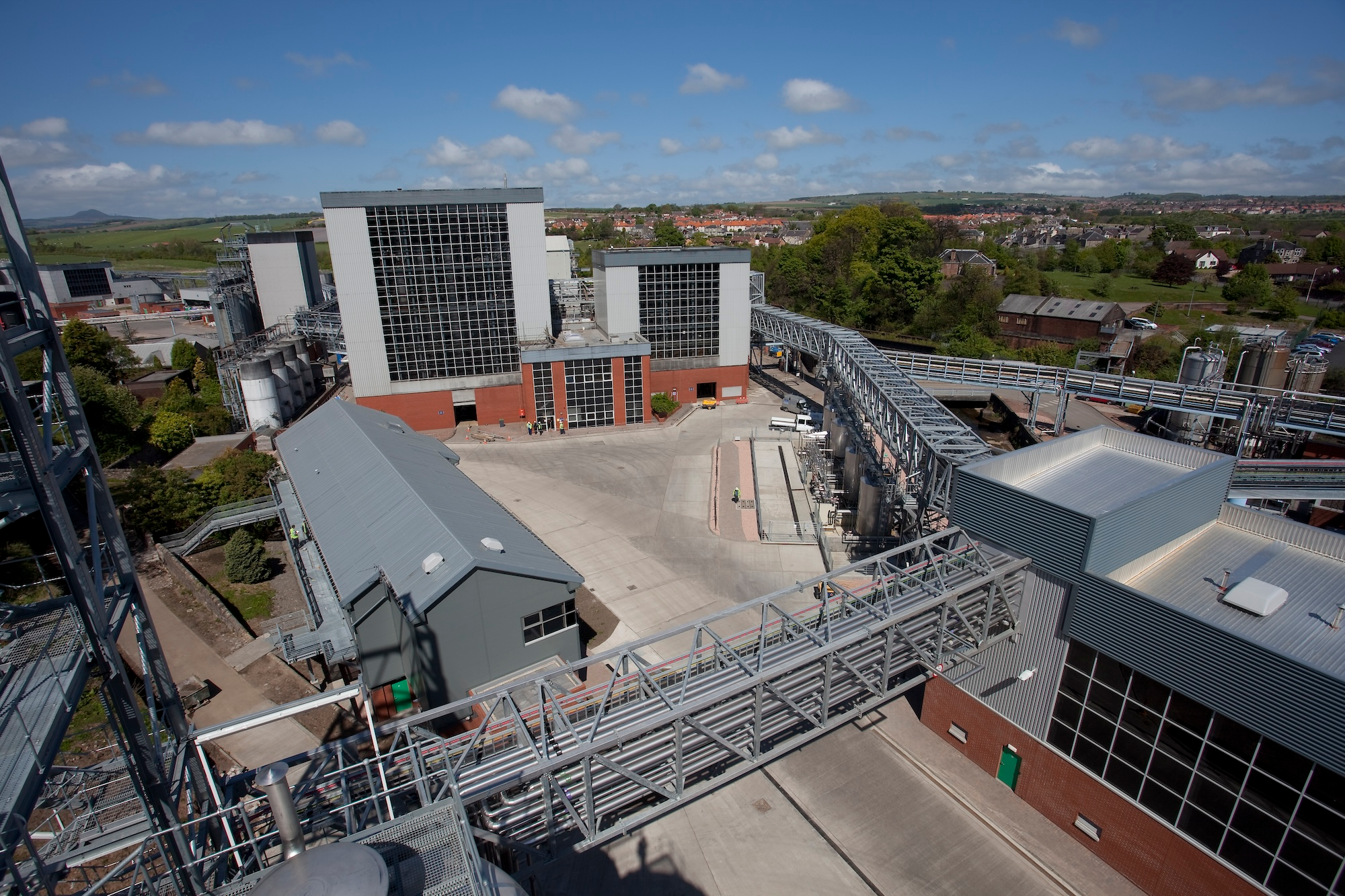
That distinction will matter during the ballot because Cameronbridge is not a peripheral site. The Fife operation is a major grain distillery supplying spirit used across Diageo’s Scotch portfolio and also supports production associated with brands including Smirnoff, Gordon’s, and Tanqueray.
Grain distilling is a continuous industrial process built around fermentation, distillation, utilities, storage, maintenance, and coordinated shift coverage. Lower throughput can reduce some operating demand, but the relationship between litres produced and the number of people required to run the plant is not linear.
Some functions remain necessary whenever the process is operating, regardless of whether equipment is running at full utilisation. Control rooms, utilities, maintenance, quality, safety systems, cask movements, and process supervision still need coverage, which is why disputes over crew structures often turn on the practical detail of how work is redistributed rather than on headline production volumes alone.
Unite says production operators and cask handlers are among the employees involved in the ballot. The union’s position is that cuts would increase pressure on those remaining at the site, while Diageo describes the proposal as a small reduction in roles and says it will continue to support affected employees through consultation.
The arguments are taking place against a broader restructuring programme across Diageo. The drinks group has been reducing employment in parts of its global operation while continuing to invest selectively in production capacity where it sees stronger demand or a need to improve long-term efficiency.
That creates an uneven manufacturing picture. Capacity can expand in one part of a drinks group while utilisation falls elsewhere, especially when product categories, maturation requirements, market demand, and inventory positions differ. The operating question at Cameronbridge is therefore specific to the economics of grain distilling and the volumes Diageo expects to need from the site.
Whisky production also carries a planning problem that is less forgiving than many short-shelf-life beverage operations. Spirit produced today may remain in maturation for years before sale, so distillers have to make decisions about current output against forecasts for future demand and stocks already sitting in warehouses.
When those forecasts weaken, reducing current distillation can be necessary long before the effect is visible in finished-product sales. Excess maturing inventory ties up working capital and storage capacity, yet cutting production too aggressively risks leaving a shortage years later if demand recovers faster than expected.
Workforce decisions sit awkwardly inside that cycle. A site built to run continuously carries fixed operating requirements even at lower throughput, while extending reduced utilisation can make management reluctant to retain a labour structure designed around a different production level.
Cameronbridge also includes substantial supporting infrastructure. Diageo has invested heavily in bioenergy and water-treatment systems at the site, integrating distillation with utilities and the handling of production co-products. Operating such systems safely places its own demands on engineering and shift coverage.
The plant forms part of a wider Scottish network rather than operating as an isolated factory. Diageo employs around 3,000 people across distilleries and bottling plants in Scotland, linking grain spirit production with maturation, packaging, engineering, warehousing, and distribution.
Industrial action at Cameronbridge would consequently become more material if it disrupted the planned flow of spirit into that wider system for a prolonged period. Mature stocks provide some insulation from short-term stoppages, but distillation schedules are planned around years rather than days, and lost production cannot always be recovered simply by running faster later.
No strike has yet been called. Members must first complete the ballot, and talks can continue before and after the vote. If the ballot supports action and the dispute remains unresolved, Unite says strikes could begin by the middle of September.
The immediate issue is therefore narrower than the wider restructuring surrounding Diageo: whether the proposed staffing model at Cameronbridge can support the level of production management intends to maintain. The ballot will determine whether that disagreement remains within consultation or begins to affect the operation of the distillery itself.