IN Brief:
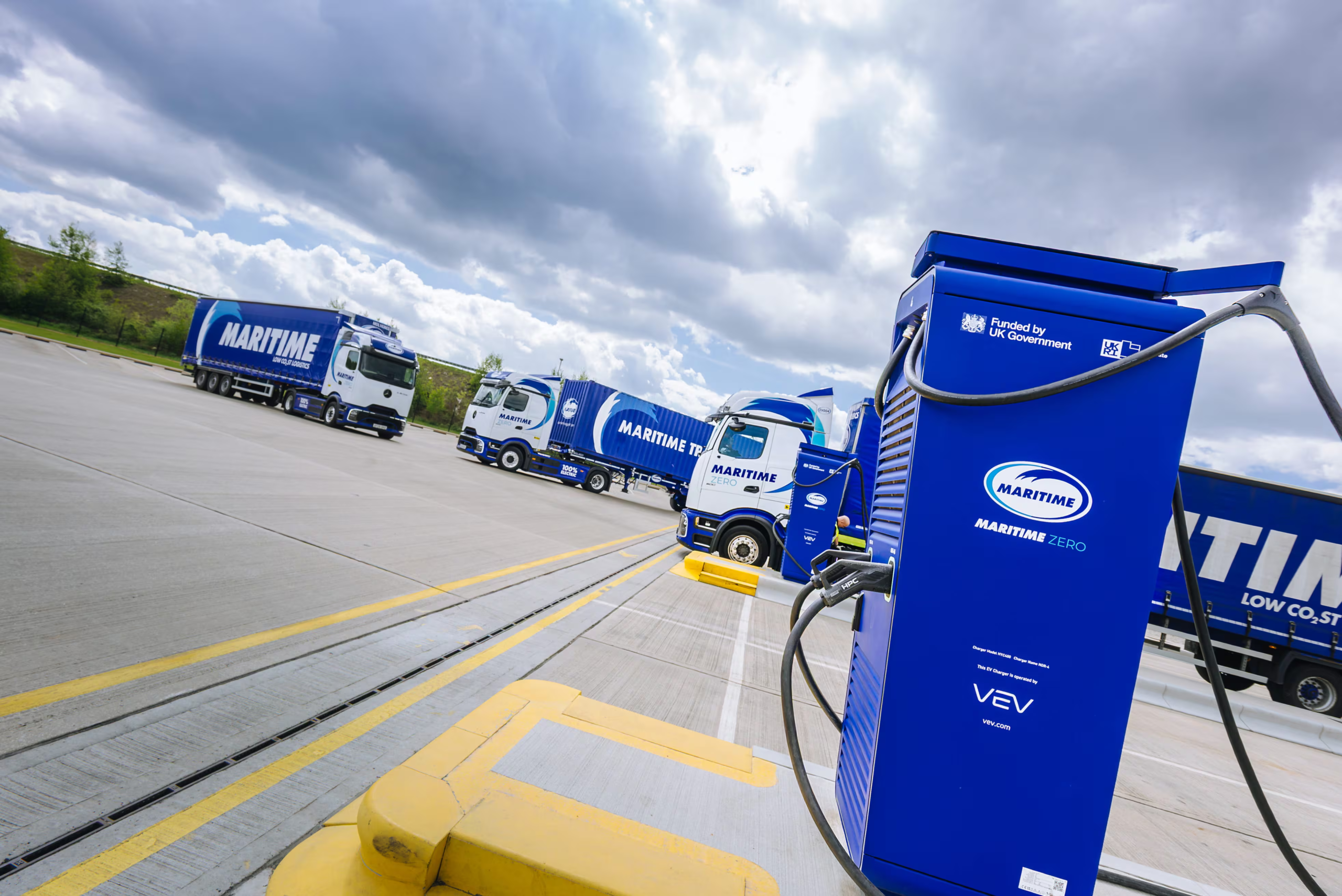
- Maritime Transport has introduced an electric HGV into CCEP’s UK logistics network.
- The Mercedes-Benz eActros 600 is operating from CCEP’s Wakefield soft drinks plant.
- The trial is testing battery-electric freight under live beverage distribution conditions.
Coca-Cola Europacific Partners has introduced an electric heavy goods vehicle into its British logistics network as part of a live freight trial with Maritime Transport.
The Mercedes-Benz eActros 600 is operating from CCEP’s Wakefield site, the company’s largest soft drinks plant in Europe by volume. The vehicle is being used for multi-drop deliveries to convenience and wholesale customers.
Since entering service in January, the eHGV has travelled more than 7,000 miles and saved an estimated 12.43 tonnes of CO₂e compared with a diesel equivalent. The trial is assessing how electric trucks perform under beverage payload conditions, where vehicle weight, range, route density, and charging access all affect daily operations.
Wakefield is a major production and logistics hub for CCEP, supplying retailers, wholesalers, and convenience networks that depend on regular replenishment and tight delivery windows. Replacing diesel vehicles in that environment requires changes across route planning, driver scheduling, depot charging, and load optimisation.
Maritime Transport plans to roll out 56 electric HGVs across its network, with part of the expansion supported through the government-backed Zero Emission HGV and Infrastructure Demonstrator programme. The vehicle deployed with CCEP sits within Maritime ZERO, the company’s zero-emission road transport division.
Electric HGV adoption remains more difficult than the shift to electric vans in last-mile delivery. Soft drinks are heavy, routes can involve multiple drops, and production sites work around dispatch windows that leave limited space for charging delays. Depot infrastructure and public charging provision also remain uneven outside major logistics corridors.
The Wakefield deployment puts the technology into commercial use rather than a controlled demonstration. It brings together a high-volume beverage plant, a national logistics provider, and a live multi-drop delivery pattern. The trial will show how well battery-electric trucks can handle the weight, schedule discipline, and route complexity of drinks distribution.
Freight remains one of the more difficult areas of food and beverage decarbonisation. Packaging, refrigeration, ingredients, and manufacturing energy all contribute to emissions, but road transport is highly visible and still heavily dependent on diesel across much of the sector.
Battery-electric trucks are likely to move first on routes where payloads, charging, and scheduling can be controlled from depot-based networks. Beverage distribution has predictable flows from large plants, but it also exposes the technology to weight and range pressures that light logistics trials do not fully test.
CCEP’s trial will therefore be judged on operational consistency as much as emissions savings. If electric HGVs can deliver reliably from Wakefield under normal distribution conditions, similar models could become more practical for other UK food and drink manufacturers running structured depot-to-customer networks.