IN Brief:
- Cirkla will invest more than $5 million in a Gainesville, Georgia, moulded-fibre packaging facility.
- The plant will include precision automation, in-house quality laboratories, and finishing capability for MAP and overwrap trays.
- The US operation brings production closer to meat and poultry customers after commercial manufacturing at scale in India.
Cirkla will invest more than $5 million in a moulded-fibre food packaging plant in Gainesville, Georgia, bringing production of its meat and protein trays closer to customers in one of the US food industry’s major processing regions.
The facility will be established at Gainesville 85 Business Center and is expected to create around 140 jobs in Hall County over three years. It will manufacture Cirkla’s wider moulded-fibre portfolio, including modified-atmosphere packaging and overwrap trays, using precision automation, in-house quality laboratories, and expanded finishing capability.
The decision follows commercial manufacturing in India, where Cirkla says its fibre tray technology is already being produced at scale for demanding protein applications. The Georgia operation gives the company a domestic base from which to supply US processors as it tries to move moulded fibre further into applications traditionally dominated by rigid plastics and foam.
That is a more demanding task in fresh meat than in many foodservice applications. A tray carrying beef, pork, poultry, or seafood has to remain dimensionally stable through denesting, loading, sealing, chilling, transport, merchandising, and consumer handling while coping with moisture and protein exudate.
Fresh protein raises the barrier requirement
Modified-atmosphere packaging adds another layer of difficulty because the pack has to maintain a controlled internal gas mixture for its validated shelf life. Tray rigidity, flange geometry, barrier performance, liner adhesion, and compatibility with lidding film all have to remain within tolerance if seals are to perform consistently on a high-speed production line.
Cirkla is positioning its high-barrier fibre trays as drop-in replacements for existing rigid plastic formats rather than packaging that requires processors to replace their sealing equipment. The company says its meat and protein formats are being supplied commercially and are designed to run on established packing systems.
That compatibility is central to the economics. Meat processors already have substantial capital tied up in tray denesters, conveyors, sealers, weighing systems, inspection equipment, labellers, and end-of-line automation. A packaging substrate that requires significant reconfiguration introduces both capital cost and production risk, even if its environmental performance is attractive on paper.
The material itself uses plant fibres including sugarcane bagasse, bamboo, and wood pulp, combined with barrier technology appropriate to the application. Cirkla says its current fibre packaging can reduce the amount of plastic used by weight compared with conventional rigid trays, while maintaining the physical performance required for commercial food packing.
The manufacturing challenge lies in reproducing that performance at high volume. Moulded-fibre production involves pulp preparation, forming, pressing, moisture removal, trimming, and, where required, liner or coating processes. Variation at any stage can affect tray dimensions, surface condition, stiffness, seal performance, or stackability.
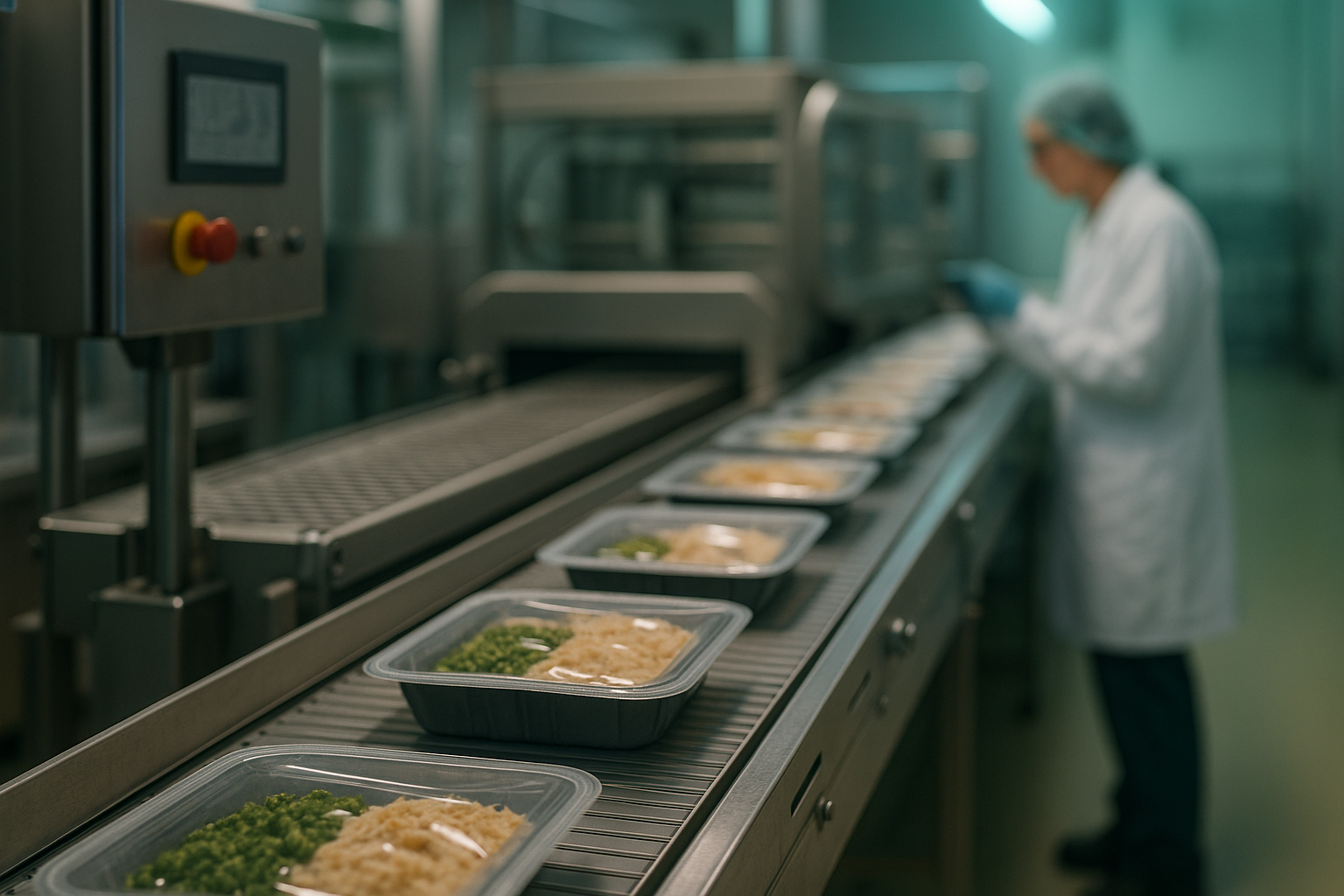
Precision automation and in-house quality laboratories therefore matter as much as headline capacity. Automated food-packing lines operate within narrow dimensional tolerances, and a tray that varies excessively from one production run to the next can create poor denesting, damaged flanges, seal failures, or line stoppages.
Cirkla’s domestic plant will also shorten the physical supply chain for US customers. Imported finished packaging occupies significant volume relative to its value, meaning freight, warehousing, lead times, and inventory requirements can become material costs. Producing closer to customers can reduce some of that burden and allow engineering teams to respond more quickly during qualification and format changes.
Gainesville offers a particularly relevant industrial base. Hall County has a high concentration of poultry and food manufacturers, placing the new operation close to potential users of fresh-protein trays rather than locating it solely around a general packaging cluster. The recently developed Gainesville Inland Port also adds freight connectivity for incoming material and finished packaging.
Qualification will remain customer-specific. A tray that performs successfully with one sealing film, line speed, product weight, and shelf-life requirement cannot automatically be assumed to perform identically elsewhere. Processors will still need to test machinability, seal integrity, product life, storage behaviour, leak resistance, and compatibility with their existing quality-control procedures.
Those trials are where many alternative packaging concepts become difficult. Sustainability performance can create commercial interest, but an industrial food pack is ultimately judged by reject rate, uptime, food safety, shelf life, cost, and customer complaints. A material that increases line stoppages or shortens product life can generate more waste elsewhere in the system than it removes from the tray itself.
Cirkla’s advantage is that it is entering the Georgia project with existing commercial production rather than attempting to move directly from a laboratory prototype into a large factory. Its US website describes the trays as already shipping to protein producers and retailers, with qualification support available for processors assessing a switch from plastic.
The new facility therefore represents a manufacturing scale-up as much as a sustainability project. Cirkla now has to reproduce the performance of its existing supply base while installing and stabilising new equipment, training operators, validating quality systems, and increasing output for a market where packaging performance is closely tied to food shelf life and factory productivity.
If the Gainesville operation delivers that consistency, moulded fibre will have a stronger case in one of the packaging applications where plastic has historically been hardest to displace. The relevant measure will not be how convincing the tray looks in isolation, but how reliably millions of them move through commercial protein-packing lines.