IN Brief:
- Dennis Group is positioning packaging as an integrated part of food factory and warehouse design.
- Its service covers primary and secondary packaging, pallet handling, automation, utilities, modelling, and start up.
- Digital simulation tests accumulation, failure recovery, line balance, control logic, and changeover effects before installation.
Dennis Group is connecting packaging, warehousing, automation, utilities, and building design within an integrated engineering service for food and beverage manufacturers.
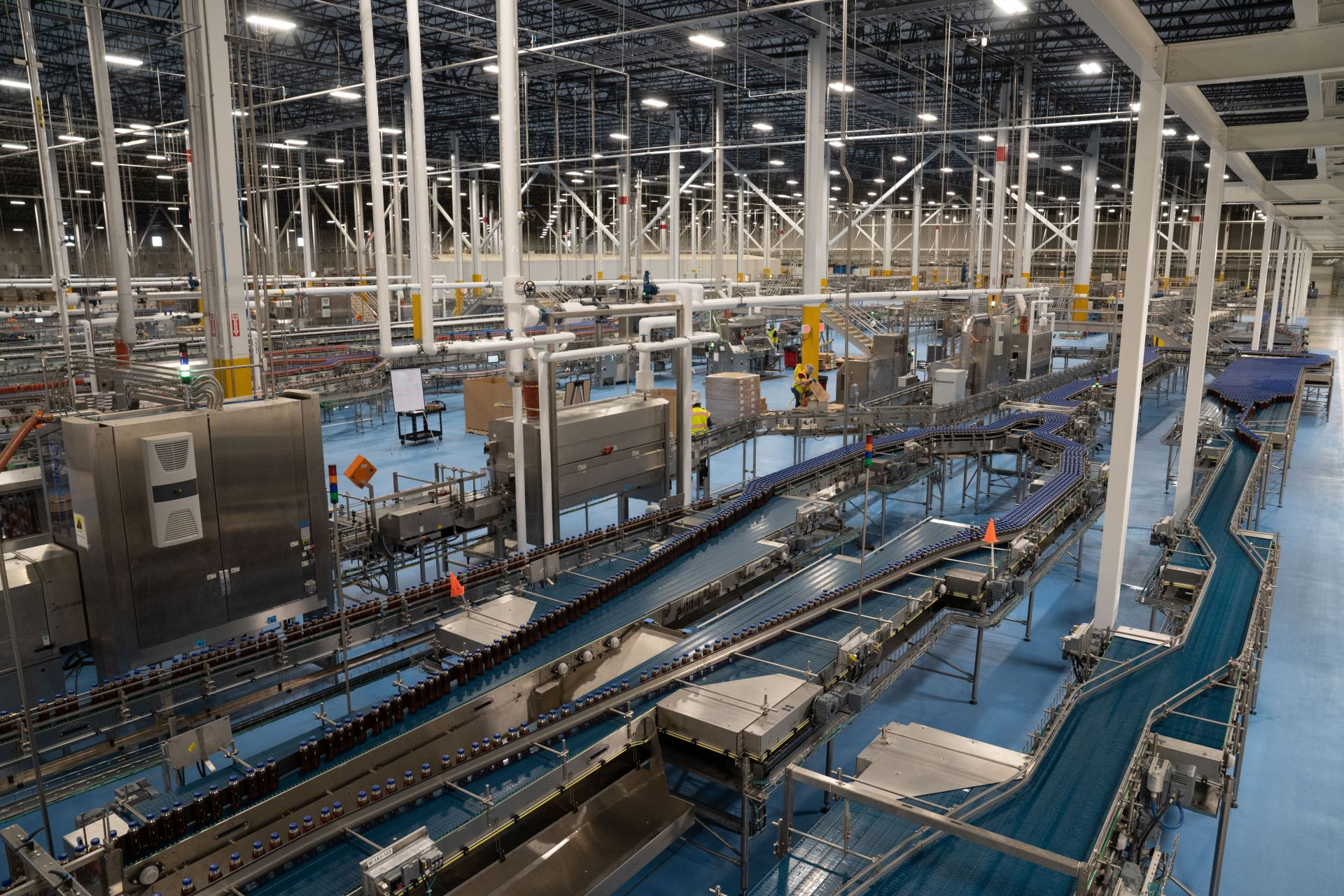
The approach brings primary packaging, secondary packing, pallet handling, conveyors, storage, and dispatch into capital project planning before major layout and construction decisions are fixed. Packaging capacity can then shape the building and warehouse rather than being fitted into space left after process equipment is selected.
Dennis Group’s scope covers products including solids, liquids, powders, semi solids, chilled foods, frozen foods, bakery, beverages, dairy, meat, confectionery, snacks, sauces, and ingredients. Its packaging work extends from conceptual design and capacity studies through installation, controls, commissioning, and start up.
Technical services include primary and secondary packaging, pallet and unit handling, automated storage, warehouse sizing, machine retrofits, electrical design, safety upgrades, production schedule analysis, and packaging process automation.
Food factory projects frequently treat fillers, wrappers, cartoners, or case packers as individual equipment purchases. That can leave incompatible line speeds, insufficient accumulation, restricted maintenance access, weak utility provision, or warehouse capacity that cannot accept the planned output.
Earlier integration allows product flow, equipment footprints, conveyor routes, pallet patterns, operator access, and materials movement to influence the site plan. Problems identified during design are generally less disruptive than changes made after floors, drains, walls, and utilities are complete.
Modelling tests the whole line
Dennis Group uses two dimensional and three dimensional models, physics based simulation, emulation, and digital twin tools to assess performance before equipment enters production. Layouts, buffers, control strategies, failures, and recovery sequences can be evaluated within a virtual representation of the system.
A packaging line rarely stops only at the machine where a fault begins. A short interruption at a labeller or case packer can block upstream equipment, while inconsistent product supply can leave fillers or wrappers starved.
Accumulation provides time for equipment to recover without stopping the full process, but excessive buffering consumes floor space, increases product handling, and may create additional cleaning or traceability requirements. Simulation helps determine how much capacity is justified and where it should sit.
Production schedule analysis adds the effects of recipes, formats, labels, allergens, sanitation, and customer campaigns. A line that performs well during continuous operation may deliver much less weekly output once routine changes and cleaning are included.
Emulation can test programmable logic controller and supervisory software against a virtual process before live commissioning. Alarms, interlocks, recipes, restart logic, and fault handling can be examined while physical installation continues.
Connected machinery is becoming more prominent within supplier portfolios, with MULTIVAC linking processing, packing, inspection, and software across complete lines. Plant design still decides whether those connected machines receive the utilities, space, products, and downstream capacity required to work effectively.
Packaging shapes the wider factory
Case rates and pallet patterns influence rack design, warehouse area, forklift activity, automated storage, dock scheduling, and vehicle utilisation. A change to pack size can alter pallet quantity and storage demand even where the product recipe and processing rate remain unchanged.
Utilities must also be planned around the full line. Electricity, compressed air, vacuum, steam, chilled water, extraction, drainage, and data connections may all be required, while future automation can increase both power and network demands.
Packaging regulation and material changes add further mechanical uncertainty. Lighter packs, recyclable structures, paper based formats, tethered closures, and greater recycled content can behave differently during forming, denesting, filling, sealing, coding, inspection, and case packing.
Trials remain necessary because a material that performs in laboratory testing may crease, stretch, slip, tear, or seal differently at production speed. Integrated design allows those changes to be considered alongside machine settings, handling systems, storage, and quality controls.
Most manufacturers will modernise existing plants rather than build entirely new operations. New equipment therefore has to connect with older controls, conveyors, utilities, warehouses, and structural limits, making retrofit planning central to the project.
Phased installation can preserve useful assets and spread capital expenditure, although temporary interfaces and construction around live production require detailed sequencing. Safety access, guarding, hygiene separation, and maintenance routes cannot be treated as additions once the machinery is in place.
Packaging performance is ultimately determined by more than the fastest machine on the line. Product supply, controls, buffers, people, materials, utilities, pallet movement, and warehouse removal must sustain the same operating rate.
By moving those decisions into early factory design and testing them through simulation, Dennis Group is seeking to reduce late construction changes and shorten the path to stable output. The effectiveness of the approach will appear in start up performance, changeover control, usable capacity, and the ability to accommodate future formats without rebuilding the surrounding plant.