IN Brief:
- GEA's ProCoater applies wet coatings to poultry, fish, cheese, pork and plant-based products.
- A patent-pending return flow design is claimed to reduce air entrainment and foaming by up to 80%.
- The machine is offered in 400mm, 600mm and 1,000mm belt widths; customer results were not disclosed.
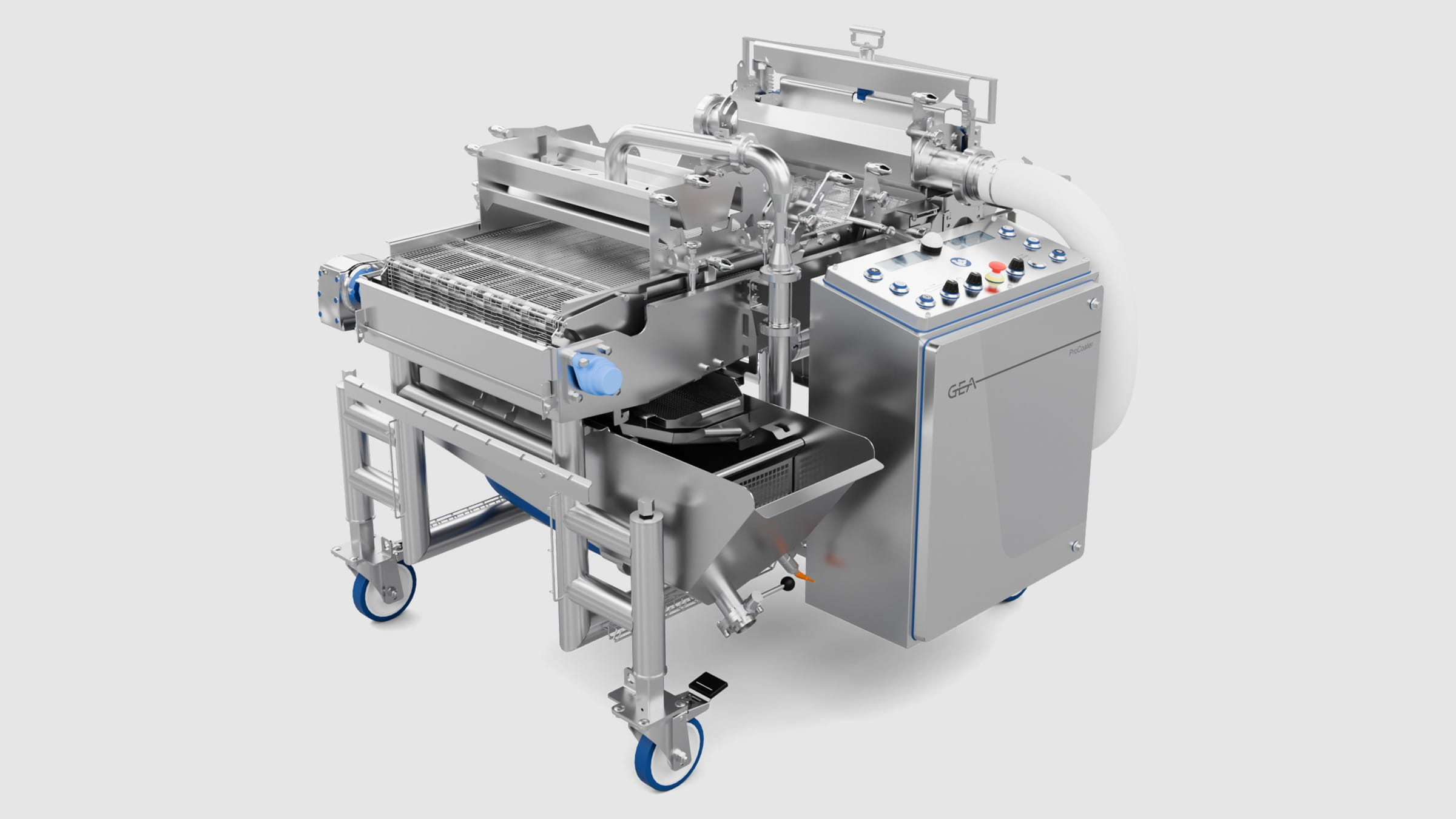
GEA has introduced a wet coating machine designed to provide tighter control of batter application on industrial food production lines, with particular emphasis on reducing foam formation and maintaining a consistent layer around products. The ProCoater is intended for manufacturers of coated poultry, pork, fish, cheese and plant-based foods.
The equipment, announced on 19 October, combines a guided batter return flow system with adjustable scrapers, air knives and a batter retention arrangement designed to keep coating conditions more stable. GEA says its patent-pending guided return flow technology can reduce air entrainment and foam formation by up to 80%. The reported reduction is GEA’s own performance claim; independent trial results and the complete test conditions have not been supplied.
Foam can affect how batter is presented to a product and how uniformly a coating is applied. In a factory handling products at speed, variation in coating can create differences in surface appearance and the amount of ingredient retained. GEA’s design focuses on controlling these variables at the application stage, which can influence what happens during subsequent cooking and inspection processes.
The machine uses adjustable scrapers to allow operators to fine-tune coating performance while production continues. The supplier says this can reduce the need to stop a line for certain routine corrections. Air knives provide a controlled flow of air across the belt width to manage excess batter and support more consistent coating weight. An optimised infeed transfer is designed to support smoother handling as products enter the machine.
GEA has incorporated a batter retention plate and offers an optional device to supply a lower batter layer. Those features are intended to improve coverage of the underside of products and help prevent items from floating or drifting during coating. The importance of bottom coverage varies with product characteristics and the formulation used, so the flexibility may be relevant to manufacturers handling several recipes or shapes on a shared line.
The ProCoater is available in belt widths of 400, 600 and 1,000mm. Providing different sizes can help plants match equipment to existing conveyor layouts and planned throughput, although the company has not published a single maximum production rate that applies to every product and batter combination. Line performance will necessarily depend on the broader processing arrangement and the product being handled.
GEA said more stable batter application should help manufacturers limit defects, rework and giveaway while improving yield and line cleanliness. These are stated potential benefits based on the machine’s design, not measured savings reported by a named customer. The launch was not accompanied by a named installation, independent case study or quantified return on investment.
Ben Kop, an application specialist at GEA, said the development had concentrated on control at a quality-critical stage of coated food production. In addition to the machine itself, the company is offering access to its food technology specialists and technology centres for product testing, recipe development and process validation. Such facilities can help processors assess how a particular coating behaves before transferring it to a production line.
Recipe behaviour matters because different batters have distinct flow characteristics. A system designed to accommodate variation can be useful where manufacturers change flavours, formulations or product formats, but selecting the appropriate machine requires testing the actual materials and target product specification. GEA has not identified the individual recipes used to generate its headline foaming figure.
GEA is also offering access to its technology centres for validation of coating recipes and processing conditions, allowing customers to test materials before considering wider production adoption. Its results will still depend on actual batter formulations and processing conditions at individual factories; the technical support offering does not independently validate the published headline performance figure.
The machine’s value will also depend on how it fits into the broader sequence of a coating line. Processors may use several coating and cooking stages, and the quality of the wet layer can influence downstream performance. Nevertheless, GEA’s material does not demonstrate that the ProCoater alone changes the throughput of a complete installation. Any reported line-wide gain would need to account for constraints elsewhere in production.
Cleaning and product changeovers are additional considerations for manufacturers assessing new machinery. Different recipes and food categories can require careful management of residues and cross-contact risks. Although GEA identifies line cleanliness as a benefit, it has not published quantified cleaning-time reductions or specific hygiene validation results. Buyers will need to test those issues against their own products and operating procedures.