IN Brief:
- All General Mills cereals manufactured for the US market are now made without FDA-certified synthetic colours.
- Completion of the cereal programme means around 90% of the company's US retail portfolio has made the transition.
- General Mills plans to remove certified colours from remaining US retail products, including fruit snacks and baking lines, by the end of 2027.
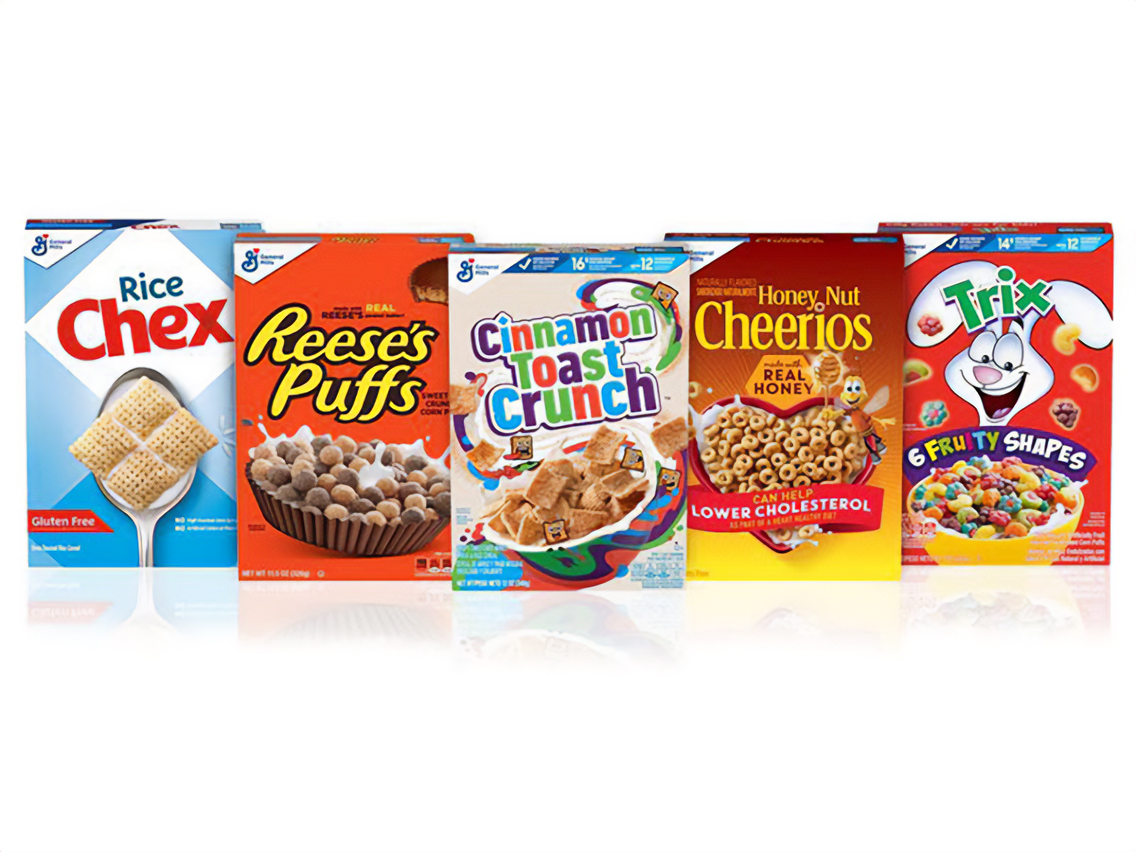
General Mills has completed the removal of certified synthetic colours from cereals manufactured for the US market, bringing major brands including Lucky Charms and Trix through a reformulation programme announced last year.
The company says all of its US cereals are now made without certified colours, completing the cereal phase of the programme against its summer 2026 target. Around 90% of the wider General Mills US retail portfolio has now made the same transition.
The remaining work covers categories including fruit snacks and baking products, which are scheduled to move away from certified colours by the end of 2027. General Mills completed the equivalent change across its K-12 school-food portfolio earlier this year.
Removing a colour additive is mechanically straightforward on a formulation sheet but considerably less so across an established manufacturing network. Synthetic colours are widely used because they can provide repeatable appearance at low inclusion rates across different production conditions, making replacement a problem of consistency as well as ingredient sourcing.
General Mills has moved towards colour sources derived from fruits, vegetables, and spices including turmeric and paprika. Those materials can behave differently under heat, moisture, oxygen, light, and storage, so the final formulation has to be designed around the entire manufacturing and shelf-life process rather than simply matching a colour in a laboratory sample.
The complexity varies between products. A lightly coloured cereal may require relatively minor adjustment, while brands built around multiple bright colours make appearance a much more prominent part of the finished specification.
Trix is particularly relevant because General Mills has been through the process before. The company removed artificial colours from the US product more than a decade ago but subsequently restored them after consumer reaction to the reformulated cereal. The current programme therefore takes place with first-hand experience of how quickly a technically successful change can become a commercial problem if the finished appearance moves too far from what buyers expect.
The latest transition is broader than that earlier brand exercise. General Mills announced its current US programme in June 2025 and has been working category by category, first completing school foods and now cereals before moving through the remaining retail lines.
Bethany Quam, president of Big G Cereal at General Mills, said: “This achievement reflects how we are evolving with consumer needs while continuing to offer food that tastes great, delivers quality and provides value.”
Delivering those requirements simultaneously is the more difficult part of reformulation. Alternative colour systems have to survive mixing, cooking or extrusion, drying, coating, packaging, transport, and storage while remaining sufficiently stable for industrial production tolerances.
Large-scale ingredient changes also create procurement consequences. Moving away from a standardised synthetic additive can introduce additional botanical raw materials with different agricultural supply chains, specifications, lead times, and natural variation.
Suppliers have to provide those ingredients at volumes appropriate for national brands, while General Mills has to maintain colour consistency between factories and production runs. Reformulation therefore becomes a quality and supply-chain programme alongside the development work carried out by food scientists.
Manufacturing validation adds another layer. Revised recipes have to run through existing equipment without introducing unacceptable changes to mixing behaviour, moisture, deposition, extrusion, coating, drying, or cleaning. A colour system that works technically but forces lower line speeds or more frequent sanitation can produce costs elsewhere in the factory.
Packaging information also has to change as ingredients are reformulated, creating a controlled transition between old and new specifications. Plants and distribution systems need to prevent obsolete packaging or ingredients from being mixed into later production once the revised recipe formally takes effect.
The company has not described the programme as a response to a food-safety recall. FDA-certified colours remain regulated additives in the US, although scrutiny from federal authorities, individual states, retailers, and consumers has increased, and manufacturers have made a growing number of voluntary commitments to remove petroleum-derived dyes.
The US Food and Drug Administration now maintains a public tracker of industry commitments. General Mills’ programme covers cereals and school products, which are complete, followed by the remainder of its US retail portfolio by the end of 2027.
Retail policy is adding another commercial incentive. Where major customers set tighter requirements around colours than federal regulation, manufacturers face the choice of maintaining different recipes by channel or changing the wider portfolio. Standardising around one formulation can simplify production and inventory if the alternative ingredient system performs adequately.
General Mills reported approximately $18 billion in fiscal 2026 net sales, so its ingredient decisions carry substantial purchasing weight. Moving national cereal brands away from certified colours creates additional demand for alternative colour systems and places those ingredients under the same volume, consistency, and cost pressures as other mainstream food-manufacturing inputs.
The remaining 10% of the US retail portfolio may not be easier. Fruit snacks and baking products present different process conditions and visual expectations from cereals, while brightly coloured confectionery-style formats can be particularly dependent on stable, high-intensity shades.
The cereal milestone demonstrates that General Mills has moved some of its most recognisable products through the change without abandoning the timetable. The next manufacturing test is whether the same approach can be repeated across categories whose recipes, processing conditions, and colour requirements are considerably less uniform.