IN Brief:
- Evergreen by Novolex announced an 18–21 October PACK EXPO demonstration on 8 October.
- The new filling machine is rated at 50 SmartPour dry ingredient cartons per minute.
- EverIQ is an early preview; predictive maintenance and AI-assisted functions are planned, not proven deployments.
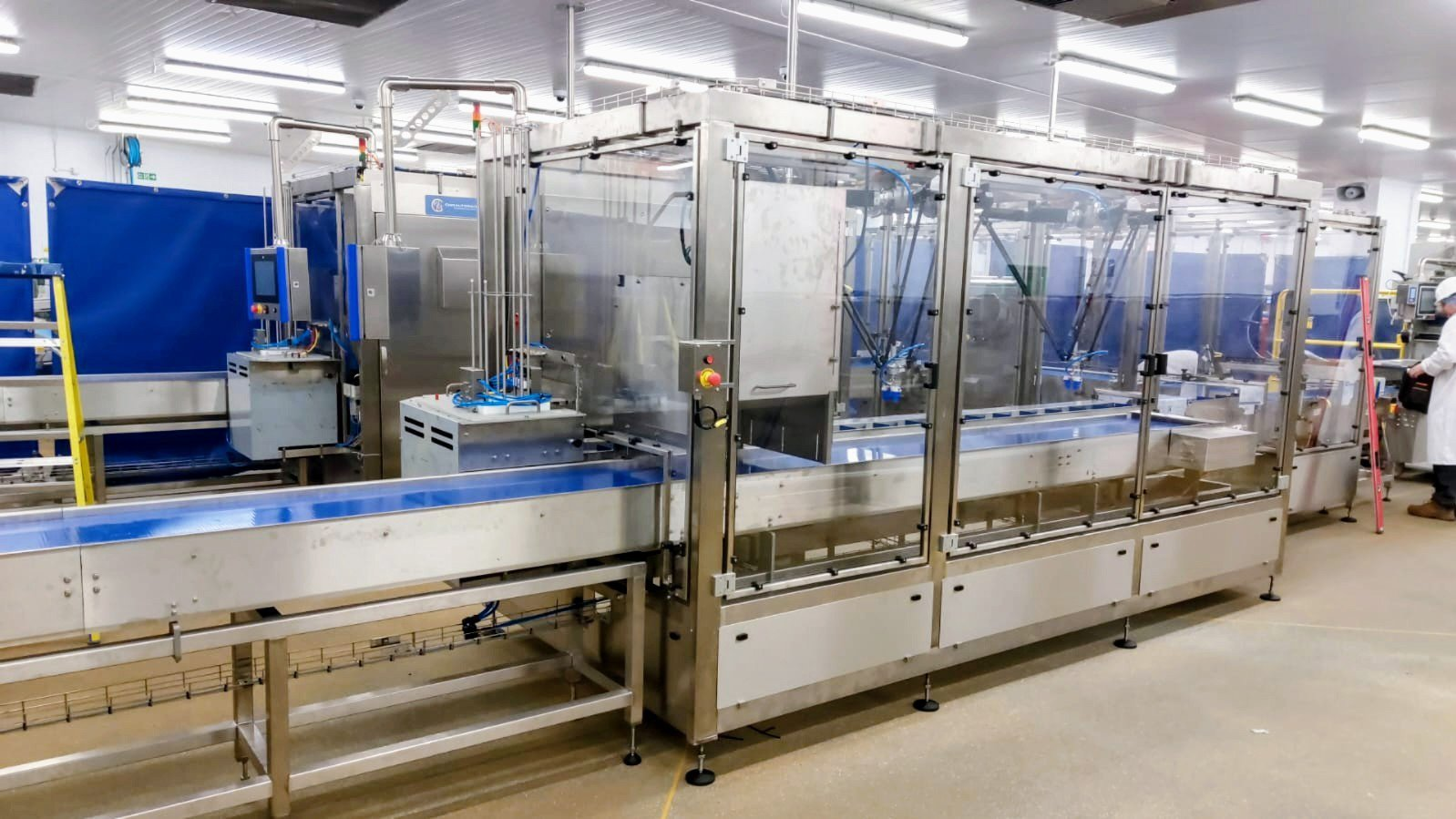
Evergreen by Novolex will demonstrate its new SmartPour dry filling machine at PACK EXPO International in Chicago, positioning the equipment alongside the company’s existing resealable carton concept for dry ingredients.
The 8 October announcement sets out plans for a demonstration on 18–21 October 2026, rather than reporting that the machine has already been installed at a customer factory. The stated operating rate is 50 cartons per minute.
The SmartPour carton concept and an associated filling capability had been documented before October. The current milestone is the planned public demonstration of the machine and a preview of an additional digital platform, not the first-ever disclosure of the entire packaging system.
Novolex says the equipment has been designed to work with its SmartPour carton and to provide repeatable filling for suitable dry, pourable products. Its stated output should be treated as a manufacturer design rating.
Possible contents include cereals, snacks, crackers, baking ingredients, powders and pet food. These applications create different requirements because dry materials do not all behave in the same way during storage and movement.
Particle size, bulk density, moisture content and the tendency to clump can alter flow through a filling system. A machine that handles one product smoothly may require adjustments when the formulation or physical properties change.
Accurate filling requires control over the product delivered to each package. Underfilling may breach quantity requirements, whereas systematic overfilling consumes additional ingredient and can affect pack closure.
Food factories therefore evaluate filling equipment using application-specific products, expected packaging weights and the complete range of operating conditions, rather than relying solely on the headline cycles-per-minute figure.
Novolex has not published a comprehensive specification for dose accuracy, allowable bulk density, filling method or achieved reject rates. None can be inferred from its description of the new equipment.
The announced 50-carton-per-minute rating also does not represent an independently verified average across a production week. Stops for replenishment, cleaning, adjustments and maintenance will influence sustained output.
The package and filler have been developed as related components. That approach can be important because pack geometry, closure position and the way a carton is presented to the machine affect the filling process.
SmartPour is designed to replace the conventional bag-in-box arrangement used for some dry products. The carton incorporates a resealable pouring feature, according to the manufacturer.
Removing a separate inner bag can change the materials and processes involved in packaging. Whether it reduces environmental impacts depends on the full specification and the conventional pack used for comparison.
A package must still protect its contents from relevant hazards during storage, distribution and consumer use. Resistance to moisture entry and the integrity of the closing system may be important for many dry products.
The supplier identifies barrier technology as part of its product design. It has not supplied a single quantified shelf-life improvement applicable to the entire range of possible contents.
Packaging material supply, carton forming and downstream handling must be coordinated with the filler. A nominally fast dosing operation cannot increase the output of the whole line when other equipment limits throughput.
For a manufacturer moving to an unfamiliar carton, trials should examine how the empty packages feed, how reliably they remain open during filling and whether the completed pack withstands transport.
Those tests may also identify interactions between the product and the closure, particularly where powders or fine particles accumulate around sealing and dispensing surfaces.
The announcement also previews EverIQ, a proposed digital environment for connecting data from cartons, filling equipment and operating activities. This is separate from the demonstrated mechanical filling function.
Novolex lists planned functions that include predictive maintenance, AI-assisted troubleshooting, quality monitoring and continuous-improvement insights. They are described as intended capabilities, not results from an independently measured deployment.
This qualification is material because a platform preview does not establish that a factory has obtained lower scrap or less downtime. Those outcomes would require operating data from a real installation.
Connecting equipment data with production information can help a manufacturer understand changes in output or machine condition when interfaces and information quality are adequate.
However, data from individual controls, maintenance systems and production records may use different formats. Combining them requires appropriate integration and a clear definition of what each reported measure means.
Predictive analysis also depends on the quality and amount of available information. A planned monitoring function cannot substitute for verified maintenance records and an established operating baseline.
Novolex says it will show the SmartPour machine at booth N-5130. Other equipment at the exhibition will include its N-200 school-milk carton filler, but that is separate from the new dry filling demonstration.
The choice of a purpose-built machine and pack gives manufacturers a defined system to evaluate. It does not remove the need for tests with real products and the intended line configuration.
No customer order, factory commissioning date or audited operating-cost saving is confirmed in the 8 October announcement. Any claim of commercial performance beyond the manufacturer’s rating would require separate evidence.
The technical questions after the exhibition will concern filling consistency, uptime, product changeovers, material performance and compatibility with downstream processes. These are the measures that will determine industrial suitability.
The verified current development remains a forthcoming machine demonstration and early digital-platform preview, with broader commercial adoption still to be established.