IN Brief:
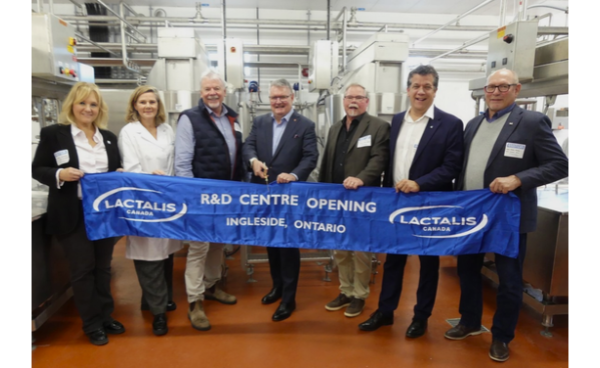
- Lactalis Canada inaugurated its new R&D centre in Ingleside, Ontario, on 20 October.
- The facility is adjacent to an existing cheese processing plant and contains pilot-scale and specialist testing capability.
- Lactalis expects the operation to become a global expertise centre for cheddar; no stand-alone project cost was supplied.
Lactalis Canada has opened a research and development centre next to its cheese processing operation in Ingleside, Ontario, adding pilot-scale production and specialist testing facilities intended to support new cheese products and manufacturing processes. The dairy group expects the centre to develop into an international focus for its cheddar expertise.
The site was inaugurated on 20 October, with details released the following day. Lactalis said the facility would serve its North American research activities and allow development work to take place close to an existing industrial production operation. Its technical spaces are designed for testing, evaluation and process refinement, although the company did not specify the pilot equipment models, installed capacity or capital expenditure associated with the building.
The location matters because scale-up is a recurring challenge in dairy processing. A formulation or processing change that behaves consistently in a laboratory may require additional validation before introduction to a factory line handling larger volumes. Pilot-scale equipment provides a controlled environment in which teams can investigate how proposed methods perform before decisions are made about equipment settings or production procedures.
Lactalis said the centre would help its staff develop and refine products and technologies and shorten the route between concept and commercial manufacturing. Sandra Senez, the group’s vice president of research and development in North America, identified the proximity to industrial cheese production as a central advantage. She said the facility was expected to support the wider Lactalis network, particularly in cheddar.
The company identifies a proposed organisational role rather than a formal designation already achieved. Describing Ingleside as an established global cheddar centre would therefore go beyond the company’s stated position. Similarly, while the new facility is physically connected to an existing manufacturing location, while Lactalis has not reported an increase in the cheese plant’s production capacity or additional finished-product output.
Research centres serving dairy factories may need to evaluate the interaction of ingredients, processing conditions, product characteristics and packaging requirements. In cheese development, repeatable process trials and assessment of product performance help determine whether a new approach is suitable for larger-scale production. Lactalis has confirmed the presence of specialised testing and evaluation spaces, but has not detailed individual research programmes or published results from the new equipment.
The company has a sizeable established Canadian business. Its portfolio includes the Cracker Barrel, Black Diamond, Balderson, Astro and Lactantia brands, and its operations span manufacturing and distribution as well as product innovation. Chief executive Mark Taylor said the business had completed four strategic acquisitions since 2018 and invested more than $900 million in Canadian manufacturing, distribution and transformation initiatives over that period.
That investment figure is historical and group-wide. It must not be used as the cost of the new Ingleside centre. Lactalis did not provide a separate investment amount for the site or quantify the number of new research positions created. The decision establishes the centre’s opening and intended technical role, without providing a basis for additional employment or productivity claims.
The centre also gives Lactalis an opportunity to coordinate specialists who understand the practical requirements of a running cheese factory with colleagues developing new products. Any benefits to waste, efficiency, consistency or time to market will depend on subsequent programmes and their implementation. No numerical performance improvement has yet been attributed to the facility.
For Canada’s dairy manufacturing sector, the opening represents an addition to the industrial development infrastructure available within a major established producer. The next useful evidence will be the technologies and products trialled at Ingleside and whether any are subsequently adopted across Lactalis factories, including those outside North America.
Product development in an established industrial setting also allows research teams to take account of practical manufacturing constraints at an earlier stage. Pilot trials can inform decisions about how products are processed, tested and scaled, but any results must still be evaluated against the operating conditions of the eventual commercial factory. Lactalis has not said that the new building replaces existing research locations or that trials conducted there can automatically be transferred without further validation.
The company’s chosen focus on cheddar suggests that production expertise developed in one Canadian location could be relevant to a much wider range of operations. That is the intended direction of the investment rather than a completed global reorganisation. Details of participating plants, future testing programmes and methods for transferring technical knowledge have yet to be disclosed.