IN Brief:
- Linx has introduced the IJ470 large-character inkjet printer after previewing the technology at interpack 2026.
- The machine marks porous and semi-porous secondary packaging, with a maximum 70mm print height per head and an integrated GS1 code creation function.
- Direct coding can replace some labels and preprinted cartons, subject to substrate performance, message verification and line integration.
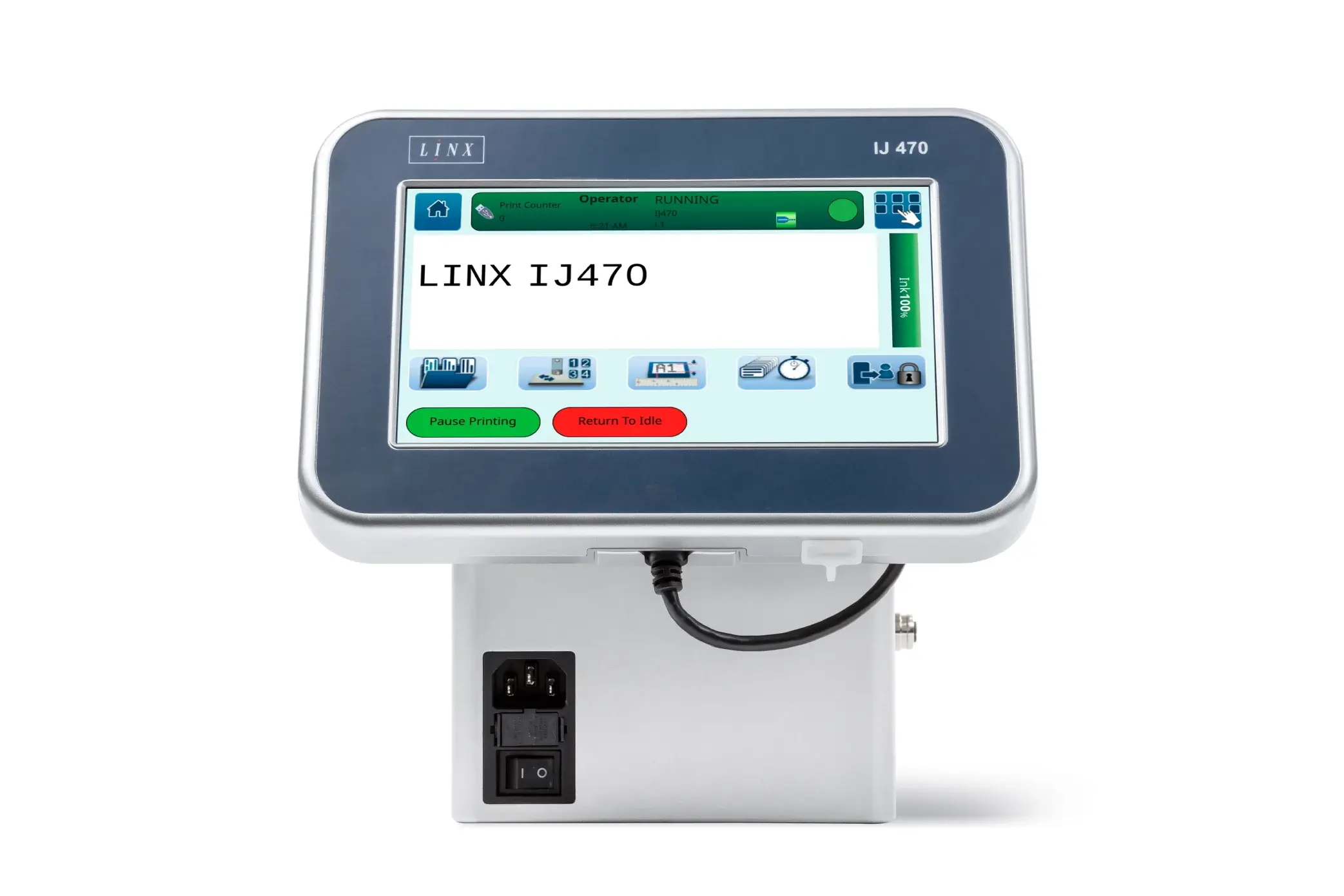
Linx Printing Technologies has launched the IJ470 large-character inkjet printer for applying variable information directly to corrugated outer cases. The secondary-packaging machine prints onto porous and semi-porous substrates and is intended to give packing lines an alternative to preprinted cartons or applied case labels. Linx previewed the equipment at interpack 2026 and incorporated customer feedback before the commercial launch reported on 2 November.
The IJ470 has a specified print area of up to 70mm in height and 2,000mm in length, with a resolution of 180 dots per inch and a character-height range of 1.4–70mm. That range allows a packing line to produce small identification marks and larger case information from the same equipment platform. Actual code legibility will still depend on the cardboard surface, contrast, symbol size, printhead positioning and the speed of the moving case.
The printer incorporates Linx’s ReFRESH cleaning system, which removes deposits from print nozzles and recycles ink for reuse. Inkjet marking depends on the repeatability of droplet formation: blocked or contaminated nozzles can produce missing strokes, broken bars or incomplete two-dimensional symbols. Automated cleaning is intended to reduce manual attention to that failure mode. Linx gives no independently measured food-factory figures for associated reductions in downtime, rejects or ink consumption.
The printer uses oil-based inks that do not require a warm-up period before printing. Linx lists a black mineral oil-based formulation and black and red mineral oil-free alternatives, with ink selection dependent on the case material and application. The body is constructed using stainless steel and anodised aluminium, and the supplier specifies a touchscreen measuring eight inches. These features support operation in industrial packing areas, but the available specification does not establish a hygienic washdown rating or suitability for direct food contact.
Direct case marking can change the way manufacturers manage variable packaging information. Instead of stocking a different printed carton or label for each batch or product variant, a line can select the relevant message electronically when the packing order changes. Such a change can reduce the number of printed packaging variants held in storage, although a producer would need to compare the carton, label, ink and maintenance costs for its own product mix before choosing a replacement system.
The machine can create GS1 Data Matrix codes at its touchscreen and supports additional formats including QR, GS1-128 and ITF-14. Case codes can carry product and logistics identifiers used by scanners downstream of the packing line. Their value depends on accurate data from the production order and on the ability of a scanner to read the printed symbol after handling. Code creation, message selection and verification must therefore operate as a connected process if records are to follow the correct goods.
Linx specifies the ability to receive message content from external databases and connect to centralised code-management or line-control systems. This allows an approved production order to supply the variable information used by the coder and reduces manual transcription between product changes. Product selection, print triggering and downstream inspection remain separate control points; a mismatch between the carton on the conveyor and the active message can still create a wrongly labelled case even when the characters are clearly printed.
Up to four printers can be controlled through one interface, allowing installations to cover more of a carton surface or print on both sides. That arrangement matters where an outer case must remain identifiable despite its orientation on a conveyor or pallet. Each installation still requires mounting space, access for maintenance, reliable product detection and alignment between the moving case and the printhead. The specification identifies product-detector, encoder and network interfaces, but does not prescribe a single conveyor arrangement.
The IJ470 was adjusted after feedback at its interpack preview, according to contemporary launch reporting. Finished cases encounter rubbing, stacking and changes in temperature or humidity during storage and distribution. Ink adhesion and code contrast therefore need to be qualified on the corrugated board actually used, with checks after representative handling. Linx describes its inks as high adhesion, but does not publish standardised read-rate results for particular board grades or transport conditions.
Food factories frequently switch between flavours, pack sizes and customer specifications while using the same outer-case dimensions. Electronic message selection can help maintain correct batch, product and date information as those schedules change. Plants running very long campaigns with little packaging variation may make a different economic calculation, especially if their existing labels also carry information that the new printer is not configured to reproduce.
The system provides product-detector, encoder and network interfaces for matching a coding job to moving cases on a packing conveyor. The IJ470 now gives manufacturers a configurable secondary-packaging option whose results will depend on substrate testing, data accuracy and the durability of printed codes through handling and dispatch.