IN Brief:
- Mars and ofi plan to work with more than 960 cocoa farmers across more than 9,000 hectares in Ecuador.
- The programme centres on agroforestry, biochar, crop-residue management, and lower-carbon fertiliser use.
- Cocoa sourcing is moving further towards climate resilience, traceability, and supply security alongside cost and quality.
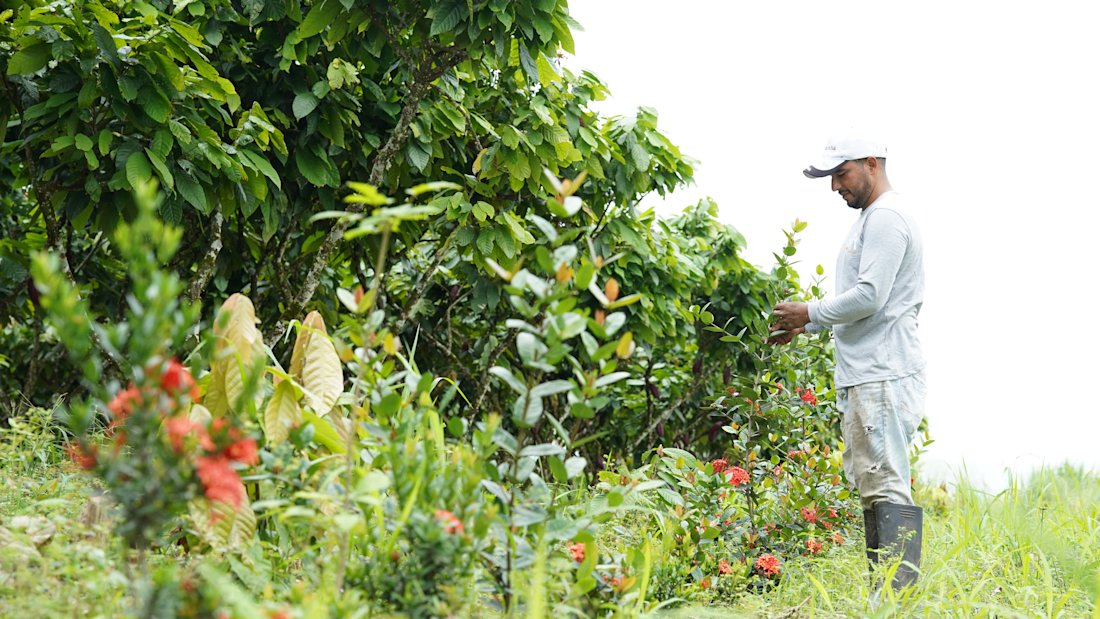
Mars and ofi have launched a new five-year programme in Ecuador aimed at accelerating regenerative cocoa production across their shared supply chain, with a first phase expected to cover more than 960 farmers and more than 9,000 hectares of farmland. The work will focus on agroforestry, biochar, crop-residue management, and lower-carbon fertiliser use, with the aim of reducing carbon intensity while improving productivity and resilience on farm.
The project builds on a much longer relationship between the two companies in sustainable cocoa sourcing, but its framing is more pointed than earlier programmes. Climate exposure, greenhouse-gas accounting, land-use scrutiny, and the practical stability of cocoa supply have all become more pressing in the past two years. That has pushed cocoa sustainability away from a largely reputational discussion and deeper into procurement, cost, and risk management.
The Ecuador programme is designed around a transition from full-sun monoculture to multistrata agroforestry systems. In practical terms, that means combining cocoa cultivation with a more layered planting structure that can improve soil condition, support biodiversity, and buffer crops against climate stress. Biochar and residue management add a second layer, aimed at improving soil health and carbon performance while reducing reliance on more emissions-intensive inputs. Lower-carbon fertiliser strategies complete the package, linking farm practice directly to the wider emissions profile of cocoa ingredient supply.
For confectionery manufacturers, the significance lies in how the cocoa supply base is being re-engineered around future availability as much as sustainability targets. The cocoa market has been strained by weather shocks, disease pressure, and price volatility, and those conditions have exposed the limits of treating sourcing resilience as separate from environmental performance. If yields remain unstable and farm economics deteriorate, supply pressure eventually reaches processors and manufacturers regardless of how strong branded commitments may look on paper.
That is why the current wave of cocoa programmes is less about stand-alone farm projects and more about supply-chain architecture. Ingredient buyers and branded manufacturers are under pressure to show progress on Scope 3 emissions, but they are also trying to hold on to functional supply chains in a volatile market. A programme that lifts resilience, supports productivity, and lowers emissions intensity is doing several jobs at once. It is also increasingly necessary as regulatory expectations tighten around origin assurance, land-use exposure, and due-diligence systems.
The Ecuador focus is noteworthy for another reason. While West Africa remains central to the global cocoa industry, diversification and origin-specific programme design are becoming more important. Different origins present different climate conditions, agronomic challenges, and policy environments. That means resilience cannot be built through a single template. Food manufacturers with complex cocoa portfolios are having to think in more regional and origin-specific ways, particularly where sustainability, farmer support, and compliance requirements now overlap.
There is also a deeper commercial point in the programme’s emphasis on farmer adoption. The barrier to change is rarely technical knowledge alone. New systems must be practical, affordable, and capable of fitting into farm economics. If climate-smart agriculture remains expensive or administratively heavy, adoption will stall. Programmes that bring finance, agronomic support, and buyer commitment into the same structure are more likely to have a measurable effect on ingredient availability over time.
For the confectionery sector, that makes this more than another sustainability initiative. Cocoa procurement is being pulled into a more disciplined model in which emissions, resilience, and supply continuity are increasingly inseparable. Companies that once treated these as parallel workstreams are now finding that they sit inside the same equation. The Mars-ofi programme is a sign of that shift: less rhetoric, more supply-chain engineering.