IN Brief:
- TNA says its new vacuum de-oiler can reduce total fat in batch-fried chips from roughly 32–35% into the low 20s.
- The system removes both surface oil and oil absorbed by potato cells after frying, while operating at ambient temperature.
- Health-driven reformulation in snacks is shifting equipment buying toward systems that protect texture and throughput as well as nutrition.
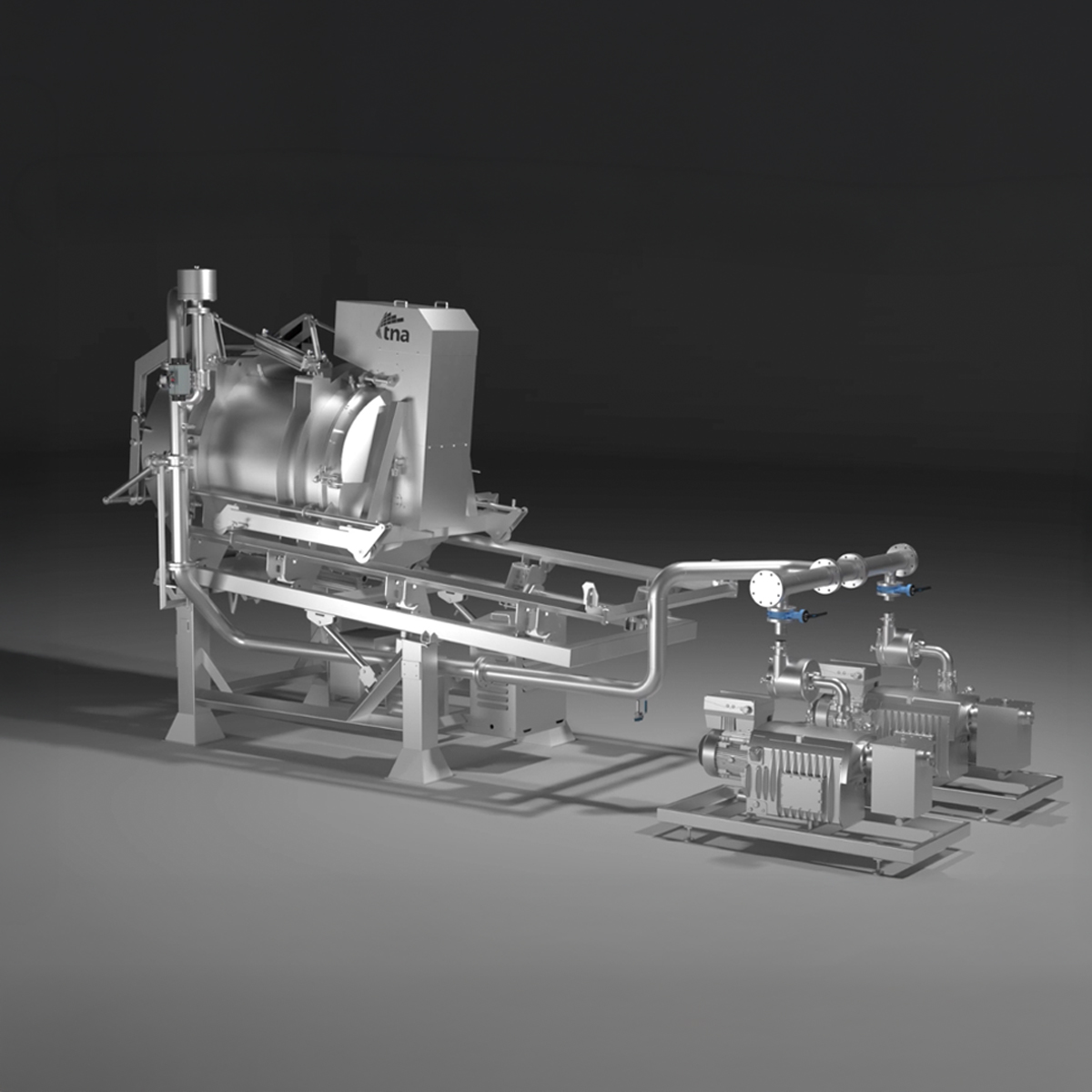
TNA Solutions will use interpack 2026 to preview a new vacuum de-oiler for batch-fried potato chips, aiming to reduce finished-product oil content without undermining the colour, texture, and crispness that define the category.
The company says the system can lower total fat from a typical 32% to 35% range into the low 20s, depending on customer requirements. Unlike conventional heated centrifuge-based approaches, the new unit operates at ambient temperature and removes both surface oil and oil absorbed by the potato cells after frying. TNA argues that this matters because reheating chips after frying can increase browning and raise the risk of additional acrylamide formation, creating a trade-off between nutritional improvement and product quality that many processors would rather avoid.
The launch is targeted squarely at batch-fried production, which gives it a clearer industrial identity than a broad better-for-you snack announcement. Batch-fried chips occupy a distinct position in the market, often competing on premium cues including crunch, colour, and more varied texture. Those characteristics are part of the appeal, but they also make process intervention more delicate. Change the product too aggressively after frying and the line may deliver a healthier chip on paper while compromising the eating experience that justified the higher-value format in the first place.
TNA says the vacuum de-oiler has been engineered to integrate with its batch frying systems, with the centrifuge sized to handle a full batch directly from the fryer. It also says a single unit can support two batch fryers running out of cycle, which could make the proposition more attractive for larger snack lines looking to increase throughput without adding unnecessary complexity. Recovered oil is filtered and returned to the fryer, which introduces a second operational hook alongside reformulation: reduced oil consumption and lower running cost.
That dual message is important. Snack processors are not buying on health alone. They are buying on whether a line change improves margin, throughput, consistency, or risk. Better-for-you positioning is useful, but it is rarely enough on its own to justify equipment spend. By coupling fat reduction with oil recovery and an integration argument, TNA is trying to position the de-oiler as a process-efficiency tool as much as a nutritional one.
The timing is sensible. Snack manufacturers remain under pressure to widen healthier options without turning their core ranges into compromised versions of themselves. The category is full of technical trade-offs: lower oil often affects flavour delivery, colour, mouthfeel, and shelf-life behaviour; cleaner processing can reduce flexibility elsewhere; and every intervention has to sit within the realities of labour, uptime, and maintenance. Equipment that narrows one of those trade-offs is likely to draw attention.
There is also an interesting food-safety angle. Acrylamide has typically been addressed upstream through raw material control, frying profiles, and recipe work, but post-fry handling can also matter if it introduces more thermal stress. By avoiding reheating, TNA is implicitly aligning nutritional reformulation with contaminant-control logic, which is a more compelling position than simply offering a lower-fat number.
The fact that customers can test and validate the process at TNA’s Food Technology Centre in Woerden adds another practical layer. New snack equipment tends to move faster when processors can see what it does to oil uptake, crunch, and colour before a line commitment is made. That is especially true in premium chips, where small shifts in texture or appearance can have outsized commercial consequences.
For interpack, the message is clear enough: healthier chips are still a growth ambition, but the equipment route to that goal has to preserve the attributes people are actually buying. TNA’s de-oiler is an attempt to bring those priorities closer together. Whether it gains traction will depend on test results, integration performance, and how much value batch-fried producers place on lowering fat without reopening other process headaches.