IN Brief:
- MATR Foods has opened a fermentation factory in Skovlund with design capacity of 4,000 tonnes of finished products annually.
- The company uses solid-state fungal fermentation to convert vegetables, legumes, and grains into meat alternative products.
- Production will increase progressively, with full capacity not expected until 2028 and distribution targeting Denmark, Germany, and Switzerland.
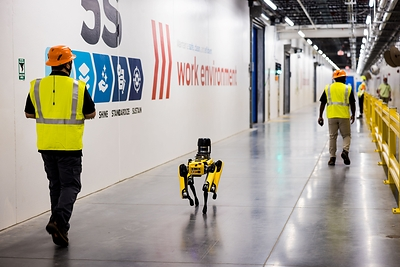
MATR Foods has opened an industrial-scale fermentation factory in Skovlund, western Denmark, establishing production capacity for up to 4,000 tonnes of plant-based meat alternatives annually as the company expands beyond its previous pilot manufacturing operation.
The facility was inaugurated on 20 November and will manufacture products including burger patties, mince and other meat alternative formats for foodservice and retail customers. Distribution is initially focused on Denmark, Germany and Switzerland, where the company has established or is developing commercial relationships.
The new factory represents a substantial increase from MATR’s earlier operation in Copenhagen, which produced approximately 30 tonnes annually. Its full design capacity will not be reached immediately, with Chief Executive Officer Randi Wahlsten indicating that production is expected to increase progressively through 2027 and reach full utilisation in 2028.
The development follows a €40m financing package completed in October 2025, comprising €20m of equity investment and €20m in venture debt. The financing involved Novo Holdings, the Export and Investment Fund of Denmark and the European Investment Bank, supporting the transition from pilot production to industrial manufacturing.
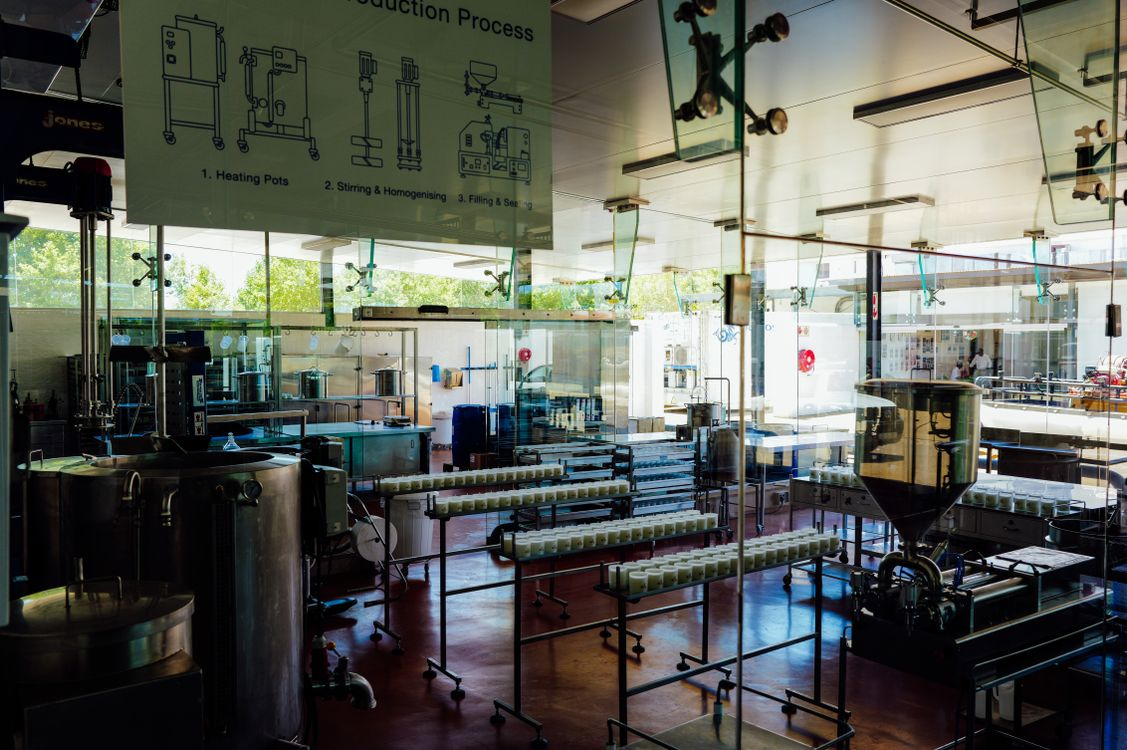
MATR’s production process uses solid-state fungal fermentation to transform a mixture of vegetables, legumes and grains into structured food products. The principal ingredients include potatoes, beetroot, split peas, lupins and oats, which are prepared before being inoculated with fungal spores.
The process differs from conventional meat alternative manufacturing based on extrusion. Extrusion typically uses mechanical shear, pressure, heat and controlled moisture to restructure proteins into a desired texture, while MATR relies on fungal growth within the plant ingredients to develop its product structure.
During fermentation, the fungal culture grows through the prepared substrate, creating a network within the material and contributing to the texture and flavour of the finished product. The company positions the resulting food as an alternative to meat products that have traditionally been formulated using concentrated plant proteins and additional structuring ingredients.
Solid-state fermentation operates on moist solid material with comparatively little free liquid, unlike submerged fermentation systems in which microorganisms grow in a liquid medium. The substrate serves both as the material being transformed and as a source of nutrients for the developing culture.
This configuration reduces the need to extract and isolate every ingredient before processing, but it introduces challenges associated with controlling biological activity throughout a solid material. Substrate preparation, moisture distribution, temperature and the duration of fermentation can all influence the development of the culture.
The ingredients used by MATR have different physical characteristics and compositions. Potatoes, beetroot, oats and legumes vary in their proportions of water, starch, protein and fibre, while agricultural supplies may also differ between batches and growing seasons.
Preparation must therefore establish conditions that allow the fermentation process to develop consistently. Differences in ingredient size or composition can affect the distribution of moisture and the structure of the material, making raw material specification an important part of controlling the finished product.
Temperature management is another consideration in solid-state fermentation because biological activity generates heat. Larger batches may behave differently from smaller trials, particularly where heat and moisture must move through substantial quantities of material without creating unacceptable variations in fermentation conditions.
The engineering requirements of the new installation consequently extend beyond its stated annual tonnage. Production must remain sufficiently repeatable across successive batches, while equipment must support cleaning, material movement, process monitoring and the controls required for food safety.
MATR has not disclosed the dimensions of its fermentation chambers, the number of production units or detailed operating parameters. Those figures would be required to assess the relationship between batch size, cycle time and the factory’s potential output.
Following fermentation, the company applies additional processing to produce finished food formats. Its products are marinated and heat-treated, with ingredients including beetroot juice and seasonings contributing to the final formulation.
The process produces finished products intended to provide a savoury flavour and a texture comparable with certain meat applications. The suitability of individual formats will depend on their behaviour during preparation by retail and foodservice customers, including heating, handling and storage.
The company’s previous manufacturing capacity constrained its ability to meet growing commercial demand. Wahlsten has said that interest from supermarkets and foodservice operators exceeded the quantities MATR could supply from its Copenhagen operation, providing the commercial basis for the new factory.
Moving to industrial production changes the relationship between demand and factory operation. The company must schedule larger production volumes against confirmed customer orders while managing finished-product storage, distribution and the shelf-life requirements associated with its chilled products.
Capacity utilisation will influence production economics. A factory designed for 4,000 tonnes annually may initially operate well below that level while manufacturing procedures are stabilised, distribution increases and demand develops across the intended markets.
Higher utilisation can distribute certain fixed costs across greater output, but it also increases the demands placed on equipment reliability, maintenance, raw material procurement and quality assurance. Production interruptions can become more expensive as customer commitments and batch volumes increase.
MATR’s approach is part of a wider effort to commercialise fermentation technologies for alternative proteins, although manufacturing methods differ considerably between companies. Some businesses use submerged microbial fermentation to produce protein biomass or particular ingredients, while others employ fermentation to modify complete food substrates.
The new Danish operation belongs to the latter category. Its manufacturing performance will depend on achieving consistent biological conversion and finished-product quality without the additional complications associated with scaling a process whose operating characteristics have previously been established mainly at pilot level.
The company has made environmental claims concerning its use of plant ingredients and fermentation, but comparable operating data for the new factory have not yet been published. Assessment of industrial resource efficiency will require evidence concerning energy, water, raw material utilisation and production losses at commercial throughput.
With the factory now open, MATR has established a substantially larger production platform for its fermented food products. The planned ramp-up to 2028 provides a period in which the business must demonstrate repeatable industrial processing while expanding its customer base and maintaining the product characteristics established during development.