IN Brief:
- Nestlé has inaugurated its Deep Tech Center in Orbe, Switzerland, bringing advanced engineering and technology development into a dedicated facility.
- The centre combines artificial intelligence, robotics, sensing technologies, simulation, and pilot testing for research and manufacturing applications.
- Nestlé intends to validate technologies before introducing them across its operations, with approximately 60 people initially working at the centre.
Nestlé has inaugurated a Deep Tech Center in Orbe, Switzerland, bringing robotics, artificial intelligence, sensor development and advanced engineering into a dedicated facility designed to accelerate the application of new technologies across its international operations.
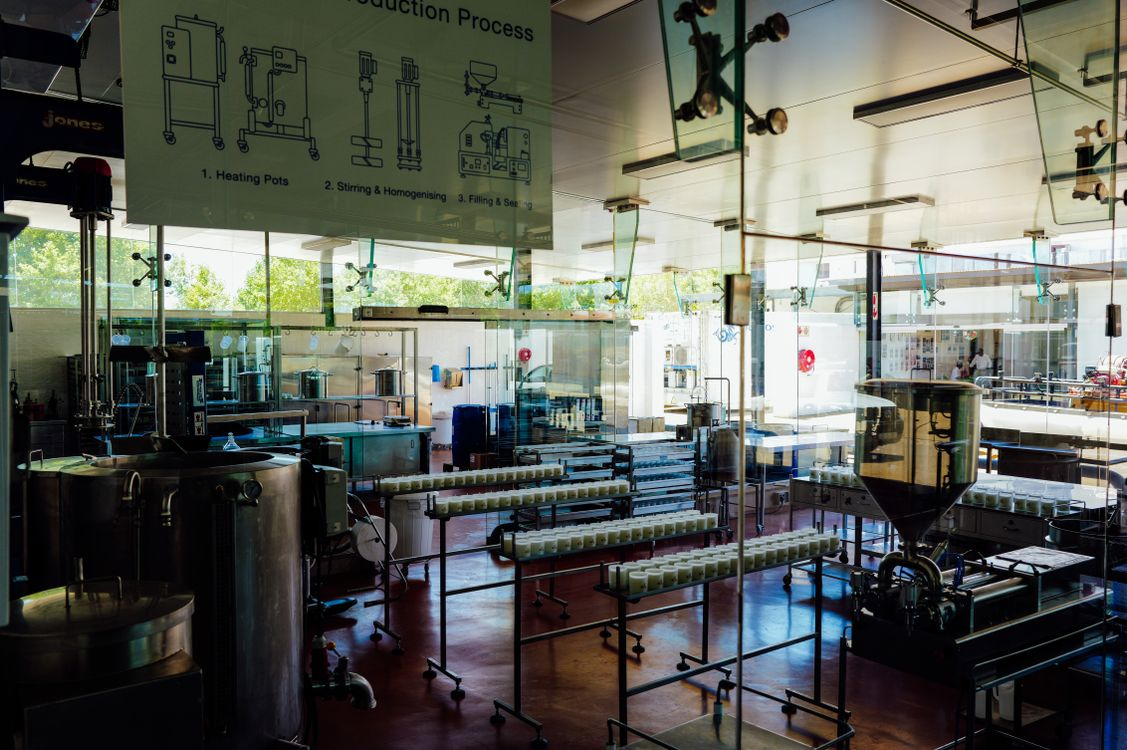
Opened on 20 November, the centre will develop and test technologies for research, product innovation and manufacturing. Its facilities include rapid prototyping laboratories, automated kitchens and pilot plants, allowing engineers to evaluate applications before they are introduced into commercial operations.
Approximately 60 people will work at the centre initially, according to information provided by Nestlé to Swiss news agency AWP. The activities are expected to expand as the company develops additional applications and strengthens its partnerships with specialist technology providers.
The facility brings together several engineering disciplines that are increasingly used in food manufacturing, including sensor systems, advanced simulation, intelligent robotics and machine learning. Nestlé intends to combine those capabilities with information generated by its laboratories and manufacturing lines to support operational decisions and develop new products.
Sensor technology is central to the approach because automated systems depend on reliable information about the processes they control. Measurements of temperature, pressure, movement and equipment condition can help establish whether a manufacturing operation is performing within its specified operating limits.
Analytical systems can then identify relationships between those measurements and the performance of equipment or products. The usefulness of such analysis depends on data quality, the accuracy of instrumentation and the ability to distinguish normal process variation from conditions requiring intervention.
Artificial intelligence offers additional methods for examining large datasets and recognising patterns that may be difficult to identify through conventional monitoring alone. However, the application of those methods to production equipment requires validation against the actual operating conditions and performance requirements of the manufacturing process.
Food manufacturing presents particular challenges because raw materials are not always uniform. Differences in moisture, composition, particle size and physical characteristics can influence how ingredients behave during mixing, heating, forming and other production stages.
Those variations create a different automation environment from manufacturing processes built around components with tightly controlled dimensions and material properties. A robotic system handling packaged products may operate with relatively predictable geometry, while equipment manipulating unpackaged food must accommodate changes in shape, texture and resistance to deformation.
These differences also influence the sensors and control systems selected for industrial applications. Optical inspection, force measurement and other sensing methods may be required to establish the position or condition of a product before automated machinery can act on it reliably.
Robotics development at Orbe is intended to address applications involving production and research activities. Nestlé has identified intelligent robotics as one of the technologies that could improve consistency and reduce the need for repetitive manual operations, although individual deployment projects and their expected productivity gains have not been disclosed.
Introducing robots into food production also requires attention to cleaning, access and safety. Equipment must be compatible with the hygiene requirements of the production environment, while moving components and associated controls must operate alongside existing machinery without introducing unacceptable risks or disrupting established processes.
The centre’s pilot facilities provide an environment for examining those interactions before installation at an operating factory. Prototype equipment can be assessed against different materials, operating conditions and process configurations, allowing engineering changes to be made without relying exclusively on trials conducted during commercial production.
Advanced simulation forms another part of the development programme. Digital models can represent equipment behaviour and operating conditions, helping engineering teams examine alternative configurations or investigate potential constraints before changes are made to physical installations.
Simulation accuracy depends on the quality of the underlying model and its relationship to real operating data. Changes in material properties, production speed or equipment condition can affect results, making validation against physical measurements necessary before simulated outcomes are used to support industrial decisions.
Comparable work is already taking place elsewhere in food manufacturing. Siemens has demonstrated digital twin technology for PepsiCo filling operations, examining how modelling and production data can be combined to support equipment development and operational analysis.
Nestlé’s technology programme extends beyond factory machinery into connected consumer products. The company has identified potential applications involving coffee machines and pet nutrition equipment, where sensors and software can support product recognition, monitoring and more personalised operation.
These activities introduce additional requirements involving data exchange between physical devices, digital services and product development systems. The centre will consequently work across both industrial equipment and consumer-facing technologies, rather than concentrating exclusively on manufacturing automation.
Nestlé’s Deep Tech Center in Orbe is complemented by a technology hub in Shenzhen, China. The arrangement is intended to connect the company’s central engineering capabilities with another established technology development environment, providing access to specialist expertise and potential partners.
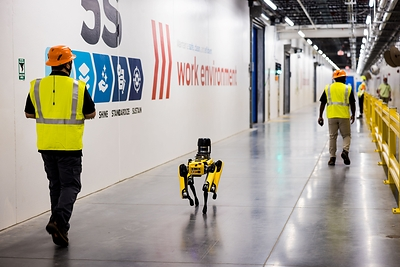
The group is also working with external technology companies, including Microsoft and Boston Dynamics, as it explores advanced software and robotics applications. Such partnerships provide access to established technology platforms, but applications developed with external suppliers must still meet Nestlé’s specific operational and regulatory requirements.
Chief Technology Officer Stefan Palzer has identified the combination of sensors, artificial intelligence and robotics as a means of turning information from laboratories and production lines into practical applications. Chief Executive Officer Philipp Navratil has similarly linked advanced engineering with the company’s objectives for product quality, innovation and manufacturing efficiency.
Moving technologies from development into production will depend on the capabilities of individual factories. Existing machinery may require additional sensors, control integration or modifications before newer analytical and automation systems can be used effectively.
Equipment reliability, maintenance requirements and the ability to maintain product quality during normal operating conditions will also determine whether a successful laboratory application is suitable for wider deployment. Nestlé has not published an implementation schedule covering specific factories or quantified financial benefits associated with the centre.
The Orbe facility establishes a central engineering environment for testing technologies before their introduction into manufacturing and research operations. The next measure of its contribution will be the transfer of validated applications into working plants, where their performance can be assessed against production reliability, quality and operating cost.