IN Brief:
- Around 130 Unite members began continuous strike action at 06:30 on 2 September.
- The dispute concerns pay and differences in paid-break arrangements between morning and other shifts.
- Pilgrim’s says it has made above-inflation offers and break proposals, while Unite says previous action affected production and stocks.
Around 130 workers at Pilgrim’s Europe have begun continuous strike action at the company’s Enniskillen production site, escalating a dispute over pay and paid-break arrangements after three weeks of earlier stoppages.
The all-out action began at 06:30 on 2 September. Unite says workers are seeking an improved pay increase and an end to differences in how paid breaks are applied between shifts.
The move is the latest stage of an established dispute rather than a new disagreement. Workers had already extended industrial action to a further two-week period from 17 August, following an initial four-day stoppage earlier in the month.
Moving to continuous action removes the defined end point around which the factory and its customers could previously plan. It also increases the importance of negotiations because every additional day potentially changes the amount of production that must be covered by remaining employees, stock, revised schedules, or alternative facilities.
Unite says morning-shift workers at Enniskillen receive payment for 15 minutes of breaks while evening and night-shift workers receive payment for 30 minutes. The union is also seeking a cost-of-living pay increase and says the lowest-paid employees receive £12.82 an hour.
Pilgrim’s Europe disputes the suggestion that it has failed to address the issues. The company says it has made a number of above-inflation pay offers, with backdating included in the proposals, and has also put forward measures intended to address concerns about paid breaks for day-shift employees.
Those proposals have not produced a settlement. Pilgrim’s says it remains available for further constructive dialogue with Unite and is seeking an agreement that is fair to employees while supporting the long-term operation of the site.
The Enniskillen factory manufactures branded and other added-value products including Fridge Raiders, Richmond sausages, Mr Brains Pork Faggots, Denny sausages for the Republic of Ireland, Rollover sausages, and vegan sausage products.
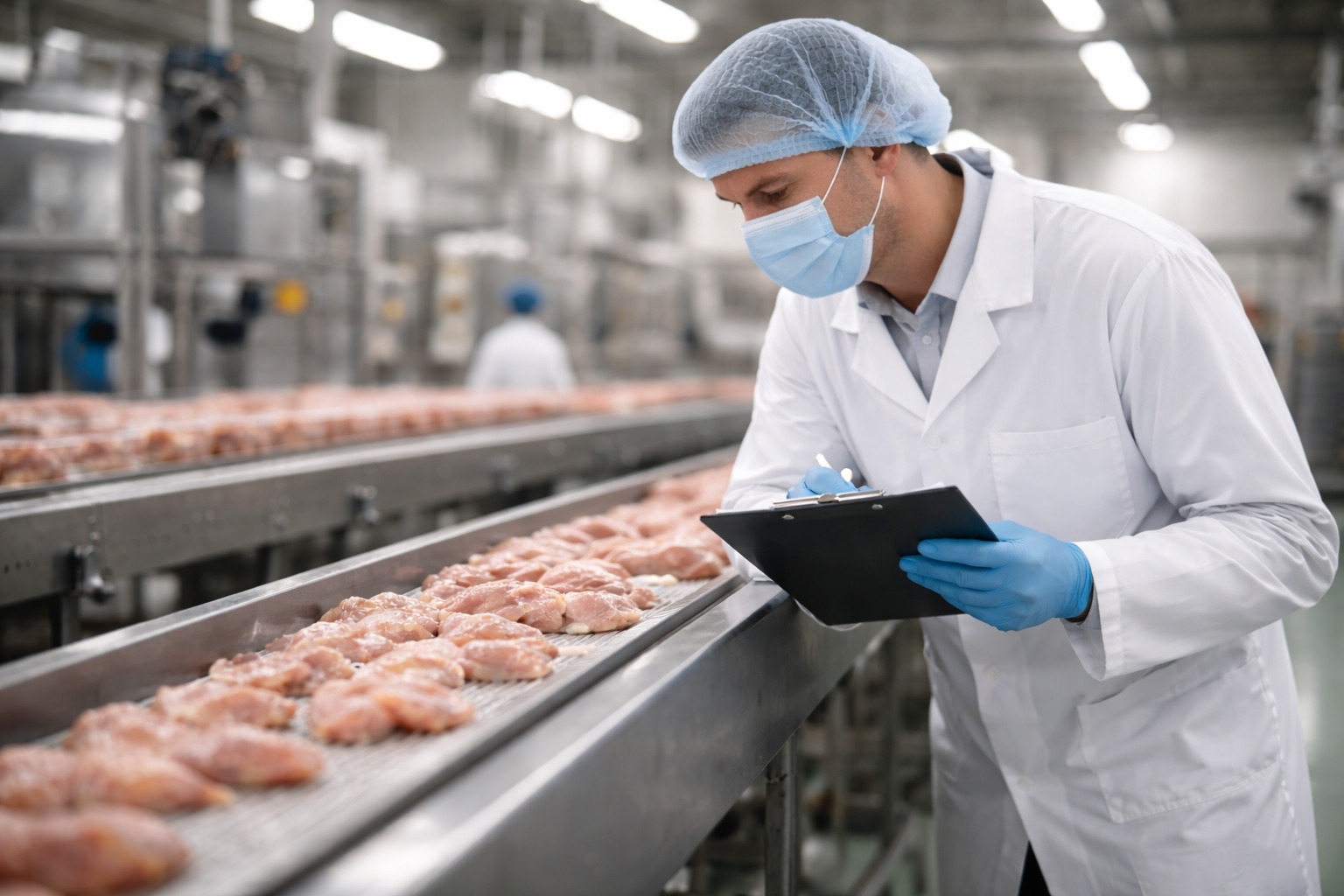
That mix makes labour availability a production issue as well as an employee-relations problem. Added-value meat lines depend on preparation, cooking, packing, inspection, hygiene, maintenance, warehousing, and dispatch functions operating in sequence, and a shortage in one part of that chain can restrict output elsewhere.
Unite says the earlier strikes have already had a heavy effect on production and stocks. That remains a union claim rather than confirmation of widespread customer shortages, and Pilgrim’s has said its wider workforce is helping to maintain operations.
The difference is worth preserving because predictions of empty shelves are not the same as verified service failures. Food manufacturers routinely hold contingency plans for disruption, although the effectiveness of those plans changes as stoppages become longer and less predictable.
Inventory is one option, but chilled and fresh categories place limits on how far production can be brought forward. Shelf life, storage capacity, customer specifications, and demand patterns constrain the amount of finished product that can simply be manufactured in advance and held until the dispute is resolved.
Production transfers are similarly dependent on practical detail. Pilgrim’s Europe has a large network across the UK and continental Europe, but another facility needs compatible equipment, available labour, raw materials, packaging, customer approval, and spare capacity before a product can be moved without creating problems elsewhere.
The Enniskillen workforce also contains different production skills, which makes the headline number of strikers only one part of the operating picture. A line may be restricted by the absence of trained operators, engineers, hygiene staff, quality personnel, or other employees even when sufficient people remain on site to run less demanding activities.
Pilgrim’s Europe operates more than 40 sites across the UK, Ireland, France, and the Netherlands. That scale provides more options than a single-site manufacturer would have, but it does not make individual recipes, pack formats, or production lines interchangeable.
Unite has also cited Pilgrim’s Europe’s latest reported after-tax profit as evidence in its affordability argument. The union puts that figure at around £128 million for the 2024 financial year, although group profitability does not establish the cost base or economics of the Enniskillen operation on its own.
The dispute is therefore concentrated on terms at one plant but has consequences that extend into production planning. Previous stoppages came with specified dates, allowing management to work around known periods of reduced labour even if the arrangements were difficult.
Continuous action removes that certainty. The factory can continue adapting its production plan while negotiations remain open, but the amount of flexibility available tends to narrow as stock positions change, employees tire of altered working patterns, and spare capacity elsewhere is used for longer than intended.
Neither side has announced an agreement. Unite is maintaining continuous action, while Pilgrim’s says its offers and proposals remain on the table and that it is available for further talks.
The practical measure of the dispute will now be how long production can be sustained without a settlement. What began in August as a series of defined stoppages has become an open-ended test of staffing, factory flexibility, and the distance between the two sides’ positions.