IN Brief:
- Rungis International Market and Dunkerque-Port plan a 350,000 square metre agri logistics hub in northern France.
- The development will support food processing, storage, traceability, and distribution close to container and cross-Channel terminals.
- The partners intend to connect maritime imports with French and wider European food markets through a more integrated logistics corridor.
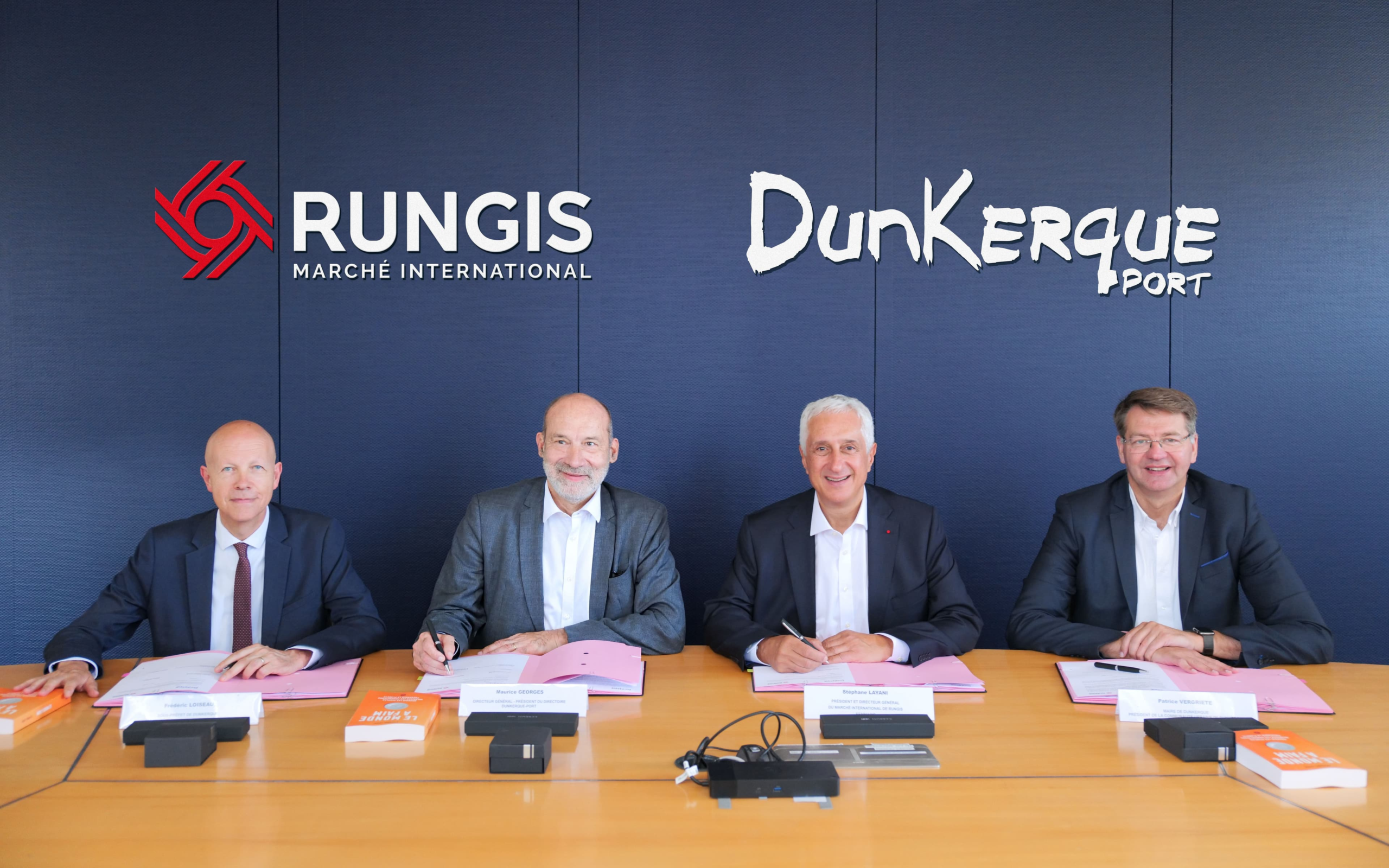
Rungis International Market and Dunkerque-Port have agreed to develop a 350,000 square metre agri logistics hub in northern France, bringing food handling, processing, storage, and distribution together within the Dunkerque Logistique International zone.
Located close to the port’s container and cross-Channel terminals, the proposed development is intended to connect maritime food imports with road, short-sea, and potentially rail services. Rungis contributes the commercial reach of Europe’s largest wholesale food market, while Dunkirk provides port handling, customs infrastructure, and access to consumer and industrial markets across northern Europe.
Facilities are expected to accommodate logistics, agri-food processing, and other value-adding operations, including activities that can be completed before products enter wider domestic distribution. Grading, packing, ripening, portioning, labelling, quality checks, and order preparation could therefore take place near the point of import rather than after an additional inland journey.
Fresh produce, seafood, dairy products, chilled foods, and temperature-sensitive ingredients lose usable shelf life whenever cargo waits between terminal discharge, inspection, storage, and onward transport. By shortening those transfers and concentrating services around one site, the partners aim to reduce avoidable handling while giving operators greater control over temperature, customs status, and product condition.
Rungis already connects wholesalers, importers, processors, foodservice suppliers, and specialist distributors serving Paris and the wider French market. Linking that network to a major northern port would create a route through which imported goods could move directly into controlled storage or processing, then leave in customer-ready consignments rather than travelling as undifferentiated bulk cargo.
Such integration depends on more than proximity. Batch identity, temperature history, inspection records, customs documentation, and customer allocation must remain intact as products pass between vessels, warehouses, processing areas, and outbound vehicles. Common data standards and interoperable systems will be needed if the hub is to operate as a connected food platform rather than a collection of separate tenants.
A potential rail connection forms part of the longer-term plan, offering an alternative for selected high-volume movements into France and neighbouring markets. Rail can reduce road mileage and emissions, although service frequency, terminal dwell time, refrigeration performance, and onward connections will determine whether it suits products with narrow shelf-life tolerances.
Cold storage will carry similar operational demands. Refrigerated capacity must be matched to product mix, seasonal peaks, and dwell times, while power resilience and maintenance provision become critical where interruptions can affect several customers simultaneously. Recent investment in national cold storage networks has reinforced the connection between temperature-controlled infrastructure, reduced food loss, and more stable processing supply.
Although Europe begins from a more mature logistics base, port congestion, border procedures, energy prices, labour availability, and uneven cold storage coverage still disrupt food flows. Chilled and fresh supply chains offer little room for the lengthy recovery periods tolerated in general industrial freight, because delayed cargo may arrive technically sound yet commercially depleted by lost shelf life.
Dunkirk’s cross-Channel position also creates options for goods moving between continental Europe and the UK. Consolidation, packing, inspection, and customs services near the port could simplify some routes, particularly where mixed consignments need preparation before shipment, but every additional stop must remove more friction than it introduces.
Waste and by-product handling will influence the site’s performance as processing activity expands. Trimming, grading, damaged produce, packaging waste, and wastewater can accumulate quickly around food operations, creating an opportunity for shared treatment and valorisation systems as well as a requirement for strict hygiene and pest control.
Utilities will shape the range of tenants that can operate economically. Cold stores, ripening rooms, wash lines, packing equipment, and processing plants need dependable electricity, water, drainage, and often heat, while peaks in refrigeration demand can place substantial loads on local infrastructure. Shared energy systems may improve efficiency, provided they do not create a single point of failure.
The 350,000 square metre footprint gives the development sufficient scale to attract processors, cold-store operators, freight businesses, packaging services, quality laboratories, and customs specialists. Complementary tenants can create shared flows and fuller vehicles; unrelated occupiers may fill the estate without producing the integrated logistics model envisaged by the agreement.
Tenant commitments, planning, transport links, and commissioning schedules will determine how quickly the proposal becomes operating capacity. If the partners can align port infrastructure with Rungis’ commercial network, the hub could reduce the distance between import, processing, and sale across one of Europe’s largest food distribution systems.