IN Brief:
- Sazerac has completed its previously announced acquisition of Au Vodka following customary completion conditions.
- Au remains headquartered in Swansea, employs more than 80 people and sells bottled vodka and ready-to-drink products.
- Sazerac has not disclosed the transaction terms or announced changes to Au’s current production arrangements.
Sazerac has completed its acquisition of Swansea-based Au Vodka, moving the transaction from the binding agreement announced in August to full ownership after customary completion conditions were satisfied.
Financial terms have not been disclosed by Sazerac. Au remains headquartered in Swansea, employs more than 80 people and sells bottled vodka and ready-to-drink products across the UK and a growing number of international markets.
The completion creates a different operating position from the original agreement because Sazerac can now begin integrating procurement, distribution and commercial planning rather than preparing for a transaction that remained subject to closing conditions. The company has not announced a production transfer, factory closure or immediate change to Au’s manufacturing arrangements.
Au was founded in Swansea in 2015 by Charlie Morgan and Jackson Quinn, with Charlie Sloth later joining as an investor. The business developed around brightly flavoured vodka in distinctive metallic gold bottles before adding canned premixed drinks, creating a portfolio that spans conventional spirits packaging and higher-volume ready-to-drink formats.
The original acquisition agreement was announced in August, when Sazerac said completion was expected within weeks. At that point, the transaction had not yet transferred ownership. The current announcement closes that gap and removes completion risk from the immediate story.
The manufacturing consequences will emerge more gradually. Bottled spirits and canned ready-to-drink products use different filling and packaging systems, and growth in either format has implications for liquid preparation, packaging procurement, warehousing and production scheduling.
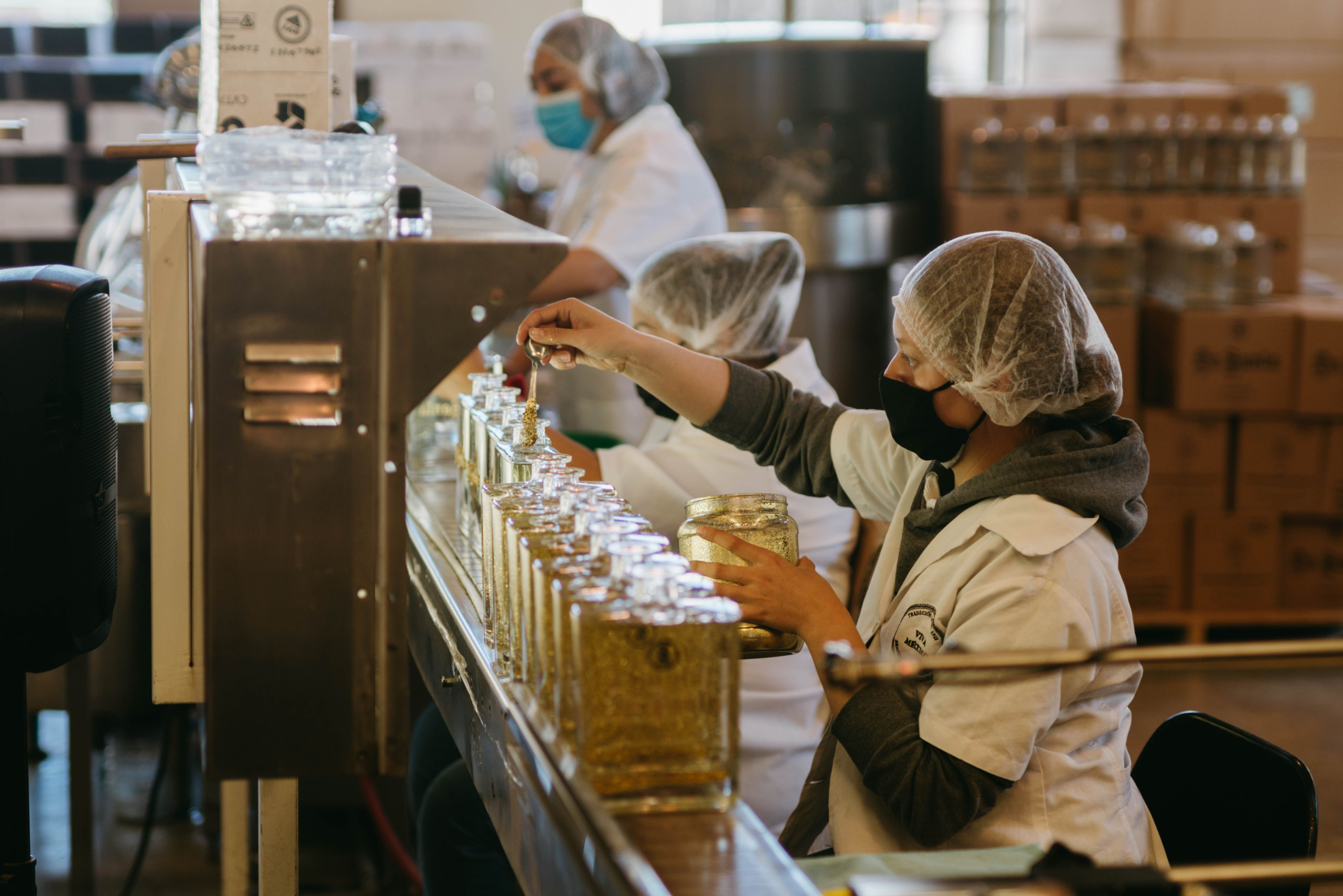
Au’s bottled range depends heavily on its gold presentation, making glass specification and decoration part of the product identity rather than a purely functional container choice. Closures, labels, cartons and secondary packaging also have to remain consistent as volumes rise or production arrangements change.
The canned range introduces aluminium supply, can ends, artwork, seaming, coding and multipack formats, alongside the filling requirements of the liquid itself. Ready-to-drink products can also create higher unit volumes than premium bottled spirits, increasing demand for filling slots, packaging inventory and finished-goods storage when new listings or promotions accelerate sales.
Sazerac brings an international portfolio of more than 500 brands, including Buffalo Trace Bourbon, BuzzBallz, Fireball Cinnamon Whisky, Southern Comfort and Svedka Vodka. Its ownership therefore gives Au access to purchasing, distribution and category infrastructure substantially larger than that of an independent brand.
Scale does not mean that production can simply be standardised across the group. Au’s flavours, alcohol strengths, packaging, artwork and brand presentation require defined specifications, while any transfer between filling sites would need to reproduce product quality and pack appearance consistently.
International growth introduces further variation. Alcohol labelling, duty, deposit-return schemes, recycling obligations and permitted pack formats differ between markets, which can multiply packaging specifications and finished-goods stock even where the underlying liquid is unchanged.
Sazerac already operates across bottled and ready-to-drink formats, giving it experience in the production and distribution requirements of both. The acquisition announcement, however, does not specify how that capability will be applied to Au or whether the buyer intends to change contract packing, sourcing or production locations.
That restraint is important because acquisition completion does not automatically signal manufacturing consolidation. Drinks groups frequently retain existing suppliers and production routes during integration to protect service levels and product consistency while commercial systems, purchasing and forecasting are brought together.
Au’s Swansea headquarters also remains part of the current structure. Sazerac has presented the acquisition as a route to further UK and international growth rather than as a restructuring exercise, and no job reductions or site closures have been announced with completion.
The next evidence will come through operating decisions rather than ownership paperwork. Additional production capacity, contract-packing agreements, supplier changes, capital investment or entry into new markets would show how Sazerac intends to convert the acquisition into higher output.
Those moves will also indicate how much of Au’s supply model is integrated into Sazerac and how much remains distinct. Packaging is likely to be particularly sensitive because the gold bottle and strongly differentiated presentation are central to Au’s identity and cannot be standardised away without altering the product proposition.
The transaction is now complete, but the industrial integration has barely begun. Sazerac owns the brand and its RTD business; the unanswered questions concern where future volume will be produced, how packaging and procurement will be managed, and whether wider international distribution requires additional manufacturing capacity.