IN Brief:
- Wilde has received a $40m investment from S2G Investments to support wider business growth.
- The producer reports that a recently opened 130,000 sq ft factory increases its manufacturing capacity sixfold.
- New funding will support additional snack formats as well as production and marketing activities.
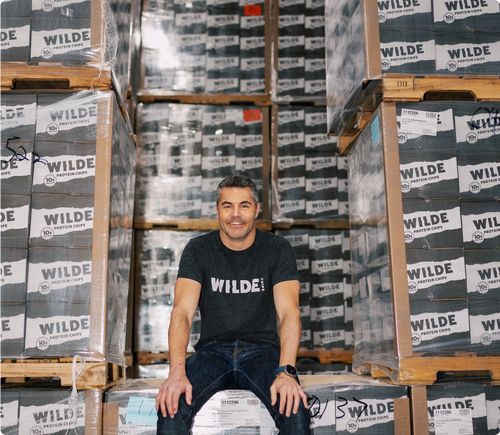
US protein snack manufacturer Wilde has secured a $40 million investment from S2G Investments to support production expansion, new product development and commercial growth after opening a 130,000 sq ft manufacturing facility. The business says the site has increased its available production capacity sixfold, giving it room to develop formats beyond its established chicken-based protein chips.
Wilde announced the financing on 22 October. Founded in 2015 and based in Lexington, Kentucky, the company manufactures savoury snacks using chicken breast and other protein ingredients, positioning the range as an alternative to conventional starch-based crisps. Its product portfolio includes Protein Chips and more recently launched Protein Crackers.
The funding will be used across several functions rather than allocated solely to construction or equipment. Wilde identified manufacturing, innovation, packaging, marketing and brand development among the activities intended to benefit from the investment. It did not provide a split of the $40 million by category, identify the equipment to be purchased or announce another factory project as part of the transaction.
The existing production development remains important to the manufacturing story. Wilde described its recently opened 130,000 sq ft plant as a US Department of Agriculture-regulated savoury snack facility, reflecting its use of meat ingredients. That brings a different set of production control considerations from many conventional potato or cereal snack operations. However, the company’s description of the site as uniquely positioned within its category is a commercial claim and not independently verified evidence about all comparable manufacturing facilities.
Wilde reports that it has surpassed $100 million in sales and reached more than 35,000 US retail locations. It did not specify the period covered by the sales figure, so it should not be presented as annual revenue or assigned a cumulative accounting period. The material does not establish the utilisation of its expanded production capacity. The sixfold capacity increase is also a company-reported comparison, with no separate figure for the previous or new annual output.
S2G said the investment reflected its interest in protein-rich products built around familiar ingredients and scalable production operations. The investment firm’s food and agriculture team identified chicken as a commercially relevant protein source for consumer products, pointing to demand for snacks that combine flavour and nutritional characteristics. Those observations describe the investor’s assessment of the market, rather than a forecast of sales or processing capacity.
Wilde’s approach places meat ingredients into a category historically associated with crops such as potatoes, maize and wheat. That has consequences for ingredient procurement, production hygiene, product specification and labelling. The company’s own product descriptions refer to chicken breast, egg whites and bone broth, while the finished range is designed to provide the crunch and flavour consumers expect from packaged savoury snacks.
Producing such foods consistently at larger scale requires balancing recipe characteristics with process control. Changes in ingredient composition may influence the behaviour of the product during forming, cooking, seasoning and packing, although Wilde has not disclosed the detailed production technologies used at its factory. The newly available capacity could support greater volumes of existing products as well as later formats, subject to customer orders and successful manufacturing trials.
Founder and chief executive Jason Wright said the investment would support the next stage of expansion after years spent establishing the category. S2G principal Arthur Chow highlighted the opportunity to build beyond a single snack format, including the recently introduced crackers.
The project confirms new financing and an already opened production facility, but does not yet provide a schedule for further line installation, specific manufacturing contracts or independently measured efficiency gains. The progress of Wilde’s industrial growth can be assessed more directly when details emerge about facility utilisation, product launches and any additional processing investment funded through the latest capital injection.
The regulatory and technical requirements associated with meat-based savoury snacks may influence how Wilde develops future production processes. A new product shape or recipe must be assessed for safe handling, processing consistency and a stable packaged product, rather than judged on consumer flavour appeal alone. None of the public material identifies a specific new production method, so those requirements are relevant context rather than evidence of an equipment choice by Wilde.
Further expansion will also depend on the balance between demand growth and available installed capacity. A newly opened factory can provide headroom for additional volume without immediate construction of another site. Wilde’s next decisions about shift patterns, line investment and product allocation have not been released, leaving a distinction between a reported sixfold increase in capacity and proof of sustained output at that level.
**Primary sources:** https://www.prnewswire.com/news-releases/wilde-raises-40-million-from-s2g-investments-to-accelerate-its-rise-in-protein-snacking-302917127.html ; https://www.s2ginvestments.com/insights/welcome-wilde