IN Brief:
- New Jelmstorf production and application site targets industrial volumes.
- Process uses food and beverage sidestreams as fermentation feedstock.
- Focus is on circular supply for beverage and plant-protein processors.
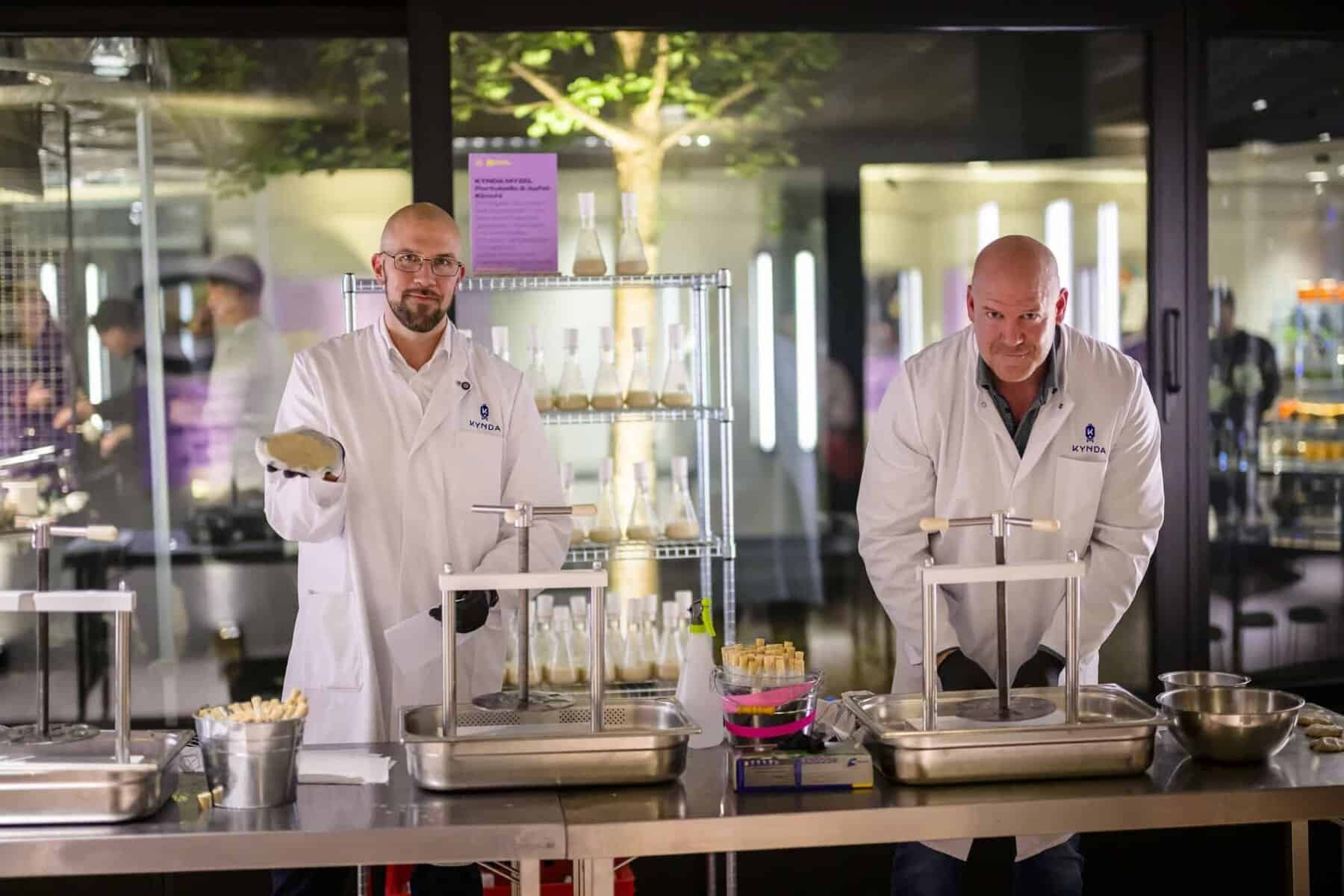
Kynda has commissioned a new production and development hub in Jelmstorf, in Lower Saxony, to convert food-processing sidestreams into mycelium-based protein. The company’s approach targets byproducts generated at scale by the fast-growing oat and soy drink segments, where high-moisture residues can become a disposal cost as volumes rise, especially for operators running multiple lines, or co-packing across brands.
The core process is a fermentation step in which fungal biomass is grown on nutrient-rich sidestream streams. In practical terms, that turns low-value residues into a protein ingredient with a clearer industrial route-to-market than many “novel” alternative protein plays, because the feedstock is already present inside established beverage and plant-protein plants, and the output is designed for conventional ingredient handling: dewatering, stabilisation, and downstream formulation.
Kynda has framed the Jelmstorf site as an industrialisation push rather than a pilot showcase, with the hub intended to sit close to German processing clusters and logistics routes. The location is also consistent with earlier regional support for the company’s scale-up, including state-level backing for fermentation capacity and related manufacturing build-out.
Feedstock sourcing is central to the model. Kynda has highlighted sidestreams from plant-based production, including residues from soy processing such as okara, as candidates for conversion into higher-value ingredient output. That matters operationally because okara and similar residues are wet, bulky, and time-sensitive: they are cheap to create, expensive to move, and awkward to store. A local conversion route that can accept variable volumes and compositions is therefore more useful than a distant offtake agreement that depends on tight specifications.
Regulatory posture is also part of the commissioning story. The Lower Saxony agriculture ministry has previously said Kynda’s fungal biomass product is not classified as a novel food, a distinction that can significantly reduce commercial friction for ingredient adoption, depending on the end application and customer category.
For beverage and plant-protein manufacturers, the immediate implication is a new nearby outlet for residues that can scale with production — and, potentially, a way to turn a waste-management line item into a contracted input stream with traceable circularity claims, provided consistency, safety controls, and pricing hold up as volumes move beyond commissioning.