IN Brief:
- Poultry processors are pushing harder on yield control, labour efficiency, and foreign-body detection.
- Ishida will show IX-PD-Poultry inspection, RobotGrader automation, and Sentinel 5.0 monitoring at VIV Europe.
- Inspection, grading, and line data are moving closer together in modern protein operations.
Ishida Europe will use VIV Europe 2026 to present a poultry processing line-up built around inspection, grading, and digital monitoring, as processors across the sector continue to focus on throughput, quality control, and labour efficiency. The company’s stand in Utrecht will feature the IX-PD-Poultry X-ray inspection system, the RobotGrader automated packing platform, and Sentinel 5.0 production monitoring software.
Each product addresses a different pressure point on the line, but the common theme is tighter process control. Poultry processors are dealing with persistent labour constraints, high-volume pack accuracy requirements, retailer scrutiny on product quality, and the cost of rework or giveaway on fast-moving lines. In that environment, the value of a machine is judged less by its headline speed than by how well it holds consistency across a shift.
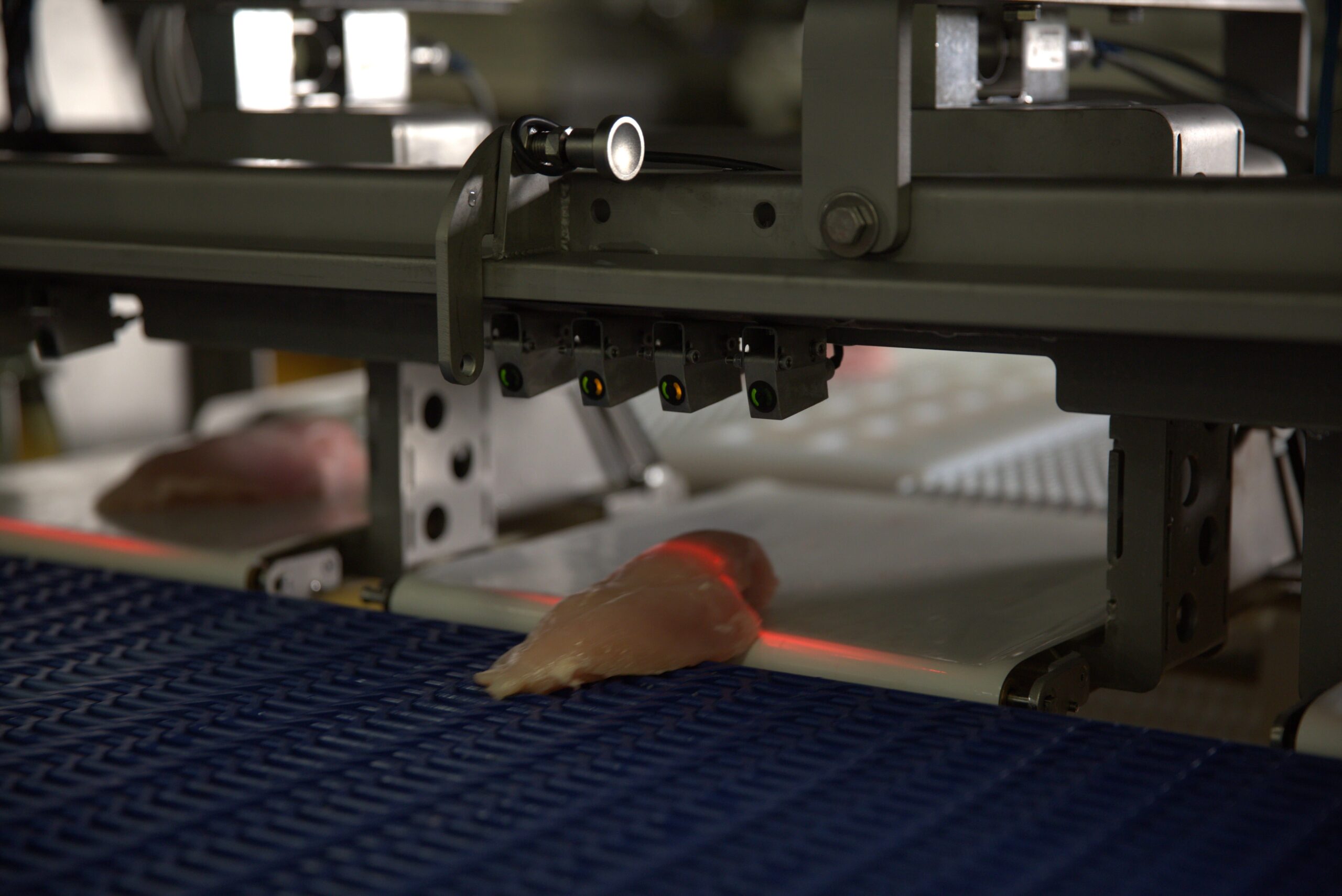
The IX-PD-Poultry sits at the centre of Ishida’s offer. Designed for poultry-specific inspection tasks, the system uses dual-energy X-ray processing and the company’s Genetic Algorithm technology to improve image quality and detection performance, particularly for low-density contaminants such as bone fragments. That is a practical issue in fillet production, where bone detection remains one of the harder inspection jobs and false rejects can quickly become a cost problem of their own.
Plants handling deboned cuts need inspection systems that can work across natural product variation without turning every irregularity into a stop, a reject, or a manual check. A higher-resolution image and more refined processing logic help on both sides of that equation: contaminants are easier to detect, and good product is less likely to be lost to over-sensitive settings. In poultry, where margin is shaped by tiny adjustments repeated at scale, those differences are cumulative.
RobotGrader focuses on the packing end of the line, where labour availability and weight control have become increasingly difficult to separate. The system is designed to automate grading and placement into both trays and bulk crates, processing up to 320 pieces per minute. That gives processors a way to reduce manual handling while holding closer to target weights and pack specifications.
For poultry businesses balancing output targets with staffing shortages, robotics is no longer confined to prestige projects or new greenfield sites. It is moving into mainstream line design because the economics are increasingly straightforward. Consistent piece selection, reduced overfill, lower handling intensity, and fewer interruptions at the packing stage all contribute to a more stable line. In categories where retailers and foodservice customers expect uniform packs at high speed, that level of control has become commercially significant.
Sentinel 5.0 extends the line from physical equipment into performance visibility. The software is designed to monitor machine performance across entire lines, including non-Ishida equipment, and apply machine learning to identify developing issues, support maintenance, and improve troubleshooting. For processors already operating mixed fleets, that cross-platform visibility is becoming more useful than vendor-specific dashboards tied to individual machines.
Digital monitoring has been part of the food processing vocabulary for years, but the standard is changing. Plants are now looking for systems that can connect inspection, packing, downtime events, and overall equipment effectiveness into one operational picture. The question is no longer whether data is available. It is whether the right people can act on it before a fault grows into a production loss.
That shift is visible across poultry processing more broadly. Automation projects are increasingly built around coordination rather than single-point upgrades. X-ray inspection is linked more closely to yield protection. Grading is tied more tightly to labour planning and pack performance. Monitoring software is being asked to do more than report historical data after the shift has ended. The line is becoming a more connected environment, and equipment suppliers are having to present their systems accordingly.
VIV Europe’s focus on AI, robotics, and automation reflects where processors are spending. The commercial pressures behind that spending are well established: rising labour costs, harder-to-man production roles, tighter specifications, and ongoing demands for better quality assurance without slower output. Poultry remains one of the clearest examples of how those forces meet on a single line.
Ishida’s exhibition package speaks directly to that reality. Inspection, packing, and monitoring are no longer separate conversations inside the plant. They are part of the same operating discipline, and suppliers that can link them together will be in a stronger position as processors continue to tighten performance across the protein line.