IN Brief:
- Autopack said Packaging Innovations & Empack 2026 generated strong interest in automated packaging, especially liquid filling and coffee pack formats.
- The company launched a project video with KTC Edibles and highlighted a line designed for 0.5L and 1L bottles at 120 bottles per minute.
- Autopack showcased semi-automatic and integrated equipment, positioning staged automation as a route into higher-throughput systems.
Autopack has reported increased interest in packaging automation following its appearance at Packaging Innovations & Empack 2026, with enquiries led by liquid filling and coffee pack applications.
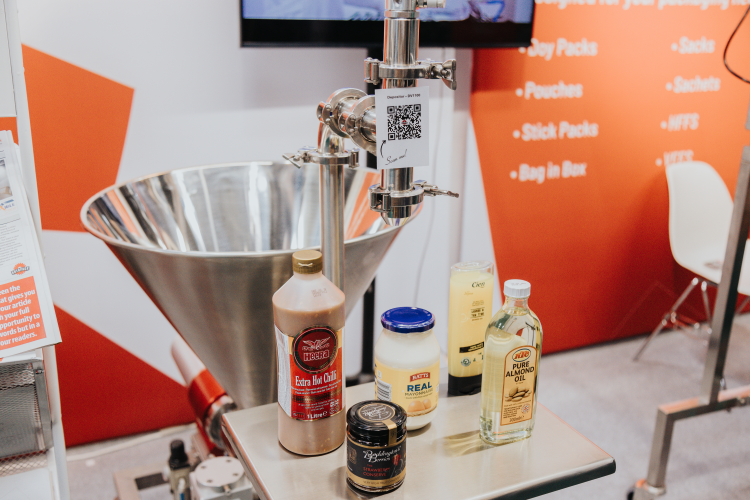
The Hereford-based company, which operates as an independent integrator of packaging lines, used the NEC event to demonstrate a mix of equipment and to promote a recent end-to-end project for edible oils manufacturer KTC Edibles. Autopack said visitors were focused on automation as a tool to improve operational efficiency, with a marked emphasis on tailored line design rather than standardised solutions.
On its stand, Autopack showed a semi-automatic bucket machine, alongside a SV30-USD sealer, an A100 system with a four-head mini weigher, a DV1100 depositor operating with a gated conveyor, and a mini auger. The company has positioned this combination as representative of its approach across staged automation, from single machines through to integrated line builds.
Jonathon Stewart, UK sales director at Autopack, said the event provided a clear signal on the type of projects moving through the market. “There was so much interest in automation at the show, which gave us an excellent understanding in how the sector is shifting right now,” he said. “Businesses are looking to become more efficient in their operations, and our approach can help them. We can enable them to become smarter, faster and more efficient.”
Autopack also used the event to launch a new project video documenting a “nose to tail” automation programme delivered for KTC. Autopack has described the original customer brief as a line capable of handling two bottle formats — 0.5 litre and 1 litre — at 120 bottles per minute, with the scope expanding to cover a broader section of packing and fulfilment. Separate project reporting on the KTC line has described a throughput target of 7,200 bottles per hour across the formats, with an integrated, turnkey build and commissioning approach.
Stewart framed automation adoption as incremental, with semi-automation positioned as a practical early step before businesses move into higher complexity systems. He added that Autopack’s role is to design and integrate around each application’s constraints. “This is what we do at Autopack — we provide tailored and integrated packaging line solutions for each customer regardless of their size,” he said.
Autopack has also emphasised its independence in supplier selection for line builds, citing “best-in-class technology” as a core principle when bringing multiple technologies together into a single integrated system.