IN Brief:
- Around 500 tonnes of Georgina potatoes are scheduled for UK retail packs this week.
- Branston and Tesco used low-carbon fertiliser, reduced cultivations, and HVO-fuelled field operations.
- The Lincolnshire site is being run as a transfer-ready test bed for wider grower adoption.
Tesco has started stocking potatoes grown on a Lincolnshire low-carbon concept farm operated with supplier Branston, with the first volumes entering stores from 23 February. The initial retail run is expected to total around 500 tonnes of the Georgina variety, sold in Tesco Finest British All-Rounder and Baking Potato packs.
Branston said the crop was produced using a combination of lower-carbon agronomy and on-farm operational changes intended to cut emissions without reducing yield or pack quality. Measures included the use of CCm fertiliser, described as a circular-economy input that utilises captured CO₂ during manufacture and is positioned as increasing soil carbon through sequestration. Fieldwork was also shifted towards minimum cultivations, reducing soil disturbance and cutting machinery passes.
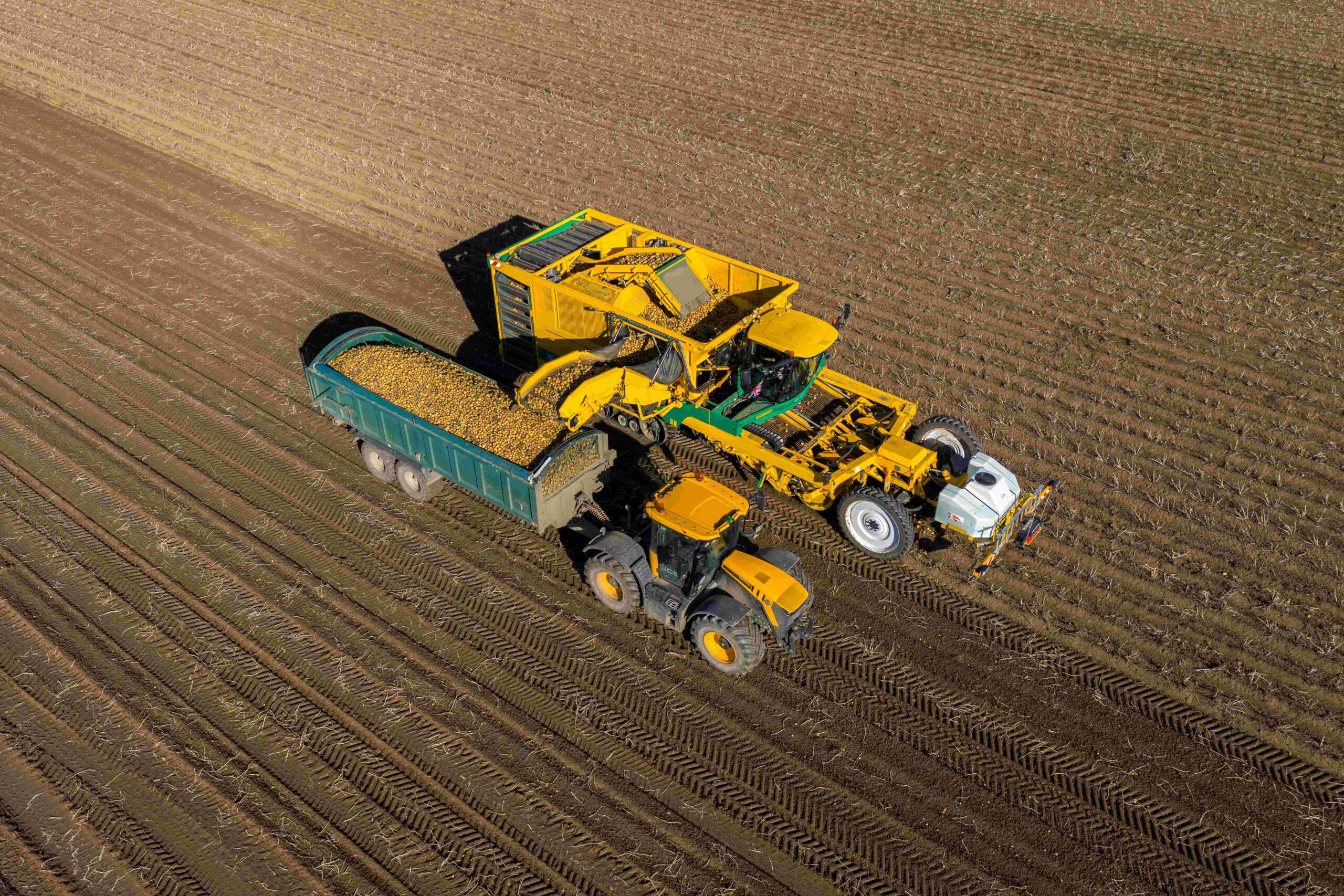
A further lever was fuel switching, with farm machinery moved onto hydrotreated vegetable oil (HVO) for the concept-farm operation. HVO is commonly sold as a “drop-in” diesel substitute and is marketed as delivering substantial lifecycle greenhouse-gas savings versus fossil diesel, with performance varying by feedstock and supply chain. Tesco and Branston have framed the combined changes as delivering more than a 50% reduction in average carbon emissions versus conventional production baselines for the crop.
Andy Blair, Branston’s field technical manager overseeing the concept-farm operation, said: “It’s a huge milestone to have achieved an lower average carbon footprint in the production of this crop of Georgina potatoes, compared to conventional production averages. The findings from this process will support the wider industry in edging forward towards national sustainability targets, which is exactly the outcome we’d hoped for.”
The Lincolnshire site was established in 2025 as part of a longer-term approach to trial practical decarbonisation measures in commercial conditions, rather than as a one-season demonstration. Tesco’s broader low-carbon farm programme in the county has been set up to test rotations and inputs across multiple crops with several suppliers, with disease management, soil health, and input efficiency designed into the rotation planning.
Natalie Smith, Tesco Head of Sustainable Agriculture and Fisheries, said: “The first crop of potatoes grown on our low-carbon concept farm in Lincolnshire are landing in stores today. Grown in partnership with our supplier Branston, they use low carbon methods and growing techniques to reduce their environmental impact. Tesco Finest Georgina potatoes are a customer favourite, and we think they taste just as good as the potatoes grown using traditional methods.”
Branston said the next phase will extend the test programme beyond the current potato crop, including additional work on cover crops to support soil structure and nutrient retention. The company also referenced planned investment in R-Leaf foliar technology, which is designed to convert atmospheric nitrogen oxides into nitrate available to plants, alongside trials of a biomethane tractor as part of the wider drive to reduce operational emissions.