IN Brief:
- Kepak trialled variable-speed ECOTORQUE control on a chamber packaging machine at its Aberdeen site.
- Busch said weekly energy use fell by more than 64%, with idle-phase consumption down by 94% and active-production demand also reduced.
- The retrofit shows how packaging utilities can be matched more closely to process demand, cutting wear as well as electricity use.
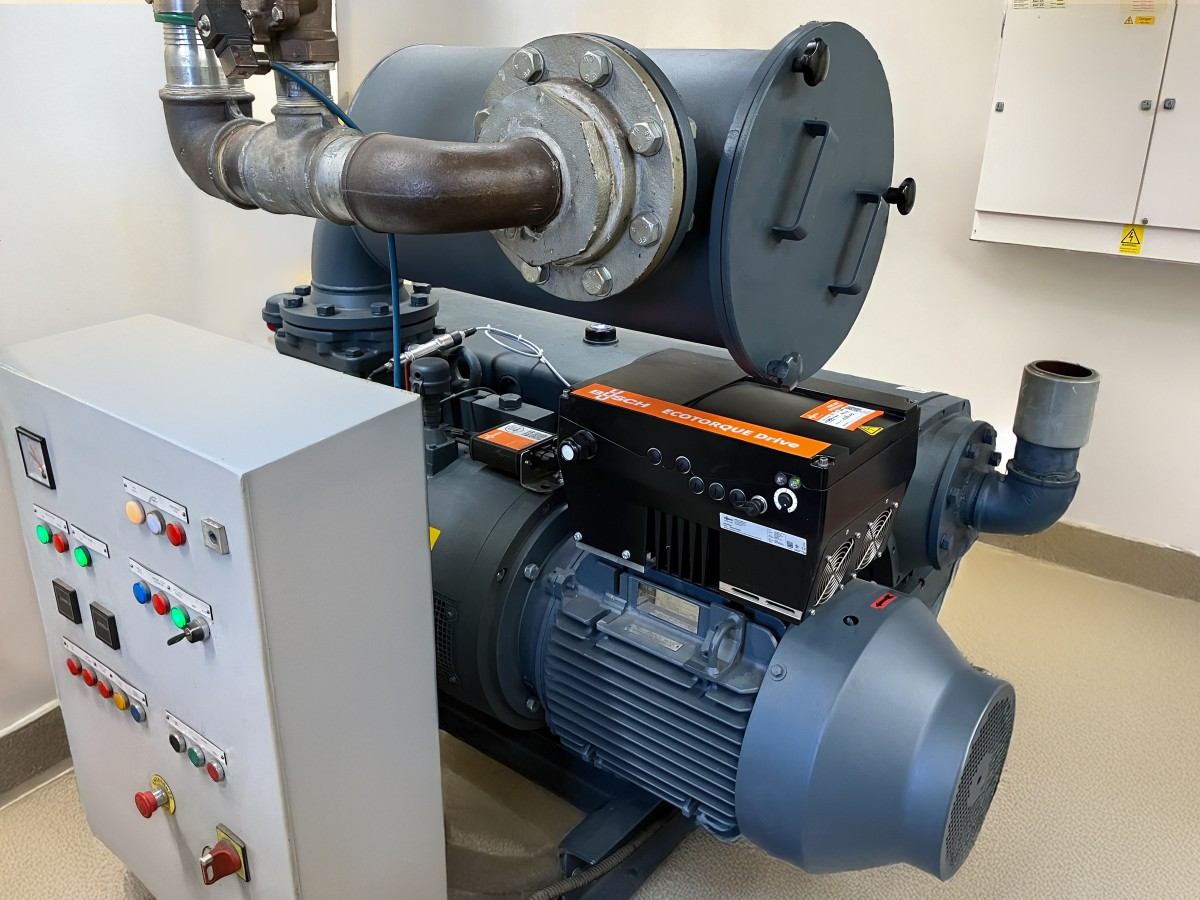
Kepak McIntosh Donald has reduced energy use on vacuum packaging lines at its Aberdeen site after retrofitting variable-speed control to existing Busch rotary vane pumps.
The project focused on chamber packaging machines used to vacuum-pack fresh meat. In that process, portions are loaded into barrier bags, placed in the chamber, evacuated to the required vacuum level, then sealed before the chamber returns to atmospheric pressure. Busch said the lines had previously been operating with R5 oil-lubricated rotary vane vacuum pumps running continuously at a fixed 50 Hz, regardless of whether the packaging cycle was actively drawing vacuum.
That operating pattern leaves an obvious inefficiency during idle periods, breaks, and changing demand conditions across the shift. Busch’s ECOTORQUE retrofit adds variable-speed drive control so pump speed can adjust in real time to process demand, slowing down or moving into Eco mode when the machine is not drawing the same level of vacuum.
The Aberdeen trial was carried out on one chamber packaging machine using baseline measurement before installation and a second measurement period after commissioning. Busch said weekly energy consumption fell by more than 64%. During active production, energy use was reduced by around 26%, while power consumption during breaks dropped by 94% because the pump no longer continued operating at the same fixed load with little or no process demand.
Average power demand during active production fell from 16 kW to 11.8 kW. Across the trial week, Busch said that equated to about 903 kWh saved, worth around £207 on its stated electricity price assumption, or roughly £10,350 a year for one machine based on 50 production weeks.
The engineering benefit extended beyond electricity consumption. By avoiding continuous full-speed operation, the retrofit also reduced mechanical wear on vanes, bearings, and related components, while lower oil temperatures slowed oil degradation. Busch said that should extend service intervals, reduce maintenance costs, and lower the risk of unplanned downtime.
For meat processors, that combination is particularly relevant because vacuum packaging is tied directly to pack integrity, shelf life, oxidation control, and line continuity. Any efficiency measure that reduces energy use while maintaining process stability is easier to justify where packaging performance remains non-negotiable.
Malcolm Baillie, engineering manager at Kepak, said: “The projections Busch provided were already attractive, but the actual trial results were even better.”
He added: “This project paid for itself quickly and fits perfectly within our wider efficiency strategy.”
Busch said the Aberdeen trial has since led to wider rollout on other suitable pumps at the site, with scope to extend the approach to additional Kepak locations. For packaging operations working to reduce utility costs without disrupting throughput or pack quality, retrofit control strategies like this are likely to draw wider attention.