IN Brief:
- SALTWELL has opened a new Chile facility near its raw material source and export routes.
- The plant increases capacity for a natural salt with 35% less sodium than conventional salt.
- Sodium reduction is becoming a supply and manufacturing issue as much as a formulation challenge.
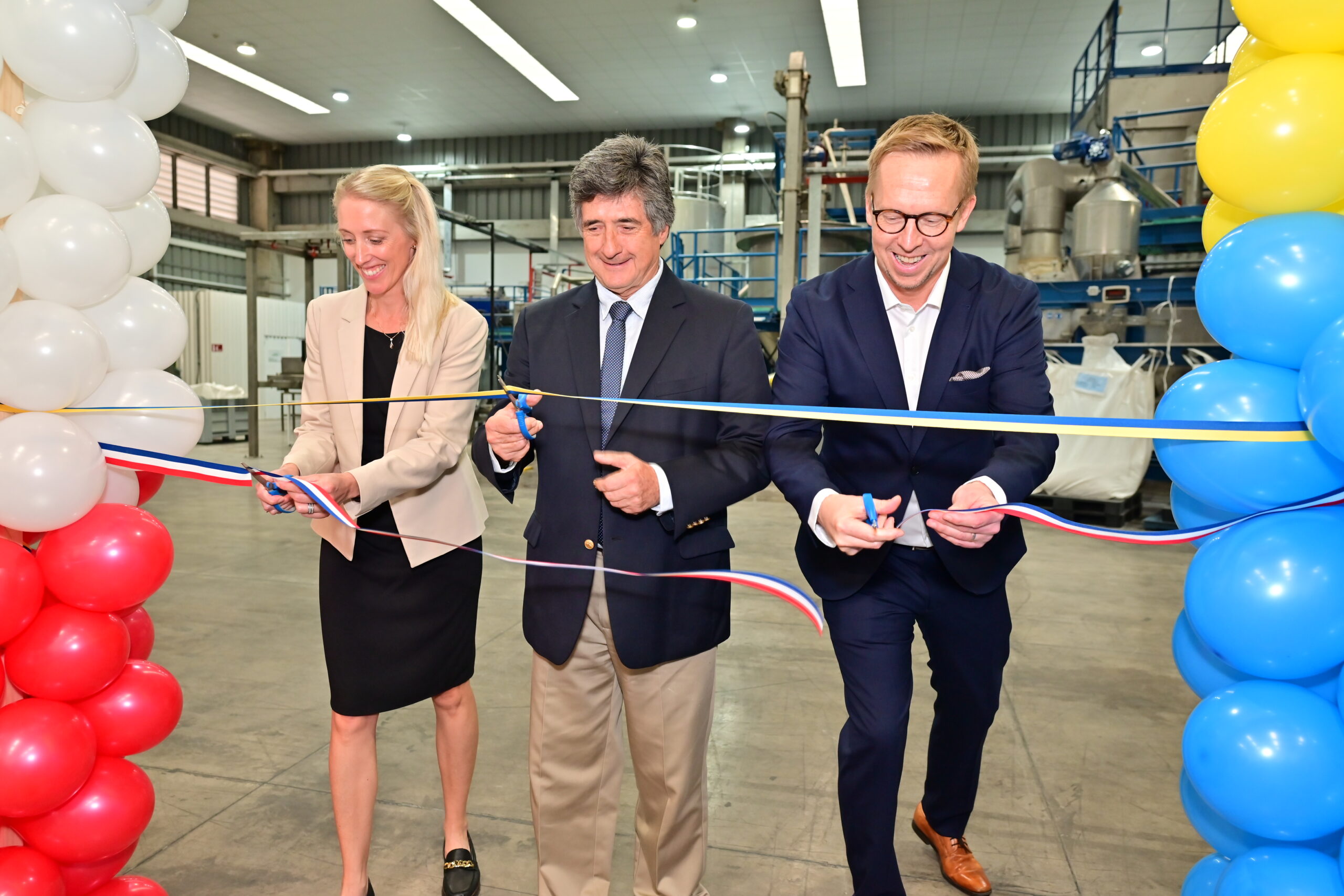
SALTWELL Group has opened a new production facility in Santiago, adding capacity for its lower-sodium salt and moving much of its manufacturing closer to the raw material source in Chile. The expansion is intended to support growing demand from food manufacturers looking to cut sodium levels while retaining the taste, texture, and functional performance expected from conventional salt.
The company’s SALTWELL ingredient is positioned as a natural, clean-label salt containing 35% less sodium than standard salt. It is produced from hypersaline water resources associated with the Atacama salt flats, using solar evaporation and sea salt production methods. For manufacturers working on sodium reduction, the attraction lies in the fact that salt rarely acts as a simple seasoning input. In many products, it contributes to preservation, texture, process behaviour, and flavour balance, which makes reformulation harder than a numerical reduction target might suggest.
The new Chile facility is significant on that industrial level. Reformulation ingredients only become useful at scale when supply is consistent, capacity is available, and logistics are dependable enough for large-volume commercial use. By locating production close to both the raw material source and Chile’s export infrastructure, SALTWELL is addressing one of the practical constraints that often slows adoption of specialist ingredients: the gap between promising formulation performance and reliable supply into mainstream manufacturing.
The site also changes the company’s production footprint. Most SALTWELL output will move to Chile from Cyprus, while the Cyprus operation will remain focused on speciality lines and contingency use. That creates a more direct production chain from source to finished ingredient and reduces the travel distance for raw materials before processing. For food manufacturers watching freight exposure, continuity risk, and procurement resilience, those changes are likely to carry as much weight as the nutritional positioning.
Sodium reduction remains a persistent target across food manufacturing, even if progress is uneven from one category to the next. Processed meats, bakery products, soups, snacks, sauces, ready meals, and coatings all rely heavily on salt, and reducing sodium in those categories often introduces trade-offs that development teams have to manage carefully. Flavour loss can usually be described quickly. Texture, shelf-life performance, process stability, and consumer acceptance take longer to solve.
That is why ingredient format still matters. A lower-sodium salt that behaves like a familiar process ingredient is easier to test, easier to scale, and easier to integrate into existing formulations than a more radical redesign of the recipe. Clean-label positioning strengthens that appeal, particularly in categories where ingredient declarations are under closer scrutiny from retailers and consumers. Manufacturers are still under pressure to make nutritional improvements without replacing one problem with another.
The wider market is moving in that direction. Public-health pressure on sodium intake has not gone away, and food manufacturers are facing a more sustained expectation that reformulation will be measurable and repeatable. Large processors increasingly need ingredient solutions that can work across portfolios rather than in isolated pilot projects. That places more emphasis on volume, consistency, and cost discipline than on novelty.
Ingredient suppliers are adjusting to that shift. Health-led claims alone are not enough in a manufacturing environment where procurement, operations, and quality teams all have to sign off on a change. The supplier that can offer scale, stable specification, clean-label compatibility, and logistical confidence has a much stronger position than one selling reformulation as a one-off technical exercise.
SALTWELL’s Chile investment reflects that more mature phase of the market. Sodium reduction is still a nutrition issue, but it is also a factory issue, a sourcing issue, and a portfolio planning issue. As manufacturers work through the harder categories in processed food, ingredients that can reduce sodium while fitting established production systems are likely to remain in demand.
The new facility gives SALTWELL a firmer industrial base for that argument. It turns a specialist formulation proposition into a larger-scale production platform, closer to source and better aligned with the demands of global food manufacturing.