IN Brief:
- Domino has introduced an Egg Pack Printing Traverser for multi-lane egg packing operations using Gx-Series thermal inkjet printers.
- The system is designed to print directly across fibre and plastic egg packs while supporting grader integration, code verification, and GS1-aligned traceability.
- It reflects a wider shift away from applied labels and toward inline, data-rich printing on primary packs.
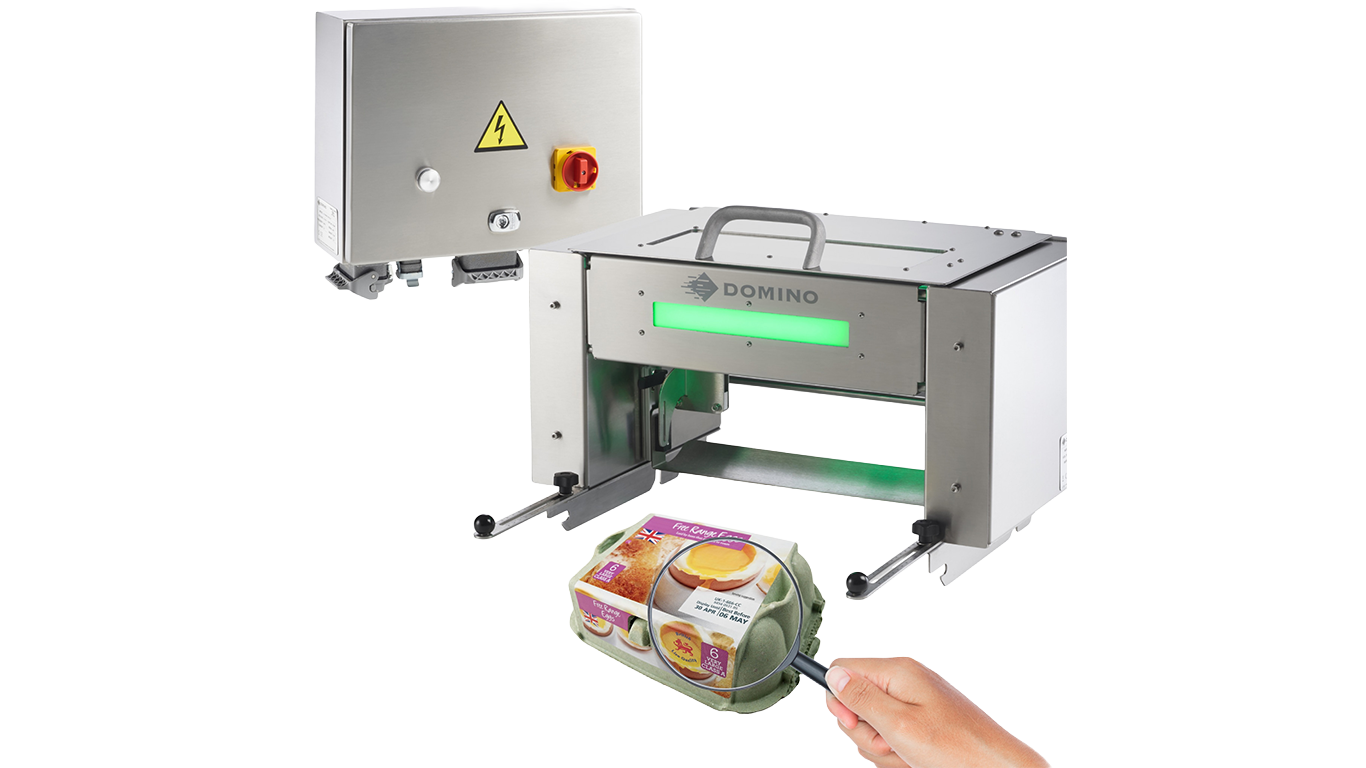
Domino Printing Sciences has launched a dedicated Egg Pack Printing Traverser aimed at high-speed, multi-lane egg packing lines, extending direct-to-pack coding further into a category where traceability, pack diversity, and retail compliance are all tightening. The new platform combines the company’s Gx-Series thermal inkjet printers with a traverser engineered to print across multiple lanes and pack formats without breaking line rhythm.
Egg operations have long had to balance speed with readability, particularly where producers are running mixed materials and high grader throughputs. Domino says the traverser is designed to print on moulded fibre, pre-labelled fibre, and rigid plastic packs, while integrating with Moba Omnia and Sanovo GraderPro systems. That matters because coding hardware in egg plants increasingly needs to behave as part of grader architecture rather than as a separate bolt-on station.
The company says the Gx350i-based system has demonstrated high-resolution coding at speeds above 50 packs per minute, which places it in line with the throughput of current high-performance graders. Inline code verification is also part of the offer, with support for smart vision systems that can detect missing or defective prints and trigger automatic reject before dispatch. In practical terms, that gives producers a tighter loop between print generation, inspection, and pack control.
The material angle is just as important. By using cartridge-based thermal inkjet printing instead of applied labels, the system cuts out backing paper and label waste while reducing servicing associated with mechanical labelling systems. For egg packers, that creates a more unified coding platform across different substrates while also reducing the number of moving parts that can interrupt production.
Domino is also tying the EPPT to a broader traceability agenda. The company says its thermal inkjet systems are already being used to produce retailer-compliant QR codes powered by GS1 and to support egg-to-pallet traceability. As code content becomes richer and more retailer-facing, direct print on pack starts to carry more value than a simple date or batch mark. It becomes part of how packing lines manage data as well as product.
Producers looking for further technical detail can learn more about the EPPT here.