IN Brief:
- UPM Specialty Materials and Felix Schoeller have launched a recyclable, fibre-based flexible packaging solution for food applications.
- The structure is designed to balance oxygen, moisture, grease, sealing, and mechanical performance across different pack formats.
- The launch lands as packaging teams prepare for tighter recyclability expectations under Europe’s PPWR framework.
UPM Specialty Materials and Felix Schoeller have introduced a fibre-based barrier solution for flexible food packaging, positioning the structure as a recyclable alternative for formats that still require robust barrier performance and reliable machine handling.
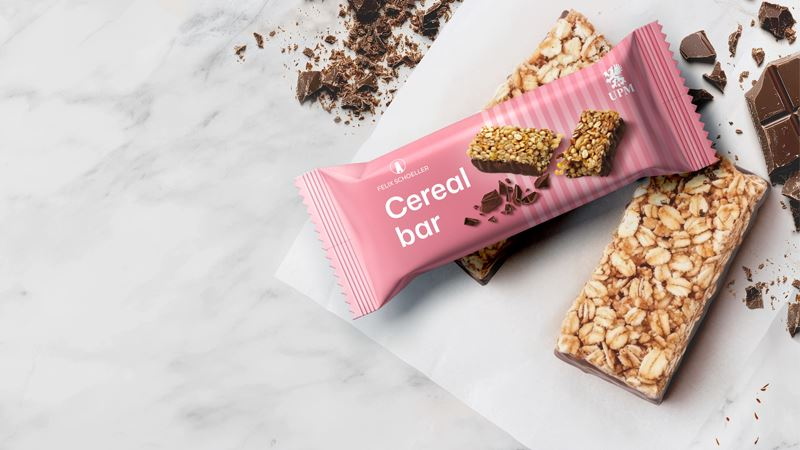
The pack is built around UPM Solide Lucent packaging paper, with Felix Schoeller applying a barrier concept that can be adjusted to suit different products and shelf-life requirements. The companies have highlighted applications including chocolate and snack bars, where oxygen, moisture, grease resistance, sealability, and mechanical performance all need to be balanced within tight cost and converting constraints.
That balance is where most fibre-based flexible packaging projects still run into trouble. A structure that performs well on one barrier metric can fall short on heat sealing, dead-fold behaviour, or line stability, while over-engineering the barrier can erode both recyclability and economics. UPM and Felix Schoeller are trying to push past that by offering a paper-based structure that can be tuned more precisely to the product rather than forcing brands into a generic replacement format.
The material has been positioned as food-safe, recyclable, and suitable for the shifting regulatory direction created by Europe’s Packaging and Packaging Waste Regulation. UPM has also focused on convertibility, with Solide Lucent designed to combine a smooth, dense surface with the strength needed for coating, printing, and downstream processing. For packaging teams, that combination matters nearly as much as the sustainability message. A pack that satisfies recyclability targets but struggles on speed, sealing, or pack integrity does not survive long in production.
Felix Schoeller’s application-specific barrier approach opens the door to a broader set of dry-food uses if performance holds up across multiple formats. Confectionery, cereal bars, biscuits, and snack products may sit close together on the shelf, but they place different demands on barrier, sealing, and transport resistance. That is one reason paper-based flexible packaging remains such a difficult category to crack at scale. The technical gap between a successful concept and a dependable, production-ready pack is still larger than many headline announcements suggest.
The timing of the launch is notable. Packaging development teams are under growing pressure to reshape materials portfolios ahead of tighter recyclability requirements, but many are still evaluating fibre-based routes application by application rather than through wholesale conversion. A system that can be adapted to different pack needs stands a better chance of being trialled seriously than one tied to a narrow use case or a single barrier profile.
There is also a broader market shift behind this. Food manufacturers are no longer treating fibre-based flexible packaging as a niche innovation track. It is now part of mainstream packaging strategy, particularly in categories where monomaterial plastics, coated papers, and hybrid structures are all competing for the same redesign window. That competition is forcing suppliers to move beyond broad sustainability claims and back their materials with more detailed performance data around machinability, barrier durability, and end-of-life routes.
Interpack is likely to provide the first clear indication of how strongly this solution resonates. The paperisation trend is crowded with prototypes, coatings, and pilot concepts, but the products that gain traction tend to be the ones that reduce compromise rather than simply shifting it elsewhere. UPM and Felix Schoeller are presenting this platform as a practical route through that problem. The next question is whether converters and food manufacturers see enough technical headroom in it to commit to live projects.