IN Brief:
- Sesotec’s new INTUITY NEX metal detector combines four simultaneous frequencies with AI-supported foreign-body detection.
- The system is built for demanding food applications, including washdown environments and products with strong product effect.
- Connectivity, remote visualisation, and hygienic conveyor design show how inspection equipment is moving deeper into digital production lines.
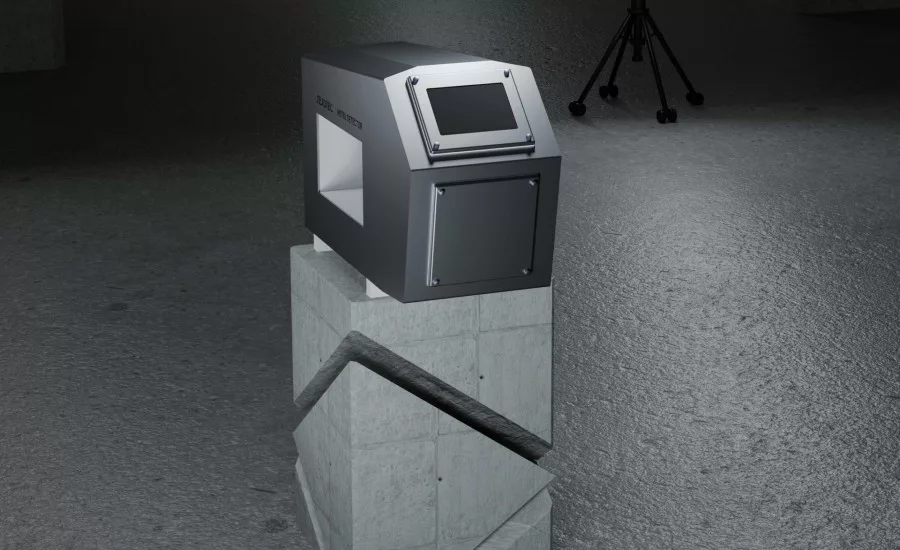
Sesotec has launched its INTUITY NEX metal detection system ahead of Interpack 2026, combining simultaneous multi-frequency inspection, AI-supported detection software, hygienic design, and line integration features in a package aimed at demanding food production environments.
The system has been developed as a tunnel metal detector for applications where conventional detection can struggle with product effect, challenging pack formats, or stringent hygiene demands. Sesotec said INTUITY NEX runs four search frequencies in parallel, a configuration designed to improve detection accuracy in products that have traditionally posed difficulties for metal detectors, including sliced packaged bread using metal clips. It also incorporates the latest version of the company’s THiNK software to support more stable foreign-body detection, including in unpackaged meat applications.
Hygiene sits at the centre of the design. The new coil architecture is built to meet IP66 and IP69K protection classes, allowing it to operate in production areas subject to frequent and intensive washdown. That places the system directly into the realities of meat, poultry, seafood, and other hygiene-sensitive lines where equipment must withstand repeated cleaning without undermining detection performance or uptime. Sesotec is also pairing the detector with a new conveyor concept for sensitive applications, including unpackaged fresh or frozen fish and chicken breast fillets.
The operating interface has also been pushed further toward digital control. A capacitive touchscreen, gesture-based controls, and remote visualisation are designed to simplify operation and reduce dependence on the machine as the only access point. On the connectivity side, the system supports OPC-UA, MQTT, and REST API, giving it a clearer route into production environments where inspection equipment is expected to feed data into wider digital systems rather than function as a standalone endpoint.
That is where the launch becomes more than a routine equipment update. Metal detection has long been a core control point in food factories, but the expectations around inspection technology are broadening. Sensitivity remains fundamental, yet manufacturers increasingly expect these systems to help with uptime, reduce false rejects, support data visibility, simplify sanitation, and integrate more neatly into line-level digital infrastructure.
Bakery and protein processing show why that shift matters. In bakery, metal clips and variable product characteristics can make inspection more complex than they appear on paper. In fresh meat and poultry, washdown demands and the handling of unpackaged products create a different but equally difficult set of constraints. A detector able to work across both types of environment, while connecting into broader monitoring systems, is easier to justify as part of a wider plant upgrade than a machine focused on detection performance alone.
There is also a clear industry trend behind the timing of the launch. Food manufacturers are under continuous pressure to strengthen food safety controls while managing labour constraints, line speeds, and tighter operating margins. That has pushed equipment suppliers to combine established hardware with more advanced software, cleaner hygienic design, and better data handling. Artificial intelligence is beginning to appear less as a separate headline feature and more as a supporting layer within inspection technology itself.
Interpack will provide Sesotec with a high-profile platform, but the decisive test will come on live lines. Food safety equipment remains a practical market. Manufacturers will want to see whether the system can maintain sensitivity in difficult conditions, whether the hygienic design stands up to repeated cleaning, and whether the extra connectivity improves plant performance without adding unnecessary complexity. INTUITY NEX suggests the inspection category is moving further into that broader operational role, where contamination control, line efficiency, and digital visibility increasingly sit side by side.