IN Brief:
- Michelman has launched two bio-based, plastic-free coatings for paper food packaging.
- Nuvita Life 4002 provides heat-seal, oil, grease, and mineral-oil barrier properties.
- Nuvita Life 4605 targets oil, grease, water, and moisture resistance for retail packs.
Michelman has introduced two bio-based, plastic-free barrier coatings for fibre-based retail food packaging applications.
Nuvita Life 4002 and Nuvita Life 4605 have been developed to support high barrier performance while enabling recyclability and compostability options for paper-based packaging. The coatings are part of Michelman’s Nuvita portfolio of sustainable packaging coatings, primers, heat seals, and functional solutions.
Nuvita Life 4002 is a heat-seal coating designed to provide oil and grease resistance, mineral-oil barrier performance, and strong seals across a broad sealing window. It is also overcoatable, giving converters flexibility in packaging structures.
Nuvita Life 4605 is a topcoat that provides oil and grease resistance, water resistance, and moisture barrier performance. The two coatings are microplastic-free, compliant with the European Single-Use Plastics Directive, and 100% bio-based in dry film.
Both coatings have been engineered to support dual end-of-life pathways, with compatibility for recycling streams and options for compostability. Michelman has also aligned the coatings with evolving European regulatory frameworks, including the Packaging and Packaging Waste Regulation.
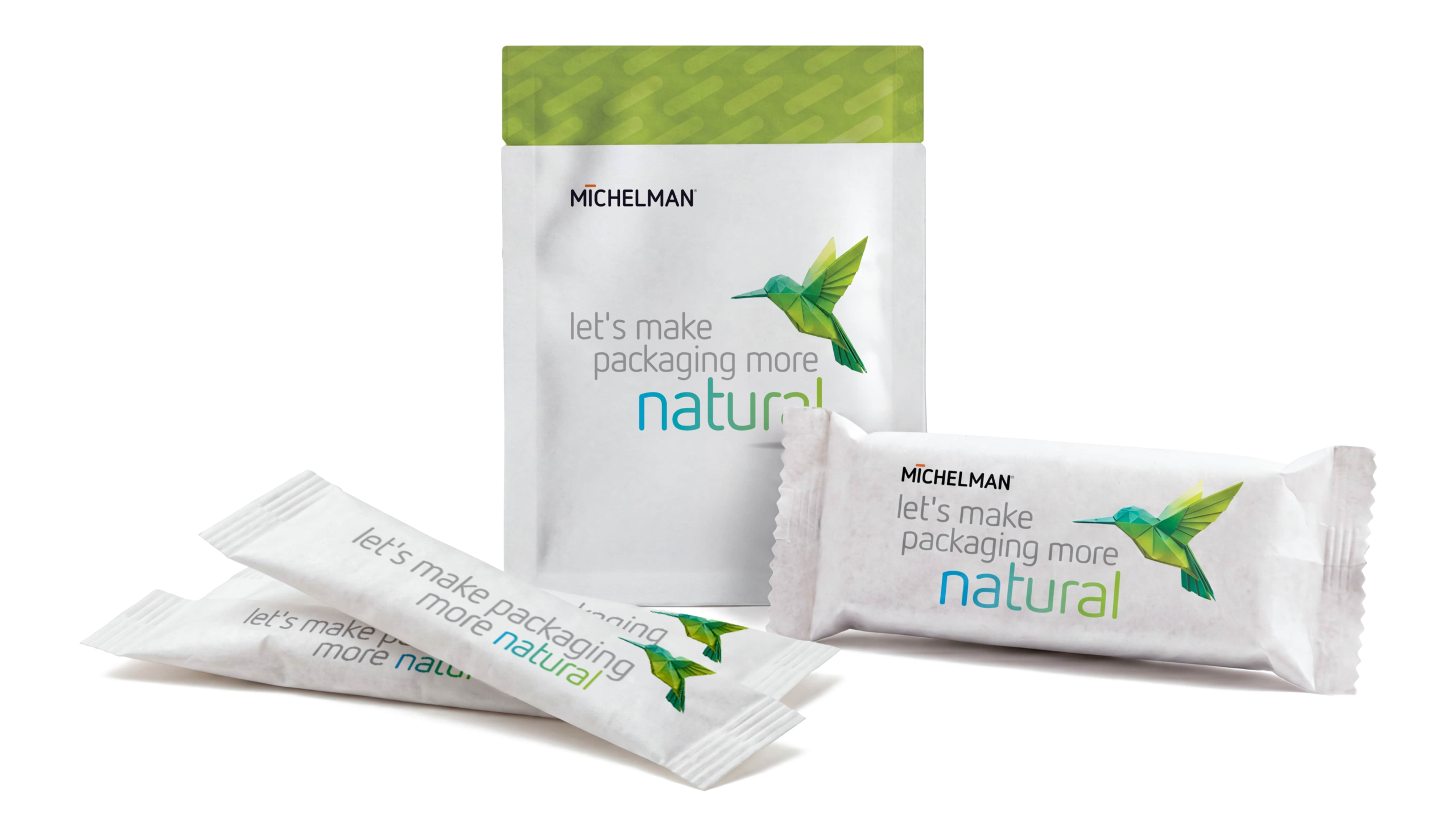
The coatings are crease resistant and designed with a low coefficient of friction to support compatibility with vertical form-fill-seal processing lines. Target applications include pouches and sachets for dry foods, flow wraps for food bars, and envelopes for tea.
The launch addresses one of the central barriers to paper-based food packaging: performance. Fibre-based packs often need added functionality to handle oil, grease, moisture, aroma, sealing, and machine handling. Without those properties, a paper pack can fail in production or distribution even when its environmental profile is attractive.
VFFS compatibility is especially important. Dry-food pouches, sachets, and food-bar wraps often run at speed on established lines where friction, sealing window, crease resistance, and web handling are critical. Packaging materials that disrupt throughput or increase rejects can quickly become commercially unviable.
The mineral-oil barrier function in Nuvita Life 4002 is also relevant for fibre-based packaging, especially where recycled paper streams or printed substrates raise potential migration concerns. Functional barriers remain one route to risk reduction in these applications.
The coatings arrive as food brands and retailers face tightening expectations around plastic reduction, recyclability, and waste. European regulation is moving towards clearer requirements on packaging design and end-of-life performance, while paper-based formats remain attractive to many consumers.
Paper is not automatically a better pack. Food packaging still has to protect product quality, prevent waste, run efficiently, and meet safety requirements. The strongest fibre-based systems are those that combine barrier performance with recycling compatibility and reliable processing.
Nuvita Life 4002 and Nuvita Life 4605 are aimed at applications where paper formats can realistically meet product demands. Dry foods, bars, tea envelopes, pouches, and sachets are logical targets because they need functional protection but do not carry the same demands as chilled, wet, or high-fat refrigerated products.
Adoption will depend on converter trials and manufacturer validation. Seal integrity, barrier performance, and line efficiency will decide whether the coatings can widen the practical use of fibre-based retail food packs.