IN Brief:
- Cullen is investing £5m to expand sustainable packaging manufacturing at its Glasgow site.
- The programme includes the Moulded Fibre Machine 8000, designed and built in-house by the company’s engineering team.
- Fibre-based packaging capacity is growing as food brands face plastic reduction, recyclability, and EPR pressure.
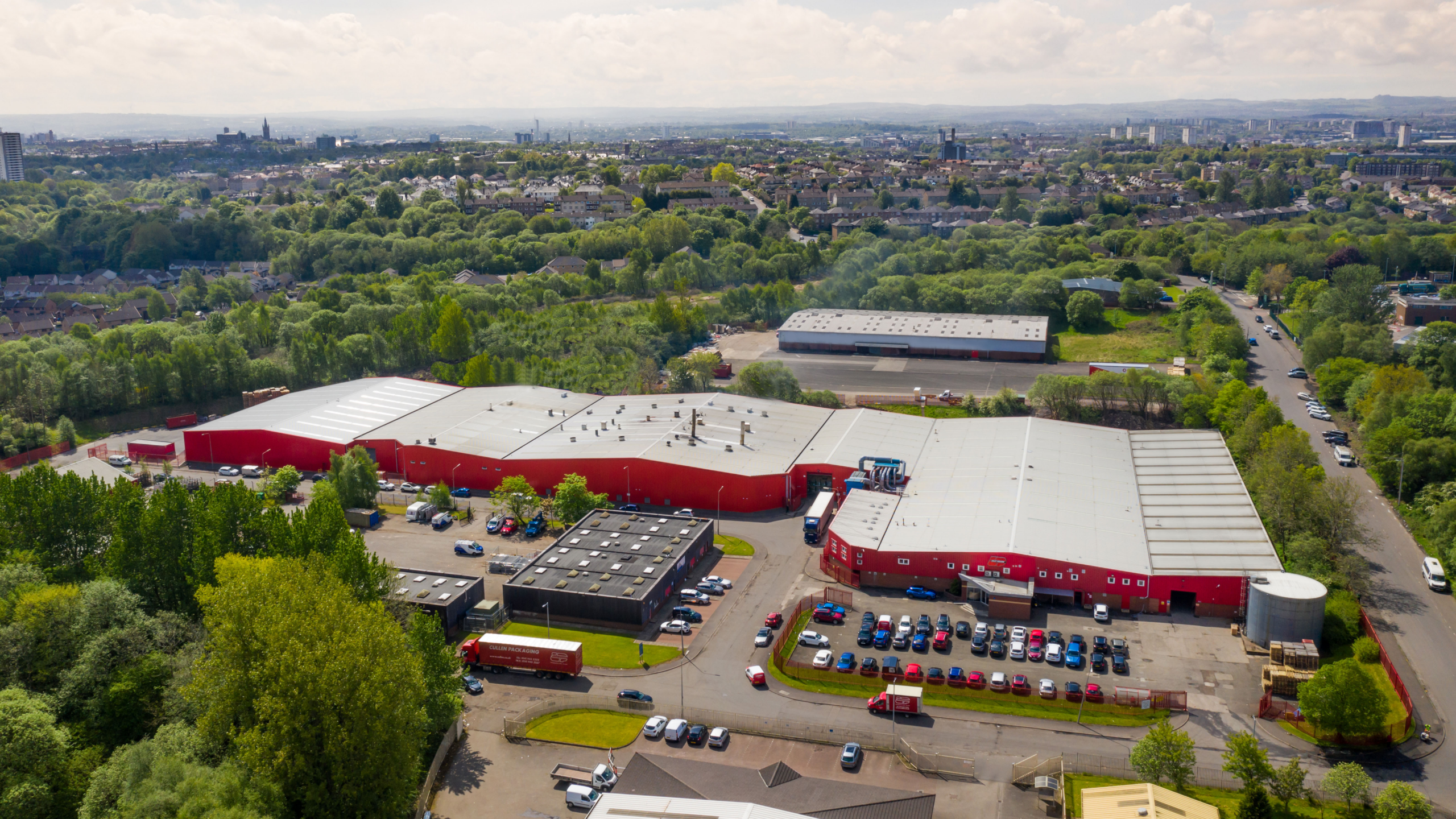
Cullen is investing £5m to expand sustainable packaging production at its Glasgow manufacturing base, with new capacity centred on its Moulded Fibre Machine 8000.
The machine was designed and built in-house by Cullen’s engineering team and has been brought online to support rising demand for moulded fibre packaging. The company manufactures both corrugated board and moulded fibre packaging, positioning the site as a combined fibre-based production platform for food, drink, retail, e-commerce, and industrial applications.
Cullen produces hundreds of millions of packaging products each year and operates a closed-loop model that reuses corrugated waste from its own operations in moulded fibre production. The new investment will increase output while supporting customers seeking alternatives to plastic and conventional packaging formats.
Food packaging teams are being pushed by extended producer responsibility, recyclability rules, plastic reduction targets, retailer requirements, and product protection demands. Material decisions now have to balance compliance, cost, performance, and machine compatibility, particularly in high-volume food and drink applications.
IN Food recently covered UPM and Felix Schoeller’s fibre-based barrier packaging work, showing how paper and fibre systems are moving into more demanding food applications. Cullen’s investment adds a capacity and machinery element to that wider shift.
Fibre-based packaging cannot displace plastic formats on principle alone. It needs machine availability, tooling, forming accuracy, surface quality, barrier compatibility where required, and consistent output. Moulded fibre also has to compete with incumbent plastics that are lightweight, cheap, highly optimised, and deeply embedded in packing lines.
Cullen’s in-house machine development gives the expansion a clear engineering dimension. Equipment designed around a specific production model can support faster iteration, stronger process control, and closer alignment with customer packaging requirements. It also gives the company more direct control over capacity expansion at a time when machinery lead times and specialist tooling can slow packaging transitions.
The suitability of moulded fibre still depends heavily on application. Produce, bakery, chilled meal components, drinks accessories, transit protection, and foodservice formats each have different performance requirements. Some can move quickly into fibre. Others need barriers, sealing performance, moisture resistance, or line compatibility that make substitution more complex.
The packaging market is entering a specification-led phase. A pack must satisfy recyclability, compliance, cost, product protection, and manufacturability at the same time. Cullen’s investment adds production depth to that transition, strengthening the infrastructure behind fibre-based packaging rather than relying on material substitution alone.