IN Brief:
- AIPIA and AWA named Xordex Ventures, Luchrome, and Lasso Loop Recycling as winners of the 2026 Brand Challenge.
- Cranswick’s brief focused on condition monitoring, traceability, authenticity, shelf-life support, and recyclable smart packaging.
- The result reflects rising demand for packaging that combines product protection, digital identity, compliance, and circularity.
The Active & Intelligent Packaging Industry Association and AWA Alexander Watson Associates have named the winners of the 2026 AIPIA Brand Challenge, following a live smart-packaging competition built around Cranswick’s “Perfect Pack” brief.
The challenge took place during the AIPIA & AWA Smart Packaging World Congress in Amsterdam, where selected packaging technology providers presented solutions to a Cranswick evaluation team. The brief asked for smart, scalable packaging capable of monitoring product condition, supporting food safety and shelf life, improving traceability and authenticity, and meeting sustainability and regulatory requirements.
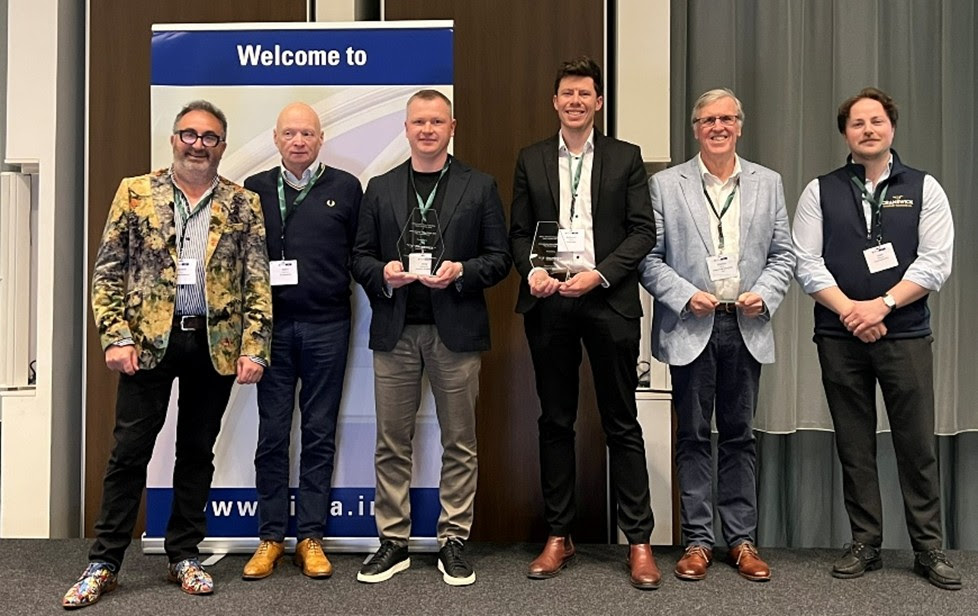
Xordex Ventures took first place, represented by Oleg Rutkowski. Luchrome placed second, represented by Romain Futsch, while Lasso Loop Recycling took third, represented by Aldous Hicks. The finalists were judged on innovation, feasibility, and potential real-world impact.
Cranswick’s “Perfect Pack” challenge set out a demanding version of the next generation food pack: one that can verify itself, protect itself, report its own condition, and connect digitally across the supply chain and with consumers. That moves packaging beyond containment and presentation, placing it inside the operational systems that govern assurance, traceability, shelf life, and waste reduction.
Fresh meat and prepared-food producers already rely on packaging to carry much of the burden of shelf-life control, hygiene, tamper evidence, traceability, coding, and retail presentation. Smart packaging adds a further layer by making product status, handling history, or pack identity more visible. In chilled categories, where time, temperature, seal integrity, and microbial risk remain tightly connected, additional visibility can support more targeted decisions across production and distribution.
Connected packaging is also moving closer to execution on the line. The shift explored in Domino sees 2D codes shift to execution showed how 2D codes, coding systems, vision equipment, and enterprise data are increasingly being treated as production tools rather than marketing add-ons. Cranswick’s challenge sits on the same path, linking packaging intelligence with traceability, verification, and supply-chain control.
The commercial test for any smart-packaging technology remains harsh. Food producers need systems that can survive high-speed packing, chilled conditions, moisture, sanitation regimes, retailer requirements, and tight unit economics. A sensor, marker, tag, or code only becomes useful when it can be integrated into existing lines without disrupting throughput, hygiene, or recycling obligations.
The presence of Lasso Loop Recycling among the winners also reflects a more mature conversation around intelligent packaging. Digital or active functionality must increasingly be compatible with circularity. Packaging that improves traceability but complicates recycling will face resistance from compliance teams, retailers, and material recovery systems.
Cranswick’s involvement gives the challenge industrial weight. The company operates in high-volume chilled food categories where shelf-life performance, retailer standards, hygiene discipline, and cost control leave little space for packaging concepts that cannot scale. Any system emerging from the “Perfect Pack” brief would need to move from demonstrator to factory conditions, where sealers, coders, inspection equipment, materials, and operators all shape the result.
The winning entries point to three active development tracks in smart food packaging: digital trust, optical or sensing-led condition monitoring, and circularity-focused material recovery. The strongest long-term systems are likely to combine those functions into packaging architectures that carry identity, condition, compliance, and end-of-life information without overloading the production line.