IN Brief:
- Handtmann Ltd was established in 1986 as the group’s first international subsidiary.
- The UK business now employs almost 50 people and operates as a launch market for new processing technology.
- Its Product Innovation Centre will support trials across filling, portioning, forming, dosing, and integrated production.
Handtmann Ltd has marked 40 years of UK operations by expanding the role of its Leighton Buzzard test facility as the Product Innovation Centre.
The business was founded in 1986 as the Handtmann Processing Group’s first international subsidiary, providing the foundation for a network that now includes 17 subsidiaries worldwide.
Almost 50 people work across the UK operation, supporting manufacturers in Britain and Ireland with equipment, line integration, product trials, training, applications development, parts, and service.
Handtmann’s portfolio spans grinding, mixing, emulsifying, filling, portioning, dough dividing, forming, separating, dosing, co-extruding, linking, weight control, handling, and digital production systems.
Its machinery is used across meat and sausage production, bakery and confectionery, prepared foods, pet food, dairy, fish, seafood, and plant based manufacturing. Filling and forming technology that developed around meat processing now handles a much wider range of product structures and recipes.
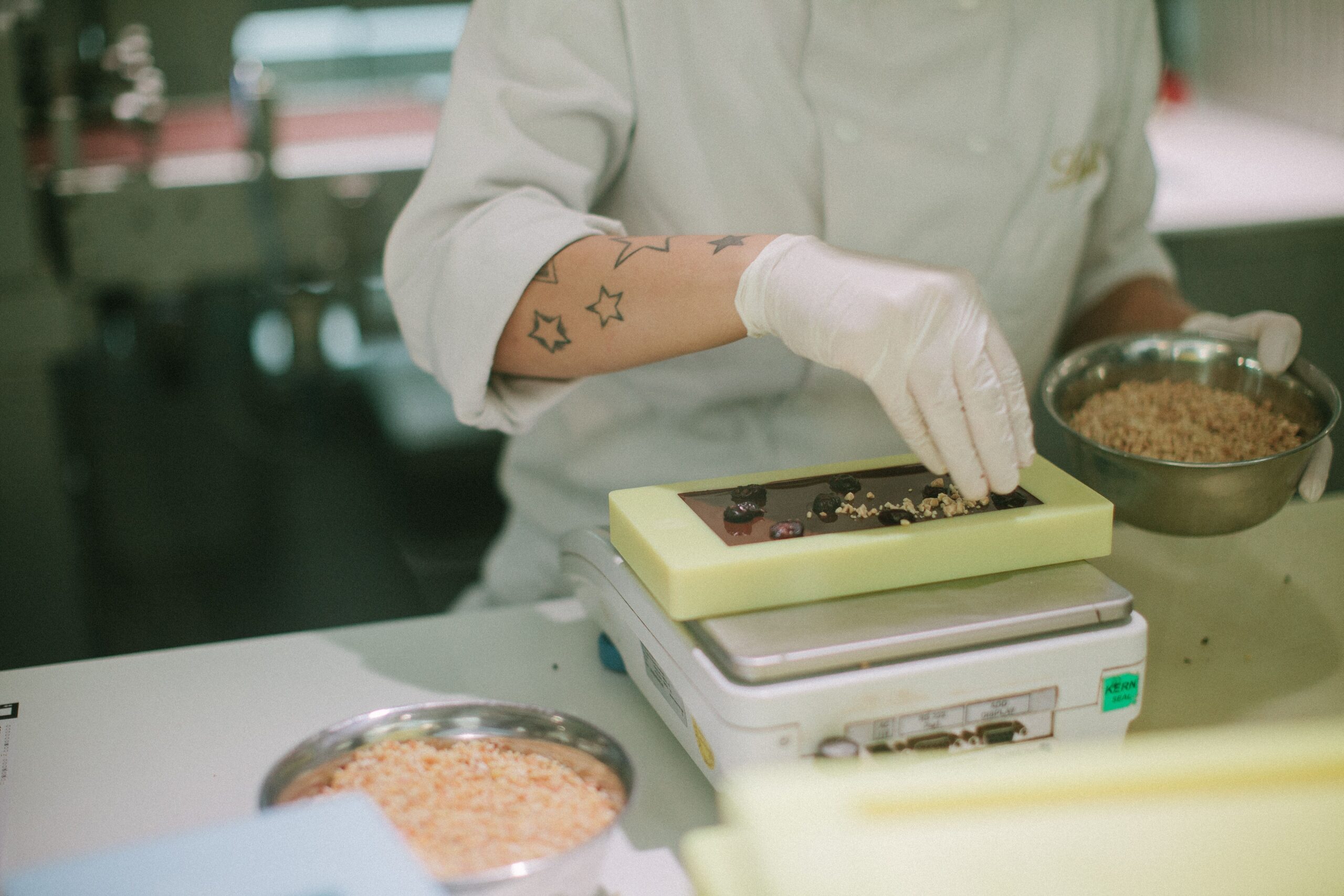
The Product Innovation Centre gives customers access to machinery, tooling, and applications expertise without taking commercial production lines out of service. Recipes and process settings can be tested before a manufacturer commits capital or interrupts a factory schedule.
Scale-up frequently reveals behaviour that is not visible during kitchen or laboratory development. Fat content, protein structure, temperature, particle size, viscosity, aeration, and inclusions all affect how material fills, forms, separates, and holds its target weight.
Formulation and machinery develop together
Changes intended to reduce cost, salt, fat, or additives can alter product flow and destabilise an established process. Increasing fibre or changing protein sources may affect pressure, shear, adhesion, and shape retention even where the sensory target remains broadly unchanged.
Plant based products provide a prominent example because hydrated proteins, oils, fibres, binders, and particulates require controlled mixing and portioning. Equipment trials allow formulation and machinery settings to be developed together instead of treating the production line as a fixed final stage.
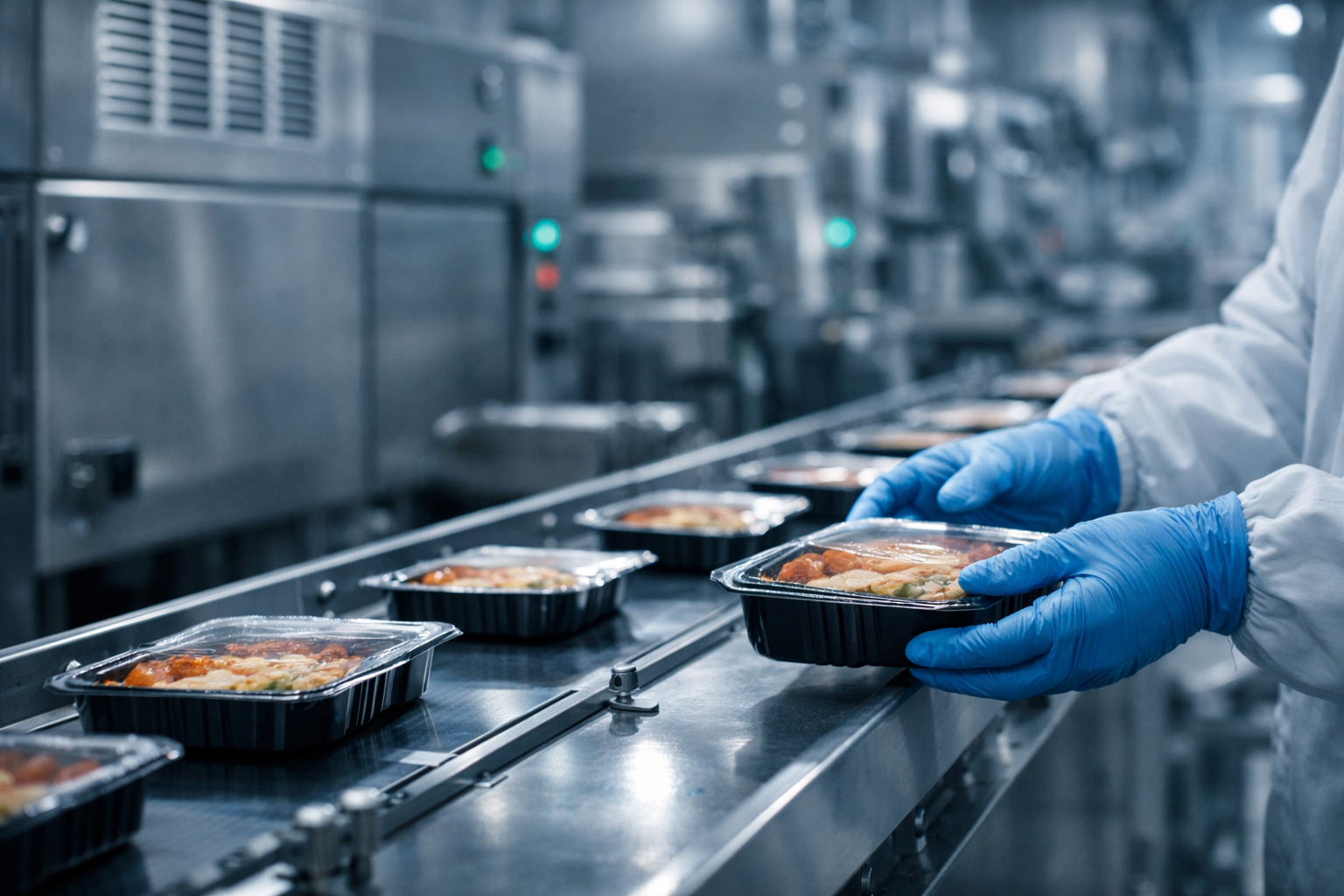
The same approach supports filled bakery products, co-extruded snacks, dairy preparations, convenience foods, and premium meat products. Accurate dosing protects yield, while controlled handling preserves visible inclusions and product structure.
Handtmann has identified integrated lines, automation, efficiency, and sustainability as priorities for its next phase in the UK. Those priorities align with the wider shift towards connected and resource-efficient food machinery, where equipment is judged through labour, giveaway, sanitation, data, and uptime as well as throughput.
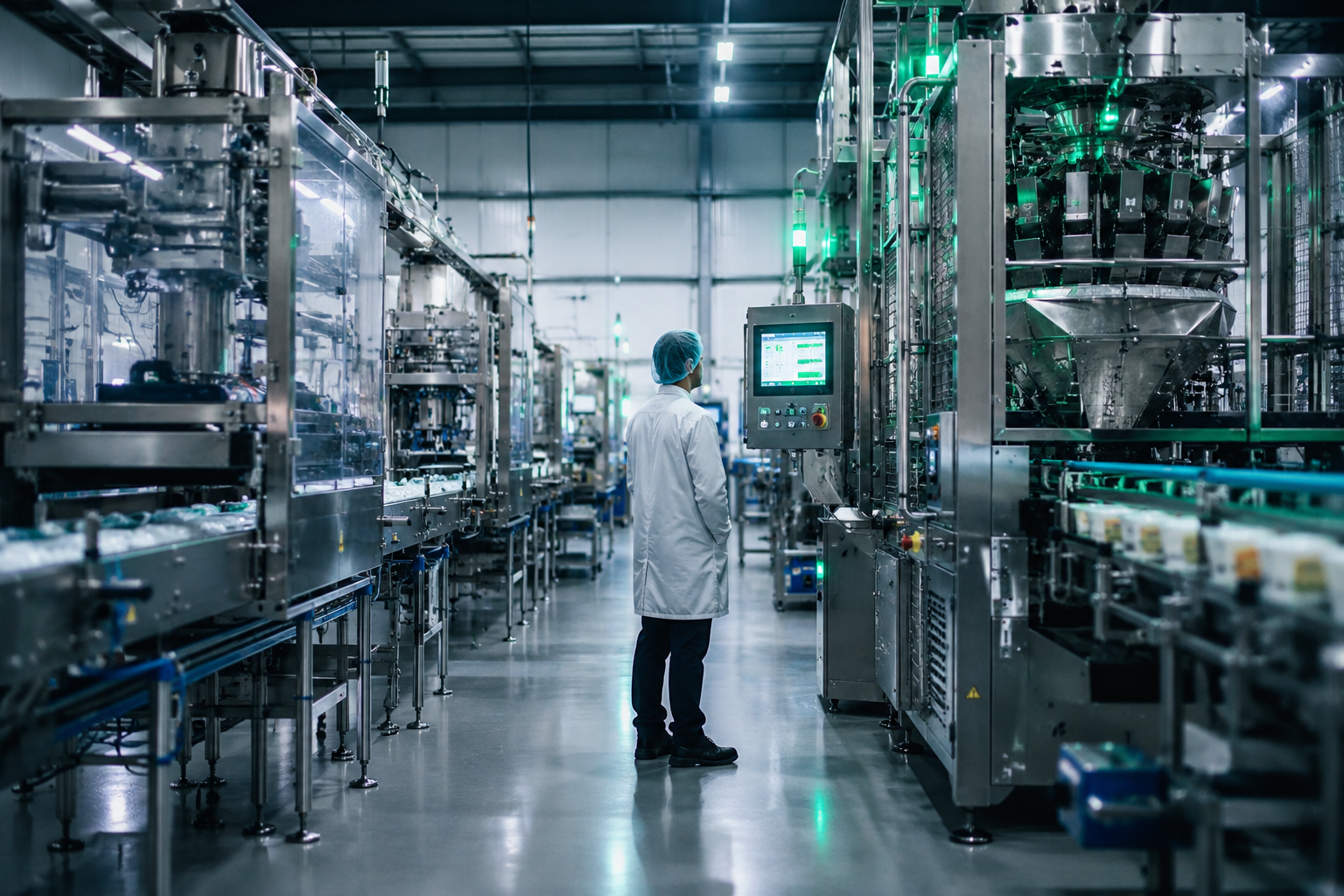
Factories increasingly ask suppliers to take responsibility for larger sections of the process. Grinding, mixing, filling, forming, inspection, handling, and packaging must operate at compatible speeds with hygienic interfaces and coordinated control.
A bottleneck in one stage can reduce the output of the complete line, while poor transfer between otherwise capable machines may damage products or create manual intervention. Integrated engineering provides a route to improving that balance, although it demands a deeper understanding of both upstream raw materials and downstream packaging.
Service determines lifetime output
Food-processing machinery often remains in service for decades, making supplier support central to its productive value. Preventive maintenance, spare parts, software, training, and rapid fault diagnosis influence lifetime performance long after the original capital project has been completed.
Local technical capability is particularly important where a specialised filler or former supports several product ranges. A prolonged stoppage can remove an entire category from the schedule rather than simply reducing one line’s output.
Four decades in the UK have given Handtmann an installed base and applications knowledge that cannot be recreated quickly. Long-serving engineers understand how equipment behaves with regional products, factory practices, and customer specifications.
That knowledge must now be transferred while the business develops skills in robotics, data, remote support, and increasingly complex control systems. Machinery suppliers face the same shortage of multidisciplinary engineers affecting food factories, particularly in field-service roles.
Connected systems can improve support by allowing alarms, output, and process information to be reviewed remotely. They can also compare performance between recipes, shifts, and sites, provided plant access is securely managed and the data is interpreted against production conditions.
Resource efficiency places further demands on machinery design. Lower giveaway, shorter changeovers, reduced product loss, and more efficient cleaning can cut both cost and environmental load without relying on headline increases in line speed.
Portion control offers one of the clearest gains. A small average overfill repeated across millions of units becomes a substantial quantity of product given away, while aggressive weight reduction can create underweight packs and compliance failures.
Dynamic regulation and integrated weighing allow a line to move closer to its declared target while monitoring drift. The resulting data can also reveal changes in product consistency or upstream preparation before they become visible through finished-pack checks.
Flexible machinery supports shorter runs and broader portfolios, although versatility does not remove the need for cleaning, tooling, recipe adjustment, and validation. Poor scheduling can consume the capacity that flexible equipment was intended to release.
The Product Innovation Centre can establish realistic rates, waste levels, cleaning requirements, and product tolerances before installation. Those results provide a stronger basis for investment than nominal machine speeds alone.
Handtmann’s anniversary records the development of its UK operation, but the expanded centre is directed towards the next set of production constraints. Manufacturers are seeking automation for difficult tasks, tighter yield control, faster product development, and capital projects supported by measurable operating gains.