IN Brief:
- Tailored Bottling Solutions began shipping products from its Dearborn, Michigan facility in September.
- The canning line is designed for about 500 million units annually and the PET line for about 250 million bottles.
- The site currently employs 18 people and is expected to reach around 45 to 50 as production expands to three shifts.
Tailored Bottling Solutions has started commercial production at its Dearborn, Michigan beverage plant, adding large can and PET contract manufacturing capacity to the Detroit area. The site began shipping products in September and currently employs 18 people, with staffing expected to reach around 45 to 50 as operations expand towards three shifts.
The canning line is designed for approximately 500 million units annually and the PET line for about 250 million bottles, giving the factory combined design capacity of roughly 750 million beverage units a year. That figure describes installed potential rather than current output because actual production depends on customer demand, operating hours, line speed, cleaning, changeovers and maintenance.
This distinction is especially important in contract manufacturing, where one site can handle carbonated soft drinks, energy drinks, protein beverages, functional waters, prebiotic sodas and other formats for several customers. The breadth increases the market available to the plant, but it also introduces more recipe, hygiene and packaging changes than a factory dedicated to one large brand.
Carbonated drinks require control of dissolved gas and filling pressure, while protein beverages can create different stability, viscosity and cleaning requirements. Functional products may add acids, minerals, flavours or other ingredients that alter how a formulation behaves during blending and filling, so process settings cannot simply be carried unchanged from one campaign to the next.
A contract manufacturer therefore has to manage product separation as carefully as throughput. Tanks, pipework and fillers need appropriate cleaning between campaigns, while ingredients, packaging and finished stock must remain traceable to the correct customer specification. The more brands a site handles, the more important disciplined scheduling becomes because every change consumes time that would otherwise be available for saleable production.
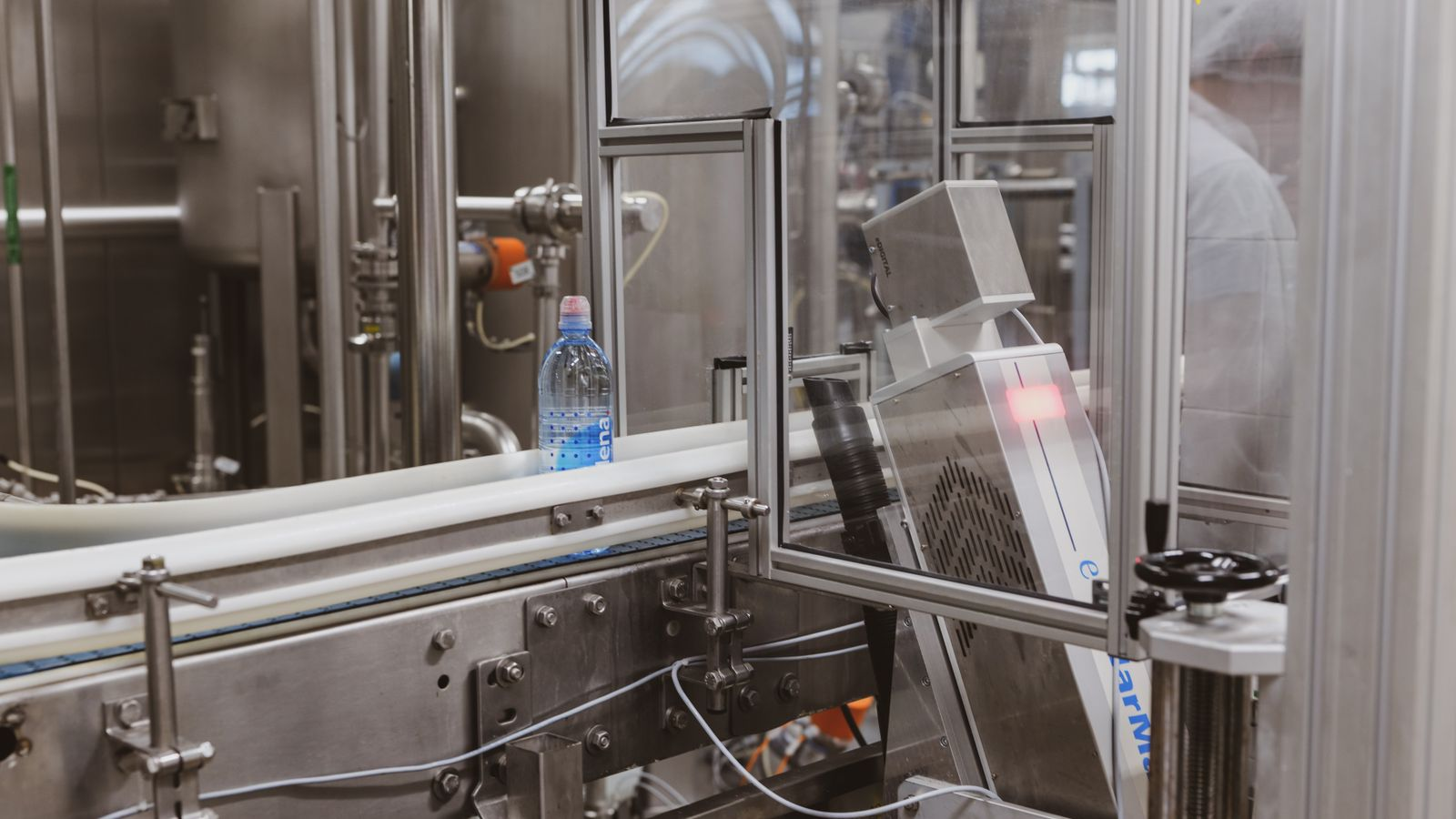
Operating both cans and PET introduces another layer of complexity because the two formats depend on different downstream equipment and quality checks. Cans rely on seam integrity after filling, whereas PET bottles use closures that must be applied within controlled dimensional and torque limits. Conveyors, inspection systems, labellers and secondary packing equipment also have to suit the container being run.
That flexibility gives customers more packaging options, but it also increases the maintenance and spare parts burden. A line designed to make hundreds of millions of units a year only reaches that scale if fillers, seamers, cappers, conveyors and case packing equipment remain available for a high proportion of scheduled time. Small recurring stops can remove millions of units from annual output even when no major breakdown occurs.
Maintenance teams therefore have to manage both catastrophic failures and the accumulation of brief interruptions. Because the machines operate as one linked system, a fault at a single point can stop production upstream and downstream until the issue is cleared, making line balance and fault response important components of practical capacity.
Changeovers create a similar loss of available time. Different customers may require new ingredients, container sizes, labels, closures or packing formats, and the plant has to remove residual product, clean where necessary, load the next materials and verify the new settings before saleable production resumes. Longer campaigns generally use a high capacity line more efficiently, but contract manufacturers must also accommodate brands whose volumes are still developing.
TBS offers work from test runs through commercial production, so scheduling has to balance those smaller jobs against the economics of sustained runs. The Dearborn site’s location can help because beverages are relatively heavy to transport compared with their manufacturing value, making regional capacity useful for customers that would otherwise move finished drinks long distances from another plant.
The company also operates facilities in Florida and Pennsylvania, giving customers several manufacturing points rather than relying on a single site. Dearborn extends that network into the Midwest and creates additional capacity that can be allocated according to customer geography, packaging format and line availability.
Workforce growth will have to keep pace with the production ramp because moving from 18 employees towards 45 to 50 requires more than adding operators at the filler. Quality, maintenance, warehousing, supervision and support functions all need enough coverage to sustain several shifts, while rapid hiring can itself create training and consistency challenges.
Quality systems become more consequential as volume increases. A formulation, fill volume, seam or closure error that affects a short trial is costly; the same problem continuing on equipment designed for hundreds of millions of units can create a much larger quantity of rejected product before it is detected. Faster output therefore increases the value of early detection rather than reducing the need for control.
The factory has now moved from installation into commercial shipments, but the 750 million unit figure will only become meaningful as utilisation develops. Dearborn’s next test is whether customer volume, staffing, maintenance and changeover discipline can turn installed capacity into reliable saleable production across several beverage types and two packaging systems without normal operating losses eroding the advantage of its scale.