IN Brief:
- Verley is producing beta lactoglobulin in fermentation tanks that hold 200,000 litres through a manufacturing partner.
- The company says fermentation titre, yield and productivity are already at its current targets, shifting attention towards downstream recovery and repeatability.
- Verley is working towards commercial sales in 2027 and is targeting applications where purified beta lactoglobulin provides specific functional value.
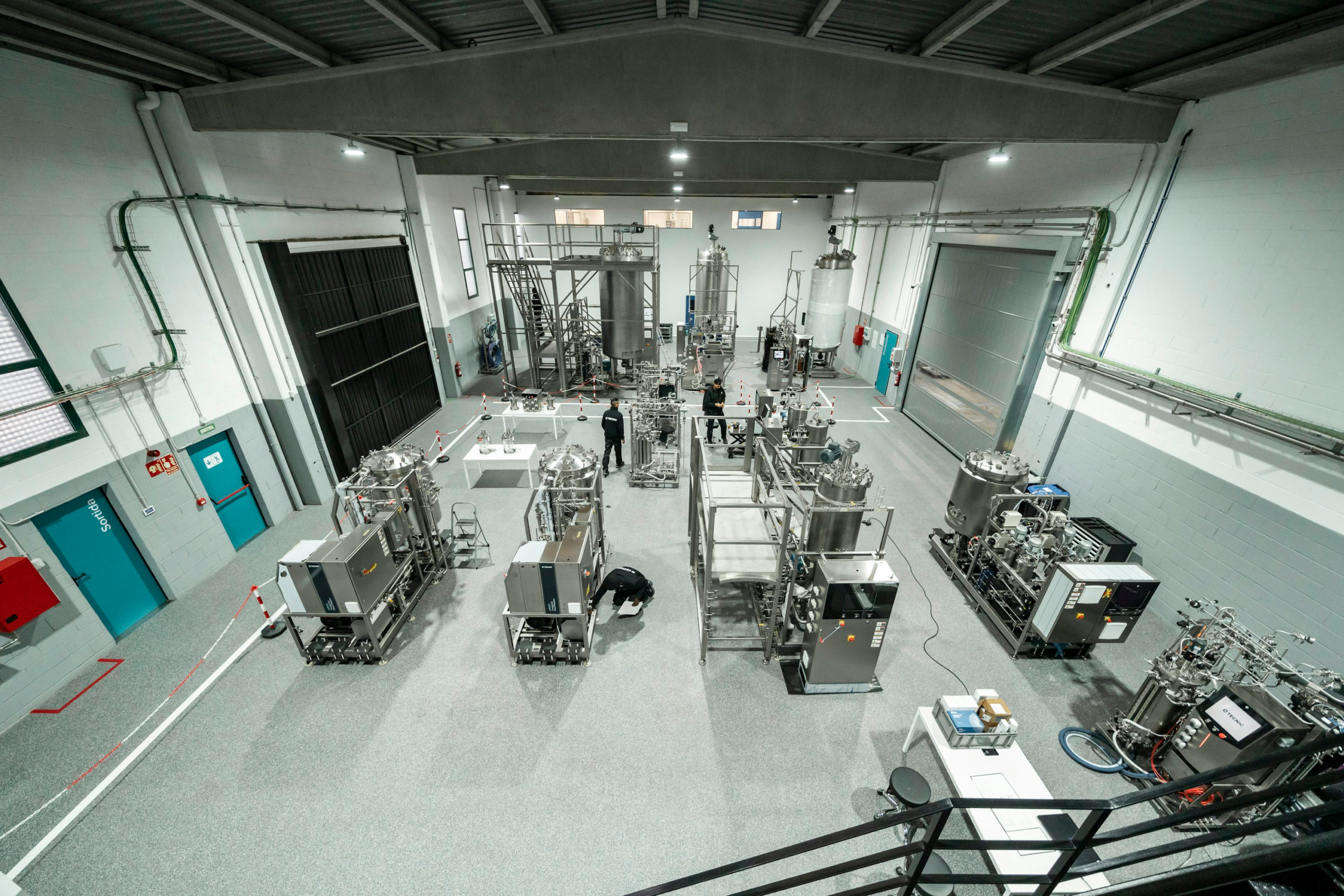
Verley is producing beta lactoglobulin in fermentation tanks that hold 200,000 litres through a manufacturing partner as it moves precision fermentation towards commercial sales. At that scale, the company’s priority has shifted from increasing fermentation titre, yield and productivity towards repeatability and recovery of the finished protein.
Verley chief executive Stéphane Mac Millan says the fermentation metrics are already where the company wants them for the present stage, which moves the engineering constraint downstream. The target protein leaves fermentation in a broth containing microbial cells, nutrients, salts and other process material, so the manufacturing problem becomes how much beta lactoglobulin can be separated, purified and dried into saleable ingredient without losing too much material along the way.
Every additional separation stage creates a trade off between purity and recovery. Membranes, filtration and other purification steps remove unwanted material, but they can also retain or discard some of the target protein. At commercial scale, those losses affect cost directly because feedstock, fermentation time and utility consumption have already been spent on material that never reaches the final powder.
The 200,000 litre vessel size also magnifies the financial impact of inconsistency. A pilot run can show that a microorganism produces the required molecule, whereas commercial manufacturing depends on reproducing the same performance repeatedly in much larger tanks. A deviation in fermentation conditions or downstream recovery now affects hundreds of cubic metres of broth rather than a small development batch.
Precision fermentation begins with microorganisms selected or engineered to produce a particular protein, but commercialisation extends well beyond that biological step. The organism grows in controlled conditions and converts feed material into the target molecule, after which the process moves through separation, purification, concentration and drying. Each stage must deliver predictable performance if the final ingredient is to meet the same specification from one manufacturing campaign to the next.
Verley is concentrating on purified beta lactoglobulin rather than a broad whey fraction, which changes the commercial proposition as well as the process. Conventional whey ingredients contain several proteins, while precision fermentation allows an individual protein to be produced and sold for applications where its functional properties justify the additional manufacturing complexity.
Mac Millan is therefore targeting higher value applications rather than competing directly with commodity whey protein. Products requiring high protein levels without excessive viscosity are one example, as are dairy style formulations where the ingredient has to retain useful functionality through heat, homogenisation or acidic conditions. Those applications make customer process performance part of Verley’s own scale up challenge because a protein that meets compositional specifications can still fail commercially if it aggregates, thickens excessively or becomes unstable during manufacture.
European fermentation investment has increasingly moved into this commercial scale phase, where the difficulty shifts from demonstrating biology to operating repeatable production. Verley’s use of a manufacturing partner reduces the need to build a dedicated fermentation plant before demand is established, but it introduces another transfer requirement: conditions developed by Verley must be reproduced inside equipment, cleaning systems and schedules controlled by another operator.
Tank availability, cleaning cycles and downstream equipment configuration will consequently influence how quickly campaigns can be repeated and how much saleable protein can be produced. Improving recovery can raise finished output from the same fermentation batch without adding vessel volume, feedstock or fermentation time, whereas poor recovery can undermine an otherwise strong biological yield.
Utility consumption becomes more visible at this scale as well. Large fermenters need controlled temperature, aeration, agitation and cleaning, while separation and drying add electricity, water and thermal demand downstream. These costs enter the commercial model even when fermentation itself performs as intended, which is why broth volume alone is a weak measure of manufacturing progress.
Verley is working towards commercial sales in 2027, but reaching that point requires repeated batches that meet the same ingredient specification and recover enough product to support acceptable economics. A single successful run proves the process can reach scale; repeated runs establish whether the whole production train can be controlled.
The decisive measure will therefore be usable beta lactoglobulin rather than the nominal size of the fermenter. Commercial progress depends on how much protein is recovered from each campaign, whether successive lots behave consistently and whether customers can process the ingredient reliably in finished foods. The 200,000 litre milestone is significant because it moves those questions out of pilot development and into the conditions that will determine whether precision fermentation becomes dependable manufacturing.