IN Brief:
- The 16 October exchange filing confirms Polinas completed the acquisition of 67% of İmaj Ambalaj for €4.02m.
- İmaj produces printed flexible packaging for food and fast-moving consumer-goods customers, while Polinas supplies packaging films.
- Neither production expansion nor operational integration targets were announced as part of the completed share transfer.
Polinas Plastik has completed the €4.02m acquisition of 67% of İmaj Ambalaj, a Turkish manufacturer of printed flexible packaging for food and fast-moving consumer goods. Parent company Gözde Girişim disclosed the completed share transfer on 16 October, after the conditions of the purchase agreement had been met. The buyer supplies plastic films used in packaging, while İmaj operates further along the converting chain, printing and preparing material for finished packs.
Gözde Girişim’s exchange filing specifies a total consideration of €4,020,000 for shares representing 67% of İmaj’s capital. The shares have changed hands; the notice is not an announcement of an agreement awaiting completion. Neither the acquired company’s turnover nor the amount of existing production capacity is provided in the regulatory disclosure. The filing gives no timetable for integrating operations or installing new converting equipment, so the purchase price cannot be interpreted as spending on production facilities.
The parties had conducted negotiations before the October announcement. Gözde Girişim’s board resolved on 29 April to defer disclosure under Turkish capital markets rules, citing the protection of legitimate interests and the risk of misleading investors while negotiations remained unresolved. The company said those grounds ceased when the transaction closed. The reportable development on 16 October is therefore the completed majority share purchase; the April decision is part of its procedural history, not a separate factory investment.
Polinas already manufactures biaxially oriented polypropylene and polyester films, known as BOPP and BOPET, alongside metallised and coated film grades. Its company materials identify food applications ranging from bakery, snacks and chocolate to pasta, pulses, powdered ingredients and coffee. Those products are commonly used as substrates or layers in flexible packaging. The buyer’s existing film operations and İmaj’s printed-packaging business occupy related but different parts of production, although the companies have not announced a specific integration programme.
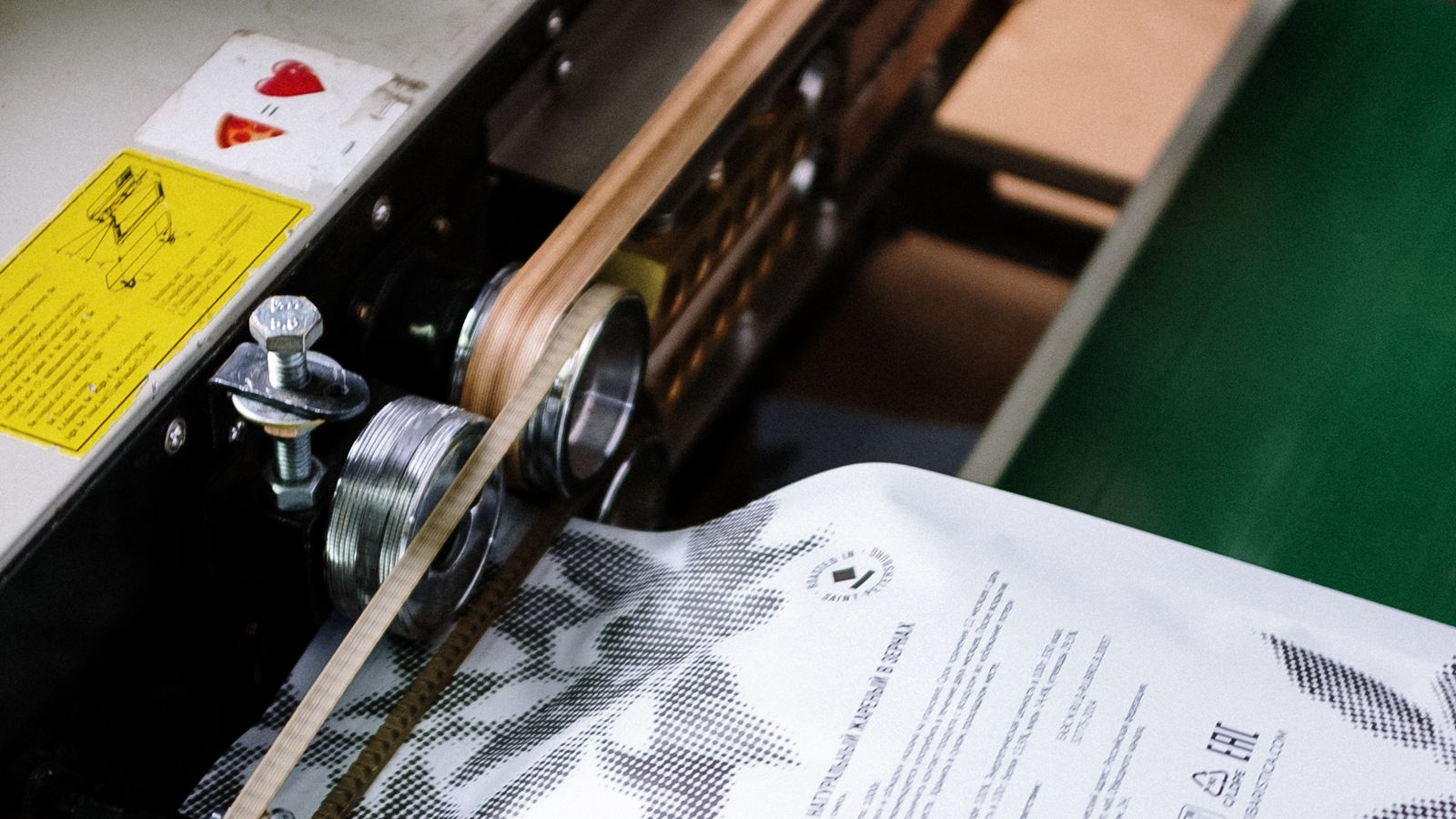
Film production and printed-pack conversion require different controls, even when they serve the same food product. BOPP and BOPET manufacturing establishes film thickness, mechanical behaviour and surface properties; particular coatings or metallisation can alter barrier performance. Conversion can then involve printing, adhesive lamination, slitting and preparation of reels or finished bag formats. A customer’s packaging line depends on friction, tracking, heat-sealing behaviour and registration remaining inside approved limits, so moving a substrate between suppliers normally requires technical assessment rather than simply substituting nominally similar film grades.
İmaj describes a flexible-packaging operation in Gebze, Kocaeli, offering prepress preparation, printing and converting. Its own published material identifies a 41,000 sq m production complex with around 25,000 sq m of enclosed space. These are supplier-stated facility figures, rather than additional capacity disclosed in the acquisition filing. The company also advertises quality management and packaging-safety certifications. Any existing certificates remain subject to their stated scope and validity; a shareholder change does not automatically extend them to other sites or products.
Pack requirements also change markedly with the food being protected. Dry powders may require moisture barriers and dust-resistant sealing arrangements, whereas oily products, aroma-sensitive foods or products filled at elevated temperatures create different compatibility demands. Ink and adhesive migration controls depend on the complete final construction and intended food-contact conditions. Bringing a film producer and a printed-pack converter under related ownership does not itself certify their materials as interchangeable or establish new food-contact approvals.
The acquisition could support closer coordination between substrate manufacture and downstream conversion, but the transaction announcement does not make that operational claim. Assessing a shared supply route would require evidence about technical specifications, capacity allocations, lead times, quality-system controls and customer approvals. Laminate changes can influence seal temperature, stiffness, machinability and shelf-life performance, with consequent validation work for food manufacturers before a replacement pack can be adopted.
The two businesses have complementary descriptions of their existing work, but the share purchase does not itself change the specification of any food pack. A producer considering a new combined supply arrangement would still have to confirm the laminate structure, migration compliance, recycling claims and suitability for its packing equipment. Claims about common production schedules or new mono-material products would require additional information from the companies; none forms part of the completed-acquisition announcement.
The October disclosure establishes a completed change in ownership at an established Turkish packaging producer. It contains no forecast for production growth, purchasing savings or new investment, and the available company profiles describe current activities rather than a post-acquisition integration plan. Subsequent disclosures would be needed to establish whether Polinas and İmaj change factory operations, develop joint films and packaging formats, or alter supply arrangements for food manufacturers.