IN Brief:
- The Genesis Thunder demonstrated at PACK EXPO combines a rotary-ring wrapper with an automatic film-roll changer.
- Robopac rates the exhibited configuration at up to 120 pallets per hour with a ring speed of 65 rpm.
- Adjustable pre-stretch and corner tension settings are intended to control film distribution; no measured film savings were reported.
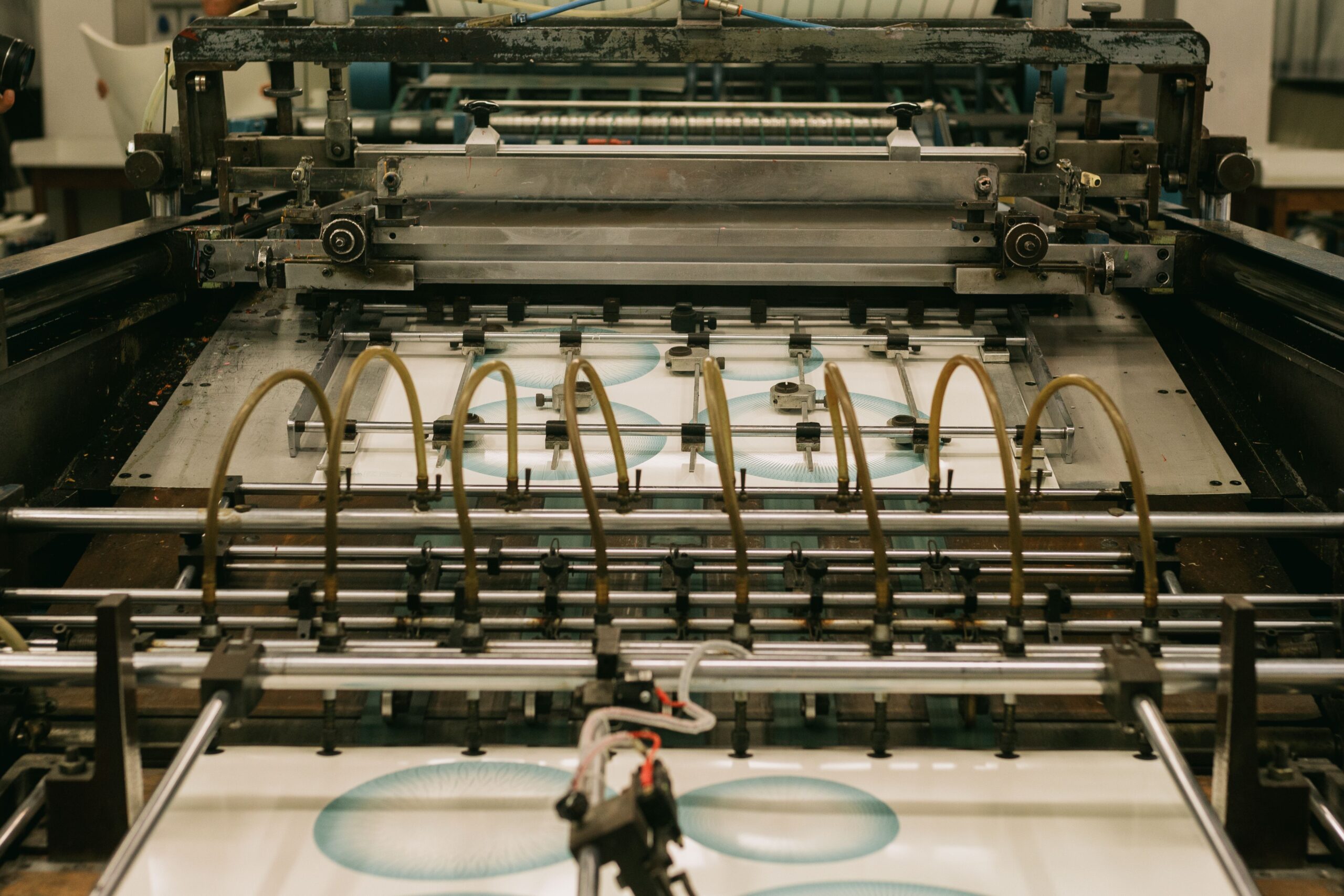
Robopac demonstrated automated film-roll replacement on a Genesis Thunder rotary-ring stretch wrapper at PACK EXPO International in Chicago on 18 October. The machine shown was rated for up to 120 pallet loads an hour, with a ring speed of up to 65 revolutions per minute. The demonstration covered end-of-line film application and reel handling; it did not identify a completed installation in a food or beverage factory or establish a measured production rate under site conditions.
The rotary ring carries stretch film around a palletised load while the load moves through the wrapping sequence without rotating on a turntable. That arrangement can limit the movement imposed on stacked cases or containers, although conveyors still have to present each pallet correctly. Sixty-five revolutions per minute describes the ring’s rotational speed, not the number of finished pallets produced in a minute. Loads per hour depend additionally on wrap cycles, pallet height, film patterns and the time needed to move successive loads into and out of the machine.
The Automatic Roll Changer (ARC) removes an empty film core and brings a fresh roll into position without a manual reel-replacement operation at each exhaustion point. Robopac described one- and two-roll configurations, and the exhibition machine had two film stations. Changing the roll automatically can remove a particular interruption in the wrapping cycle, provided replacement reels are stocked and the mechanism functions as intended. Personnel still have to replenish consumables, inspect film threading and deal with breaks, faults and scheduled maintenance.
Robopac’s CUBE film-control system adjusts pre-stretch and application settings for different regions of a pallet. A representative described pre-stretch capability of up to 400% on the demonstrated machine. That figure refers to the specified film extension setting, not a 400% reduction in material use. Film thickness, quality, elongation behaviour and the force applied to the load all affect how much usable stretch is available. Site trials would be needed to quantify film consumption and containment performance relative to a particular existing wrapper.
The demonstrator also included electronic adjustment of tension around load corners. Stretch film placed around a corner behaves differently from film resting across the face of a case, particularly when stacked products have different stiffness and compression resistance. Too little containment can permit movement during distribution; excessive force can distort lightweight containers, cardboard cases or fragile product packs. Controlled application seeks to reconcile those opposing constraints through a programmed pattern rather than by simply increasing the number of film revolutions.
Food and drink manufacturing often combines relatively stable pallets of canned or bottled products with less rigid loads of sacks, cartons, trays and mixed packaging formats. Their load characteristics vary considerably. A recipe established for dense bottled beverages may be unsuitable for thin-walled multipacks or soft sacks, even if the same wrapper can physically accept both. A production site would need to validate load stability and packaging integrity under its own transport, handling and storage conditions before adopting a particular film application pattern.
A wrapper rated for 120 pallets per hour can only operate at that output when the surrounding end-of-line system supplies and removes loads at a compatible rate. Case packing, palletising, conveyor accumulation, pallet identification and safety interlocks impose their own cycle and recovery times. A fast ring cannot recover time lost because downstream traffic is blocked. An automatic roll changer is most valuable where film depletion regularly interrupts an otherwise well-balanced line; the supplier did not report comparative factory availability data from the event.
Robopac identified Allen-Bradley controls in the exhibited unit and said the machine was UL certified. The claim relates to the equipment demonstrated; the precise certification scope and suitability for a particular destination would have to be checked with its documentation. Pallet wrapping normally takes place after primary food packaging, so the certification does not establish sanitary suitability for food-contact surfaces. In chilled dispatch areas, film selection and load testing must also account for condensation, storage temperature and the stiffness of secondary packaging.
Robopac markets multiple high-speed Genesis variants, and published capacities are not identical across the wider range. The company’s Genesis Thunder HS material, for example, describes configurations with a higher nominal throughput than the 120-per-hour demonstrator. The PACK EXPO figure therefore belongs to the specific model shown, not to every machine sold under the Genesis name. The manufacturer did not provide verified operating data from a food customer at the event.
A controlled wrapping recipe usually includes the number of top and bottom wraps, ring travel, film tension and containment settings at different pallet heights. Those parameters become part of repeatable production when loads follow a consistent specification, but mixed packs may need separate recipes. Recent palletising machinery developments concern the preceding step in end-of-line handling, rather than demonstrating a combined line with Robopac’s wrapper. The exhibition account describes the Genesis Thunder and its optional roll-change arrangement as a discrete system.
Robopac’s demonstrated configuration combines a specified high-speed ring with automatic film-roll changeover and adjustable load-containment controls. The 18 October video supports those equipment details, while the 120-pallet hourly rating and reported pre-stretch capability remain supplier specifications. Measured film consumption, reductions in damaged packs and sustained factory throughput would require separate trials with representative products, films and pallet patterns. None of those site-specific results was provided with the demonstration.