IN Brief:
- Teradyne Robotics showed Universal Robots Gen 7 operating alongside Cognex 2D and 3D inspection systems on 18 October.
- The controller size and computing comparisons were supplier claims made during the demonstration, not measured food-line performance.
- Gen 7 was originally launched on 14 September, and no new completed food-factory installation was identified.
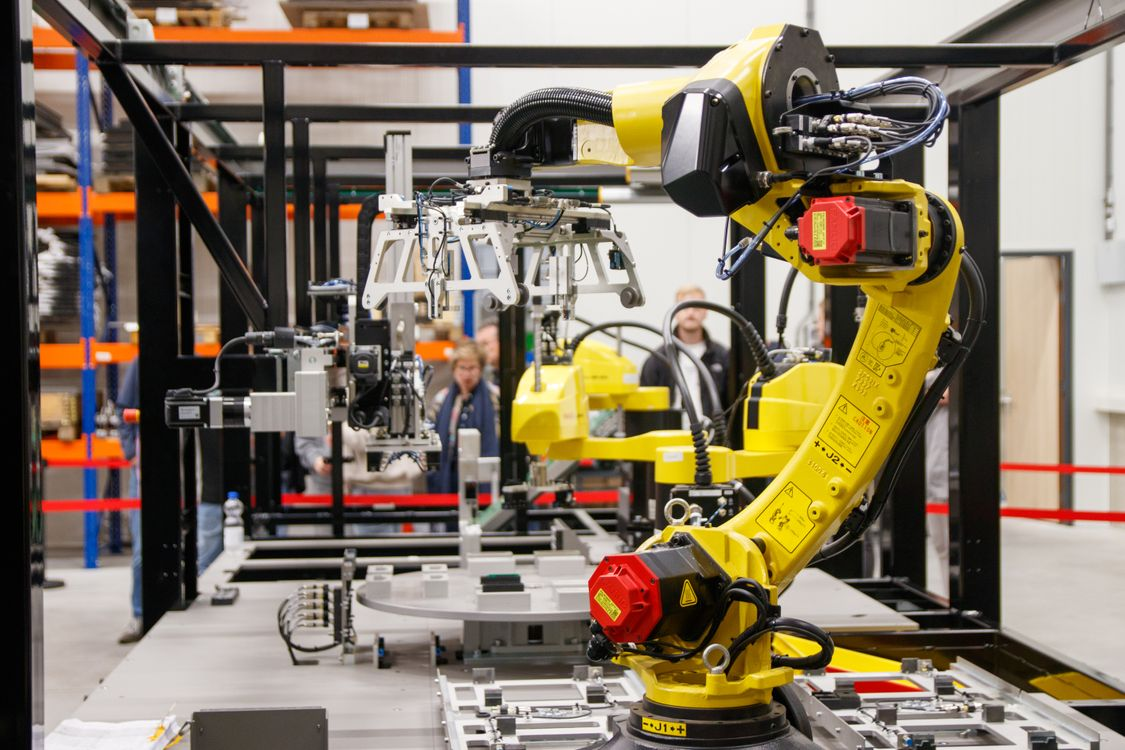
Universal Robots, part of Teradyne Robotics, has demonstrated its Gen 7 robotic platform with Cognex two-dimensional and three-dimensional vision systems at PACK EXPO International on 18 October. The display showed camera inspection results alongside connected robot hardware and software. Universal Robots originally launched Gen 7 at IMTS on 14 September, so the October development is a packaging-sector integration demonstration, not a second platform launch or a newly commissioned food-manufacturing installation.
Gen 7 comprises a revised controller, software architecture, teach pendant, cabling and robot interface alongside the manufacturer’s g-Series arms. Teradyne’s demonstration presented those components as a connected system, with Cognex cameras conducting inspection tasks and their results appearing on an adjacent display. It did not identify the inspected product as a specified food pack or give pass and reject criteria for a production inspection process. Those details are necessary before the exhibition configuration can be compared with a factory quality-control station.
A two-dimensional camera can locate visible markings, edges and orientations within its field of view, while a three-dimensional vision system can measure shape or height differences. Either approach may help a robot identify a product position or guide handling, but the result depends on camera placement, lighting, reflectivity and calibration. A demonstration of data transfer between camera and robot establishes their ability to communicate in that configuration; it does not prove that a vision algorithm can find every packaging defect or detect contaminants concealed inside food.
Regional sales manager Silas Neale described the Gen 7 controller as 30% smaller and offering 40% more computing performance than the preceding generation. Those figures are manufacturer-stated product comparisons. A compact controller may give machine builders more flexibility in cabinet design, while additional compute capacity can accommodate software workloads, subject to the chosen application. Neither percentage translates directly into shorter pick times or higher packs-per-minute throughput, which also depend on arm motion, gripper action, vision processing and conveyors.
The robot’s tool flange incorporates connections for power, communications and safety, reducing some of the additional wiring required by compatible accessories. Teradyne also demonstrated a free-drive control at the tool, allowing authorised staff to guide the robot during suitable set-up tasks. A lighter teach pendant and revised cabling form part of the broader platform update. Safe use nevertheless depends on the completed machine’s risk assessment, control configuration and operating mode; a conveniently placed guidance control does not eliminate guarding and functional-safety obligations.
Arm selection remains specific to an application. The Gen 7 designation refers to the platform and its supported architecture, rather than a single robot with uniform payload, reach or ingress protection. A packaging integrator must specify the chosen arm, end effector, mounting arrangement and cleaning requirements against the loads to be handled. Where the cell enters a controlled food-production area, hygienic material selection and washdown suitability require separate evaluation. Those requirements are not established by the platform name or by a demonstration of camera connectivity.
When machine vision is used to guide robotic handling, image capture and interpretation have to be synchronised with the robot, the movement of a conveyor and any decision to reject an item. Variations in packaging geometry, presentation and lighting can alter both detection performance and cycle time. The control system must define what happens when a target is missed, two candidate objects overlap or an image cannot be classified confidently. Factory qualification therefore includes repeated tests with representative products and line speeds, rather than only an initial proof that the component devices exchange signals.
Food lines present inspection hazards that do not all respond to camera-based detection. A visible-label or package-orientation check differs from foreign-body inspection inside a sealed product; the latter may require metal detection, X-ray equipment or other controls selected through hazard analysis. A robot operating around unsealed food has further requirements around cleanability and unintended contact. The October presentation did not disclose food-specific inspection sensitivity, a hygienic assessment or operating results from an installed food-packaging customer.
The demonstrated combination illustrates how the updated robot controller can integrate with commercial inspection cameras in a packaging application. Subsequent factory evidence would need to establish robot positioning accuracy, inspection repeatability, reject handling, cycle time and system recovery under normal operating conditions. Without those figures, the reported 30% controller-size reduction and 40% computing improvement remain component claims, not proof of higher food-packaging output or reduced contamination risk.