IN Brief:
- Material Transfer demonstrated IntelliBreak robot-guided sack selection at PACK EXPO on 18 October.
- The system combines machine vision, configurable bag-opening equipment and material discharge with options for dust and waste-bag handling.
- Food-grade surface claims originate with the supplier; no independently verified hygienic certification or production throughput was reported.
Material Transfer demonstrated an IntelliBreak automated sack-opening arrangement at PACK EXPO International on 18 October, showing how vision guidance can help select bags from a pallet that is not stacked to precise coordinates. The system links robotic picking with configurable bag breaking and bulk-material discharge. IntelliBreak existed before the October exhibition; the current development is the demonstrated method for handling inconsistent bag orientation, not the unveiling of an entirely new product family or a proven customer installation.
Sacks remain a common route for ingredients such as flour, sugar, seasonings and dairy powders entering batch-processing operations. Emptying them manually involves cutting and tipping individual packages, collecting used bags and controlling dust or accidental contamination. To automate the process, equipment must first identify a bag that can be lifted, hold it without losing product and present it reliably to the opening mechanism. Its contents then need to enter downstream conveying or blending machinery while empty packaging is kept out of the ingredient stream.
At the PACK EXPO display, an AI-assisted vision system assessed a pallet arrangement and supplied a suitable target for the next robotic pick. This is different from programming the arm to lift each sack from a fixed, repeatable pallet position. The approach can accommodate some variation in the placement of bags, but performance still depends on their size, condition, weight, surface and the visibility of usable grip points. Neither the demonstration account nor the supplier specifications establish that every damaged, obscured or loosely stacked sack can be recovered automatically.
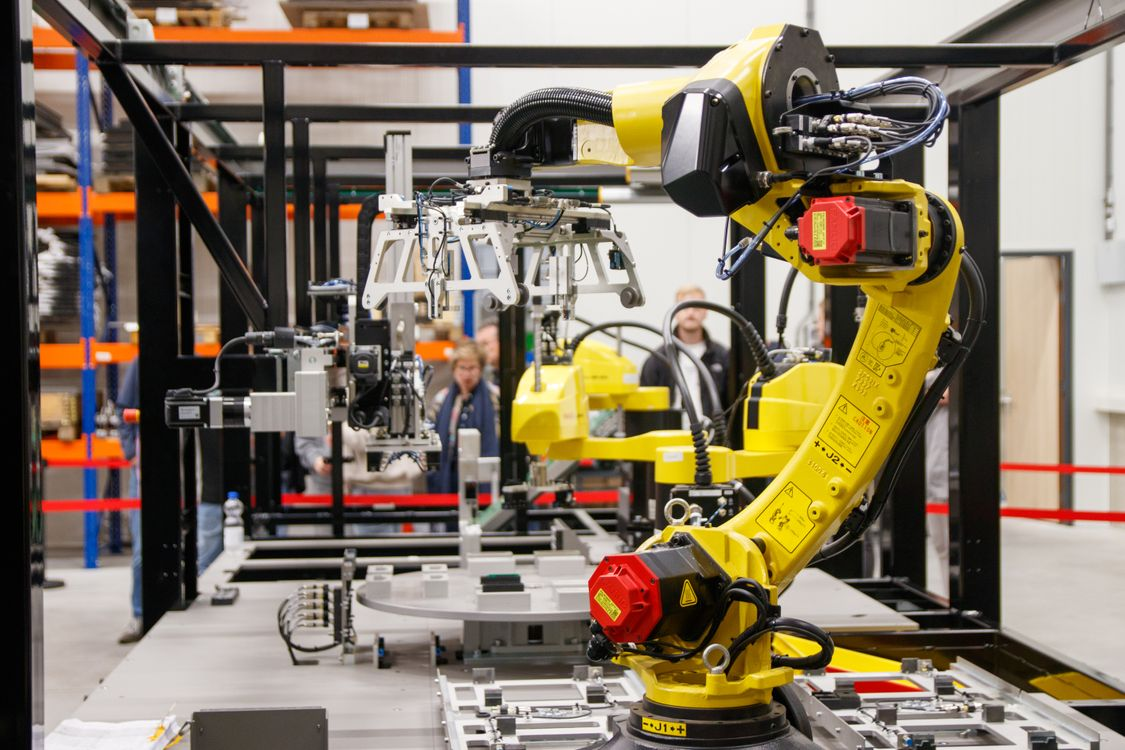
Material Transfer’s standard IntelliBreak literature identifies a Fanuc M-710/50M six-axis robot fitted with handling tooling selected for the task. The arm transfers a selected sack to equipment that opens it before material is discharged to the next stage. Pneumatic or mechanical conveying and additional screening can be specified, according to the product and factory layout. The choice of opening and transport equipment is material to the result: a free-flowing sugar powder, an aerated flour and a poorly flowing ingredient do not necessarily empty or convey in the same way.
Empty packaging must be separated from usable product after opening. The supplier describes collection, transfer and compaction options for used sacks, alongside local extraction and dust-collection equipment. Dust control is especially important where fine powders are handled, although the appropriate design will depend on exposure limits, equipment cleaning and any combustible-dust assessment. A closed bag-opening cell does not by itself prove allergen segregation or prevent fragments of sack material from entering a downstream process. Where required, supplementary screens or inspection controls must be validated against the product hazard.
Material Transfer lists food and beverage applications and refers to food-grade contact surfaces. Those are supplier descriptions rather than an independently verified hygiene approval for the exhibit or every possible installation. A processor considering the system for direct ingredient handling must review wetted or contact materials, the geometry of the opening station, cleanability, sealing and dust extraction, as well as the site’s allergen procedures. A system suitable for a dry, single-product line may require a different cleaning and control arrangement in a plant switching repeatedly between powders.
Safeguarding the robot cell is a separate engineering obligation. The equipment literature describes perimeter guarding and optional sensing systems for access control, but the food-safety plan must also cover package integrity and product segregation. Operators will need defined responses if the vision system cannot find a secure lift, an opening cycle leaves material in the bag or a bag tears during transfer. Each event can change how the system resumes operation and what material requires checking before a batch proceeds to the next manufacturing stage.
The standard-cell footprint is approximately 9 ft by 12 ft according to the supplier, excluding some surrounding requirements for pallet delivery, downstream discharge and bag disposal. The company promotes reduced manual handling, although the current demonstration did not publish independently measured sacks-per-hour output, uptime or labour savings. Overall cycle time includes image capture, target selection, lifting, opening, discharge and removal of waste packaging. Actual throughput is constrained by the slowest of those tasks and by the properties of the ingredients being handled.
The October presentation establishes the mechanism for adapting a robotic bag pick to imperfect pallet presentation and connecting it with automatic bag opening. Whether that improves an individual food line will depend on representative trials that include dusty or deformed sacks, changeovers, cleaning and failure recovery. The company has not released verified customer operating figures or third-party hygienic certification alongside the demonstration, so those claims should not be inferred from a functioning exhibition setup.