IN Brief:
- The Belgian Reuse Barometer 2026 surveyed 48 companies operating in reusable packaging and bulk distribution.
- Some industrial washing facilities operate below 10% capacity, while half of surveyed washing operators report utilisation around 50%.
- Deposit-based arrangements achieve higher reported packaging returns, although standardisation and collection infrastructure remain important constraints.
Fost Plus and ConsomAction have identified substantial underutilisation of reusable packaging washing facilities in Belgium, where some industrial installations operate at less than 10% of their available capacity despite growing interest in alternatives to single-use packaging.
The findings appear in the Belgian Reuse Barometer 2026, which examined the development of reusable packaging and bulk distribution through responses from 48 companies. The second edition concludes that the country has established technical capabilities but that many newer systems lack the volumes and coordination needed for wider commercial operation.
Equipment utilisation varies considerably between the businesses represented. ConsomAction identifies individual industrial washing facilities operating below 10% capacity, while the broader Barometer finds that half of the surveyed washing operators run at approximately 50% of their maximum capacity.
The figures describe different groups and should not be combined into a single industry average. Both indicate that available processing capacity is not necessarily matched by sufficient quantities of packaging circulating through collection and return networks.
Industrial washing is a necessary stage in many reusable food and beverage packaging systems. Containers returned after use may require sorting, residue removal, washing, inspection and preparation before they can safely re-enter a filling or distribution operation.
Washing equipment has to accommodate the packaging materials, contamination risks and required throughput of the application. A system handling rigid beverage bottles differs from one processing reusable takeaway containers or food transport trays, particularly in the arrangements needed for conveying, cleaning and inspection.
Underutilisation affects operating economics because facilities carry costs regardless of whether their equipment is running at full capacity. Buildings, machinery, maintenance, utilities and labour arrangements create expenditure that must be supported by the number of containers processed.
At low throughput, the cost allocated to each washed container may increase. The extent of that increase depends on operating schedules, equipment design and how energy, water and labour requirements vary with production volume.
Higher utilisation can improve the distribution of fixed costs, but it must remain compatible with effective cleaning. Containers with food residues, damaged surfaces or incompatible materials may require different treatment or rejection, and washing performance needs to be appropriate for the intended subsequent use.
Fost Plus and ConsomAction identify fragmentation as a central constraint. New reuse initiatives frequently establish separate packaging formats, collection locations and transport arrangements, limiting opportunities to combine containers into shared processing and logistics systems.
Belgium already has extensive experience of returnable beverage packaging. Reusable beer bottles and crates operate through established collection networks, providing a practical example of packaging being recovered, inspected and returned to production repeatedly.
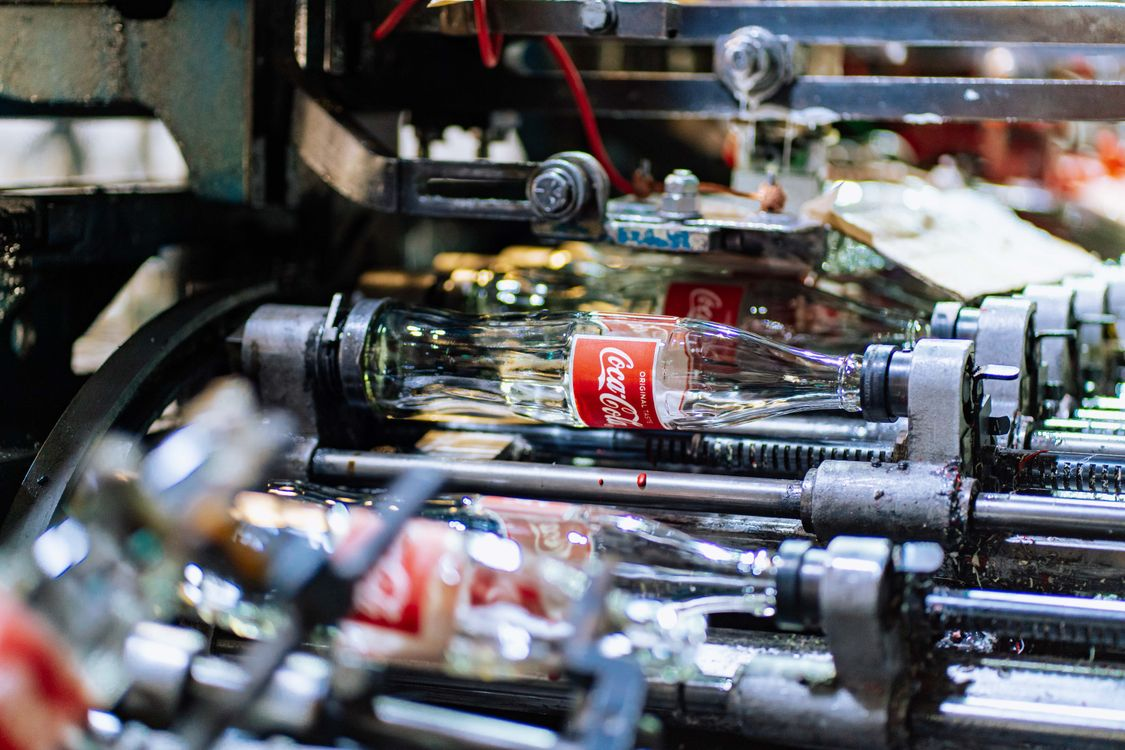
Duvel Moortgat identifies the 33cl Steinie bottle as an established reusable format shared by several breweries. Returned bottles are collected, sorted, washed and inspected before being refilled, allowing packaging assets to circulate through more than one manufacturing operation.
The brewery operates a bottle washing machine capable of handling up to 60,000 bottles per hour. This capacity illustrates the scale achievable in an established return network, although actual throughput will depend on operating conditions and the volume of suitable bottles available for processing.
Even mature systems encounter compatibility problems. Duvel Moortgat reports that bottles which remain suitable for reuse are sometimes rejected because their labels cannot be removed correctly by the washing equipment.
Label materials and adhesives therefore influence the number of times a bottle can circulate. A suitable reusable format requires coordination between container design, labelling, washing performance and the expectations of the manufacturers using the packaging.
More standardised packaging can improve the ability of several businesses to share infrastructure, provided their containers have compatible dimensions, materials and cleaning requirements. Separate proprietary formats may increase the range of equipment settings and handling arrangements needed to process returned items.
The Barometer also identifies deposit arrangements as an important influence on collection performance. Systems using post-paid or hybrid deposits report return rates above 90%, while half of the systems without deposits record rates below 50%.
These results are drawn from surveyed businesses rather than every reuse system operating in Belgium. They nevertheless indicate a relationship between the design of return incentives and the proportion of packaging recovered for another cycle.
Consumer willingness presents a different picture from actual system participation. Separate research cited by the Barometer finds that 87% of Belgians support returning reusable packaging to collection points, while the reuse businesses surveyed continue to identify insufficient customer demand as a barrier.
Convenient return locations and clear collection arrangements are therefore important alongside the availability of the packaging itself. Containers must move back to an operator capable of processing them before their potential for repeated use can be realised.
Bulk retail provides another example of changing arrangements. Among surveyed retailers, the proportion offering reusable containers to customers who arrive without their own increased from 24% in 2025 to 45% in 2026.
This can make bulk purchasing more accessible, but the upstream supply arrangements may remain dependent on conventional packaging. Retailers using reusable containers for customers still need suitable systems for receiving ingredients and products from manufacturers and distributors.
Fost Plus is supporting practical trials intended to address some of those barriers. Its Repasys project examines deposit-based reusable trays for mushrooms, while a separate reusable bag initiative focuses on e-commerce packaging and return logistics.
These applications involve different handling and cleaning requirements from established beverage bottle systems. Their expansion will depend on whether the participating businesses can establish compatible packaging formats and sufficient volumes to support shared collection and processing infrastructure.
Regulation is also becoming more influential. The EU Packaging and Packaging Waste Regulation introduces requirements affecting reusable packaging, with implementation stages extending towards 2030 and beyond. Businesses will need to assess the applicable provisions as the supporting rules and reporting arrangements are established.
Among the surveyed Belgian reuse companies, 88% call for stronger legislation and enforcement. Financial support is favoured by 59%, while 56% identify awareness-raising as a priority. The results reflect the views of businesses already active in the sector rather than a representative survey of all Belgian manufacturers.
Extended producer responsibility arrangements remain another concern. Some 27% of Belgian respondents say they lack sufficient visibility into what EPR organisations do for reuse, compared with a European average of 13% reported in the corresponding research.
Fost Plus identifies a role in bringing businesses and sectors together, communicating requirements and supporting practical trials. Better coordination may help operators combine return volumes and make fuller use of existing washing infrastructure, although the operational suitability of each shared system must still be established.
Belgium's established beverage networks demonstrate that reusable packaging can operate at industrial scale. The challenge identified by the 2026 Barometer is extending similar levels of standardisation, return performance and equipment utilisation into newer food packaging and distribution applications.
The capacity figures provide a measurable constraint for future investment. Without sufficient packaging circulating through return networks, additional washing equipment may increase available capacity without improving utilisation, leaving operators to manage the costs of infrastructure that remains substantially underused.