IN Brief:
- Marc Auclair will become Glacier's group chief executive on 16 November, succeeding Matt Frost, who remains an executive director.
- Glacier's previously announced €45m programme includes new Italian production lines and improvements to warehousing, automation and cooling infrastructure in Belgium.
- The appointment follows the combination of Ysco and Gelato d'Italia and a separate €400m financing arrangement earlier in 2026.
Glacier has appointed Marc Auclair as group chief executive, placing the former Carambar & Co leader in charge of its European private-label ice cream and frozen dessert manufacturing business from 16 November.
Auclair succeeds Matt Frost, who led the development of the group following the combination of Belgian manufacturer Ysco and Italian business Gelato d'Italia in 2025. Frost will remain an executive director on Glacier's board and continue as a partner in the operating team at Afendis, which supports the business alongside Davidson Kempner Capital Management.
The leadership change comes during an existing €45m investment programme intended to expand production capacity, introduce additional manufacturing formats and improve supporting infrastructure. The programme was announced in July, several months before Auclair's appointment, and is not a new investment authorised as part of the transition.
Auclair has more than 30 years of international food industry experience. He most recently served as chief executive of Carambar & Co, where he led the French confectionery business before its acquisition by Ferrara Candy Company. His earlier career included senior roles at Herta Foods, Neuhauser Bakery and Pladis Northern Europe.
Glacier operates a manufacturing network covering Belgium, France and Italy, producing ice cream and frozen desserts for retailers and branded businesses. Its model combines private-label production with co-manufacturing, requiring factories to accommodate different customer specifications, product formats and commercial production volumes.
The €45m investment programme addresses particular capabilities within that network. In Italy, Glacier plans two new production lines for extruded ice creams and water ice products, while investment in Belgium will improve warehousing, automation and cooling facilities at Langemark.
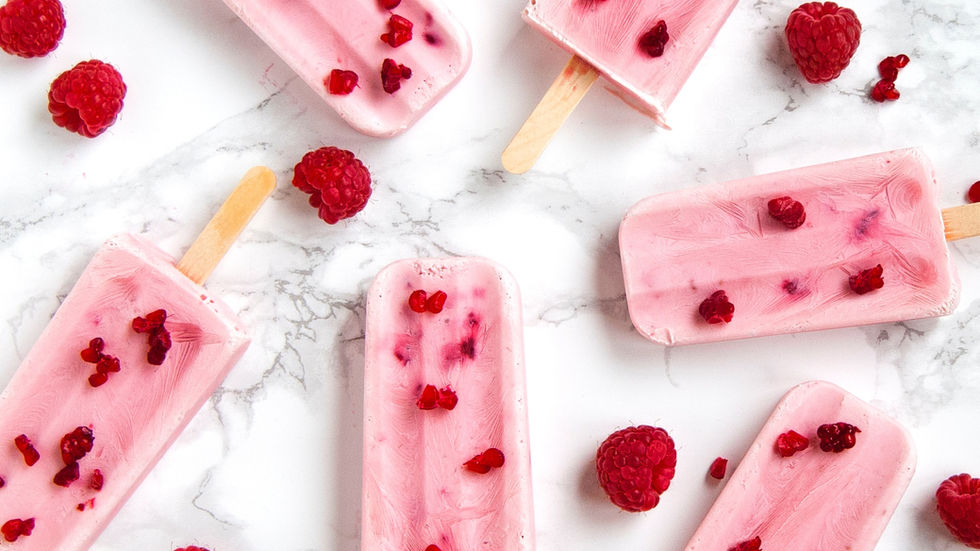
One Italian line will manufacture spiral ice lollies and fruit-coated sticks. Glacier expects the equipment to double its manufacturing capacity for those formats, although the company has not provided a commissioning date or confirmed the additional annual production volume.
The second line will extend the group's water ice capabilities, enabling higher manufacturing speeds and products containing as many as seven flavour layers. Producing several distinct layers requires the filling or moulding process to control deposition, product temperature and the sequence in which the different components are introduced.
Such products are more demanding than a single-flavour ice lolly because the manufacturer must maintain the required separation and placement of ingredients while ensuring that subsequent cooling and handling do not disrupt the intended structure.
Glacier is also investing in production capacity for bite-sized ice cream products. Its planned line has a stated capability of 50,000 units per hour and is expected to increase total annual production capacity by approximately 220 million bites. Those figures describe the planned equipment capability rather than verified output achieved since installation.
Additional warehousing and cooling investment at Langemark addresses the supporting infrastructure required for increased frozen food output. Manufacturing capacity cannot be considered independently of the ability to harden, store and distribute finished products while maintaining suitable temperatures.
Ice cream processing begins with preparation of a mix containing the ingredients required for the product formulation. Thermal treatment, homogenisation and ageing establish conditions for subsequent freezing, during which the mix develops its characteristic structure through the interaction of ice crystals, fat and incorporated air.
Production settings influence texture and consistency, while ingredients and finished-product formats determine the equipment arrangements needed after freezing. Extruded products, moulded lollies, coated sticks and filled tubs each introduce different depositing, handling and packaging requirements.
Operating several formats across a manufacturing group creates opportunities to allocate orders to suitable equipment, but transferring a product between lines or factories still requires technical qualification. Differences in freezer configuration, mould geometry, dosing equipment and packaging machinery can affect the ability to reproduce an established specification.
The private-label model adds further requirements for recipe control, material identification and production planning. Retail customers may specify ingredients, pack sizes, labelling and quality parameters, with the manufacturing operation responsible for maintaining the agreed characteristics across successive production runs.
Glacier's investment programme also includes development of an innovation centre at Cavriago in Italy. The facility is intended to allow customers to develop and test products with the group's technical teams, connecting new formulations with the manufacturing processes required for commercial production.
The company previously indicated that the centre was in its final design stage, with completion targeted for the end of 2026. The November leadership announcement does not confirm that the facility has been completed.
Development work in ice cream manufacture frequently involves balancing product formulation with equipment capability. A new inclusion, coating or layered structure may perform successfully during small-scale trials but require changes to depositing conditions, freezing time or handling arrangements before it can be produced reliably at industrial volume.
Glacier secured approximately €400m in financing earlier in 2026, supporting its wider corporate development and expansion plans. That financing is separate from the €45m programme, and the two figures should not be combined as though they represent one new manufacturing investment.
The group's expansion strategy also involves acquisitions and partnerships. Bringing additional factories into the business can extend its product range and geographical reach, although equipment, production systems and customer specifications must be integrated before manufacturing benefits can be realised.
Chairman Cem Karakaş has identified Auclair's experience in food manufacturing and business development as important to the next phase of the group. Frost's continued board involvement is intended to preserve continuity while responsibility for operational leadership transfers.
Auclair assumes the role on 16 November. The progress of the Italian production lines, Belgian infrastructure improvements and Cavriago innovation centre will provide the next measurable indications of how Glacier's existing investment programme is being implemented.