IN Brief:
- SIMEI's 2026 Innovation Challenge selected four Technology Innovation Award winners, four Green Innovation Award winners and 12 New Technology mentions.
- Recognised systems include Bertolaso's Elyra bottling equipment, HTS Enologia's fermentation technology and Omnia Technologies' Virtual5 automation platform.
- The selected environmental developments include filtration, dealcoholisation and packaging technologies, with the presentation ceremony scheduled for 17 November.
Unione Italiana Vini has selected the winners of the 2026 SIMEI Innovation Challenge, recognising equipment developments covering beverage filling, fermentation monitoring, industrial automation, filtration, dealcoholisation and packaging materials.
The competition's technical and scientific committee awarded four Technology Innovation Awards and four Green Innovation Awards, together with 12 New Technology mentions. The selections were announced on 3 November, ahead of the ceremony scheduled for 17 November during the SIMEI exhibition at Fiera Milano Rho.
The recognised equipment addresses several stages of wine and beverage manufacture. Some systems concentrate on process control and product handling, while others are designed to reduce the resources used during production or improve the recyclability of packaging components.
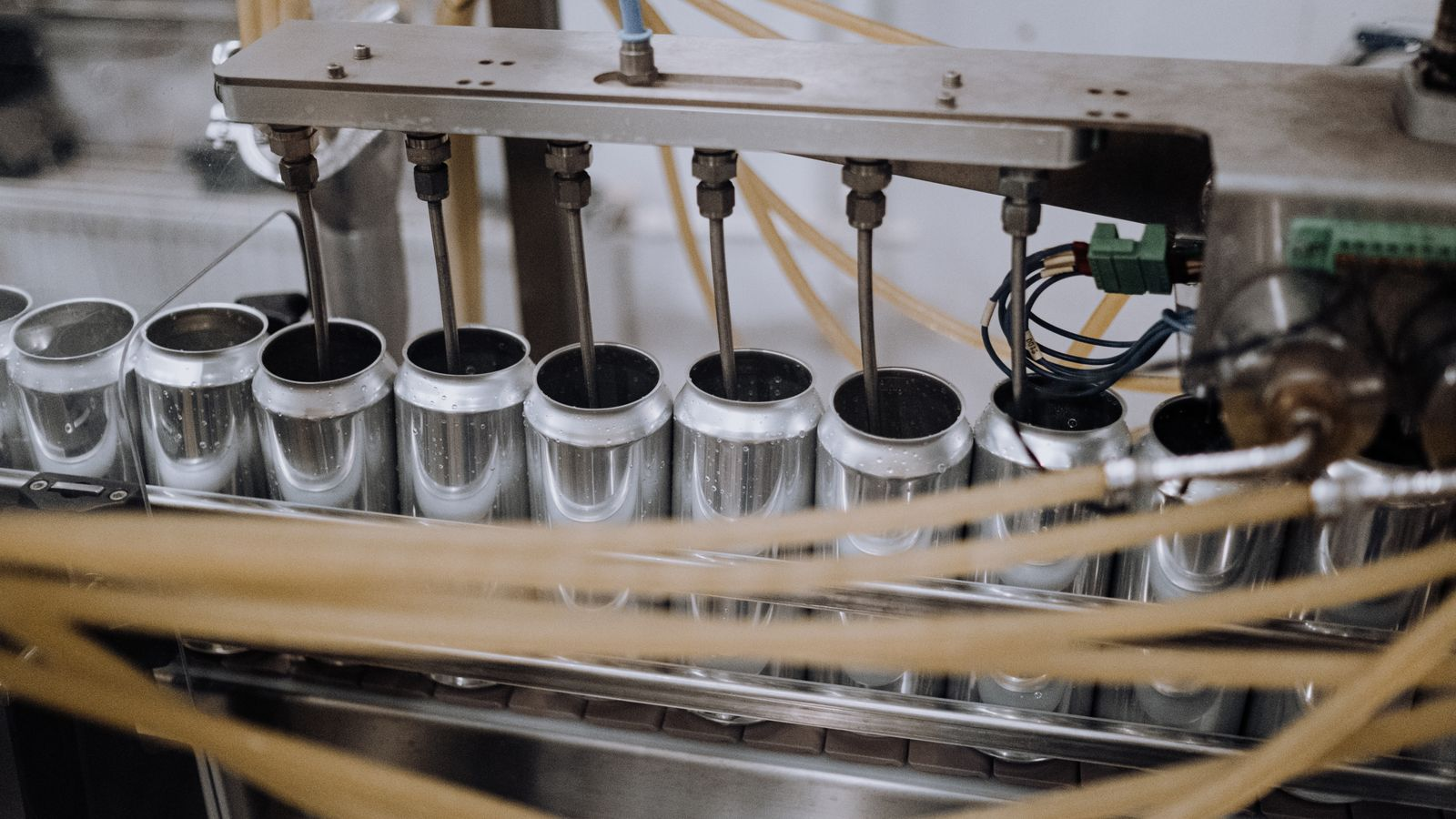
Bertolaso, part of Omnia Technologies, received a Technology Innovation Award for Elyra, a bottling system developed around a compact tank and redesigned filling valves. Its design is intended to reduce water consumption during washing, simplify maintenance and accommodate different products while maintaining filling quality.
Bottling systems have to control the movement of liquid through the filling equipment while meeting the requirements of the product and container. Foaming, dissolved gases, temperature and liquid properties can influence the filling process and the extent to which the equipment needs to be adjusted between products.
Cleaning introduces a separate design requirement. Product-contact surfaces and filling valves must be accessible to suitable cleaning procedures, while retained liquid and difficult-to-clean areas can increase the resources needed to prepare equipment for subsequent production.
Elyra's compact design and revised valves target these operating requirements. The awards material does not provide an independently verified water-saving percentage or a quantified maintenance reduction, so the expected performance improvement remains a supplier objective rather than a universal measured result.
GAI Macchine received a Technology Innovation Award for its Disgorging Valve, designed for the handling of sparkling wine after disgorgement. The device integrates excess wine removal, dosing and levelling operations within a single valve arrangement.
Sparkling wine processing requires particular attention to pressure because changes in the conditions surrounding the liquid can release dissolved carbon dioxide and create foaming. Excessive foaming can complicate volume control and contribute to product loss during finishing operations.
Combining several operations within one device is intended to simplify the process while helping maintain suitable handling conditions. Actual performance depends on the equipment configuration, pressure management and characteristics of the sparkling wine being processed.
Fermentation monitoring was recognised through HTS Enologia's IntraSense and MetaFerm systems. IntraSense uses a sensor-equipped probe for real-time measurements and localised physical intervention, while MetaFerm uses data from previous fermentation cycles to inform the management of subsequent production.
The fermentation process is influenced by temperature, substrate availability and the activity of microorganisms. Changes in these conditions can affect the rate and behaviour of fermentation, making reliable measurements important when controlling the process.
Real-time monitoring allows operators to observe conditions as fermentation develops rather than relying entirely on periodic manual measurements. Historical data may provide a reference for identifying differences between batches, although its usefulness depends on the quality and comparability of the underlying records.
Omnia Technologies received another Technology Innovation Award for Virtual5, a digital industrial automation system combining cloud services, 5G connectivity, artificial intelligence, Internet of Things technologies and digital twin capabilities.
The platform is intended to support plant monitoring, management and virtual simulation. Digital representations can be used to examine equipment behaviour and operating scenarios, but the accuracy of any simulation depends on the model, the information available and the degree to which it represents actual plant conditions.
Among the Green Innovation Award winners, Bucher Vaslin was recognised for Flavy FGCM, a filtration system for musts and untreated wines containing high concentrations of suspended solids. The design is intended to simplify processing while reducing water and energy consumption.
Filtration performance is influenced by the composition of the liquid and the accumulation of material at the filtering surface. Suspended solids can restrict flow and increase the effort required to maintain the desired processing rate, making cleaning arrangements and equipment configuration important operating variables.
Logichem received a Green Innovation Award for GoLo, a wine dealcoholisation system based on vacuum evaporation and an integrated heat pump. The supplier reports a 70% reduction in required power, although the published award information does not specify all the comparison conditions behind that figure.
Reduced-pressure evaporation allows volatile components to be separated at temperatures lower than those required under ordinary atmospheric conditions. Heat recovery can reduce the external energy required, while the process must still be controlled to manage changes in the beverage's composition and sensory characteristics.
Packaging developments also feature among the Green Innovation winners. Astro's Altair capsule is designed to make aluminium easier to separate from glass after use, while Crealis Group's Virtuo uses recycled tin and is associated with a manufacturer-reported reduction in production-related carbon emissions.
Virtuo is described as using 100% recycled tin, with the supplier claiming a 61% reduction in emissions associated with the production cycle. That result depends on the assessment methodology and comparison used, and should not be treated as a verified reduction in the footprint of a complete packaged beverage.
The 12 New Technology mentions cover further developments involving optical sorting, labelling, bottle handling and process measurement. These selections extend the competition's scope beyond the eight principal award winners.
The 31st SIMEI exhibition runs from 17 to 20 November and includes Bevertech, expanding its coverage of equipment used across the liquid food and beverage sector. The awards ceremony is scheduled for the opening day rather than having already taken place.
Industrial deployment will provide the subsequent test of the selected technologies. Equipment must integrate with existing processes, meet applicable hygiene and product specifications, and demonstrate suitable operating performance under the conditions encountered at individual production sites.
The awards establish that the committee has recognised the designs and their proposed capabilities. Quantified reductions in water, energy or emissions remain dependent on the evidence and assessment conditions associated with each manufacturer's system.