IN Brief:
- FAM STUMABO has nearly doubled its French fry blade manufacturing capacity through a third production facility in Belgium.
- Automated and semi-automated equipment supports standard hydrocutting blades and a wider selection of specialist shapes.
- Its portfolio includes more than 3,500 active hydrocutting blade types and over 75 dimensions for square-cut French fries.
FAM STUMABO has nearly doubled its French fry blade manufacturing capacity following the expansion of its Belgian production operations, adding a third factory equipped for higher-volume output and the manufacture of specialist cutting components.
The facility is fully operational and houses expanded hydrocutting blade production. Investment includes automated and semi-automated manufacturing equipment, a laser system, forming machinery and additional capabilities for circular and cross-cut blades used in industrial food cutting machines.
The expansion was first reported in early November and responds to two demands from potato processors: dependable supplies of replacement blades for established production lines and greater flexibility to manufacture differentiated French fry shapes.
Stumabo's precision blade manufacturing activities date to 1947, originally serving the canning industry before expanding into frozen food and other industrial cutting applications. The business joined forces with FAM in 1997, combining blade production with cutting equipment development.
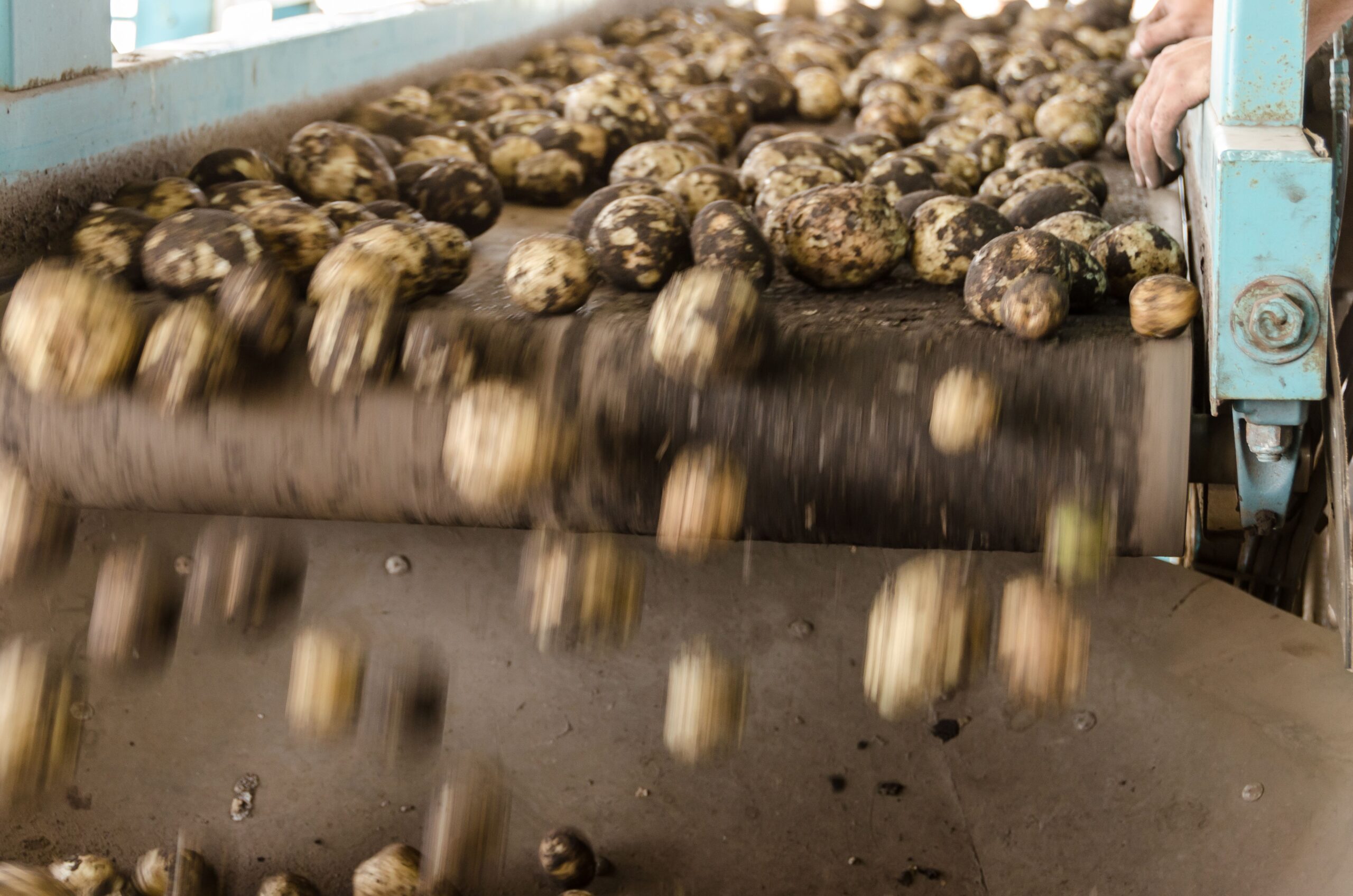
Hydrocutting is widely used in industrial potato processing. Water moves potatoes through a cutting head fitted with blades arranged to produce the required cross-section, allowing large quantities of material to be cut as part of an integrated production line.
Different blade arrangements produce different dimensions and shapes. A square-cut French fry requires a different configuration from a crinkle cut or wedge, while each arrangement has to accommodate the characteristics of the raw potatoes passing through the equipment.
Cutting performance affects subsequent manufacturing stages because product dimensions influence the behaviour of potato pieces during washing, blanching, drying, frying and freezing. Pieces with different dimensions have different surface-area-to-volume relationships, which can alter how quickly heat is transferred and moisture is removed.
Consistent cutting therefore supports downstream process control. The benefit depends on the condition of the raw material and the cutting system, rather than the blade geometry alone. Potato size, variety, firmness and operating conditions can all influence the result.
Blade wear introduces another variable. Cutting edges must maintain the required geometry over repeated production cycles, while damage or loss of sharpness can affect the quality of the cut and increase the need for maintenance.
Processors consequently require a supply of replacement components that match the dimensions and performance requirements of their installed cutting heads. Maintaining availability is particularly important where the failure or replacement of a relatively small component can interrupt a high-throughput production line.
The new FAM STUMABO facility has been configured to increase the output of frequently ordered blades while retaining the ability to produce more specialised designs. Automated equipment supports higher-volume manufacturing, and semi-automated processes provide flexibility for cutting tools that are made in smaller quantities or require different forming arrangements.
FAM STUMABO has not published a machine-by-machine capacity breakdown or quantified output for the new factory. Its description of the investment establishes a substantial increase in manufacturing capability without providing enough information to calculate the new annual number of blades produced.
The company's hydrocutting portfolio contains more than 3,500 active blade types. There are over 75 available dimensions for square-cut French fries alone, reflecting differences in equipment configuration and the product specifications requested by processors.
The range extends to crinkle cuts, deep crinkle cuts, scoops, wedges and other specialist shapes. FAM STUMABO develops some designs for general availability while working with individual customers on exclusive cutting geometries that remain confidential.
Managing a portfolio of this size creates a manufacturing challenge distinct from maximising the output of a single standard component. Production equipment must accommodate differences in blade geometry, material handling and manufacturing sequence while maintaining the precision required for replacement parts.
Laser processing and forming equipment can support the production of different blade shapes, but their suitability depends on the blade material and required specification. The company has not provided details of the tolerances, manufacturing cycle times or material grades associated with the newly installed machinery.
Manufacturing flexibility can also support product development. When a potato processor introduces a new cut, blade design and manufacturing procedures may need to be developed together so that the intended shape can be reproduced consistently on the production equipment.
Technical validation must account for both the cutting operation and the behaviour of the product further down the line. A shape that can be produced mechanically may create different requirements for conveying, frying or packaging, particularly when it differs substantially from a factory's established product range.
The company identifies engineering expertise and production experience as important alongside the machinery investment. Bjorn Thumas, business development director, and Emerson Jiménez Barajas, blade operations and food R&D director, have highlighted the need to combine increased capacity with the development of specialist cutting solutions.
Additional investment is planned in hydrocutting blades and cutting head technology. The company has not specified a further project value or installation timetable, so those plans remain separate from the completed third-facility expansion.
FAM STUMABO will present its cutting technology at Interpom in Kortrijk, Belgium, from 29 November to 1 December 2026. The exhibition will provide an opportunity to demonstrate the expanded portfolio to potato processors considering new product formats or replacement cutting equipment.
The new factory increases available manufacturing capacity for existing blade types while allowing more specialist designs to be produced. Subsequent performance will be measured through production output, component availability and the company's ability to meet orders across its extensive cutting portfolio.