IN Brief:
- The Austrian Pöchlarn line is producing Rezon bottles at around twice the former pilot speed with unchanged staffing.
- Vetropack trained about 30 employees and made over 300,000 test bottles during the ramp-up.
- A second large-scale Rezon machine is planned for 2027, building on more than 35 million bottles supplied.
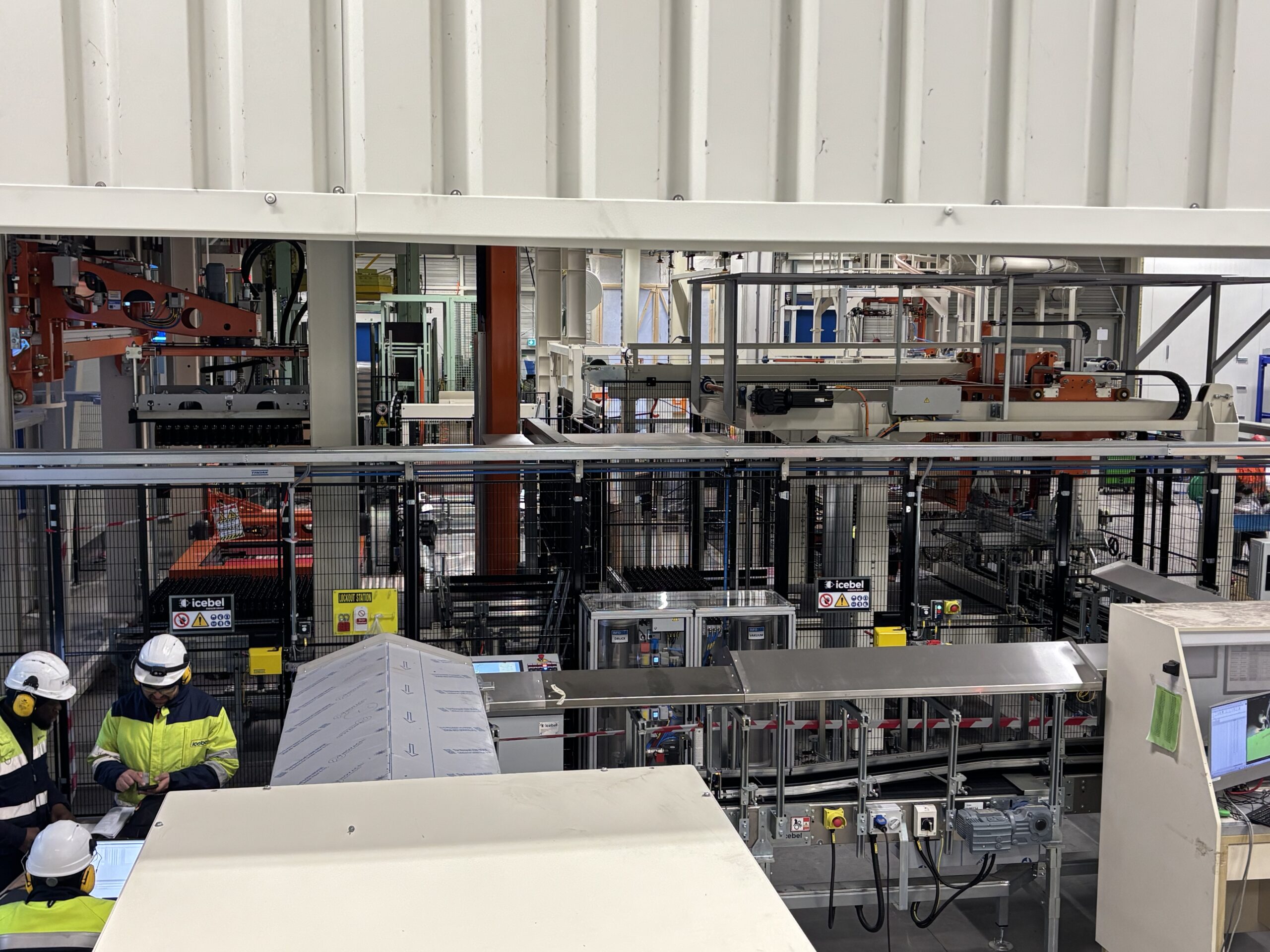
Vetropack has transferred its Rezon lightweight reusable glass bottle from pilot manufacture to industrial series production at Pöchlarn in Austria. The new large-scale installation has been operating since late summer at approximately twice the speed of the earlier pilot facility, using the same workforce. The development gives the company an industrial production platform for its proprietary thermal strengthening technology and prepares the way for a further expansion at the site in 2027.
The ramp-up involved training around 30 employees and manufacturing more than 300,000 test bottles. Rezon bottles are now produced exclusively on the new large-scale installation, rather than the previous pilot equipment. Vetropack says the transition has required optimisation of individual processing steps, automation, and digital quality control. The emphasis is on producing consistent bottles in greater volumes rather than simply demonstrating the strengthening method under controlled pilot conditions.
Rezon uses thermal treatment to strengthen a glass bottle while permitting a lighter design than a conventional reusable alternative. Vetropack reports weight reductions of up to 30% while maintaining durability, and says the resulting bottles can achieve up to 60% more return cycles. Those figures describe the manufacturer’s stated potential for the technology, rather than a uniform result for every container, filling line, and return system. Bottle geometry, handling conditions, and the operation of the reuse pool remain relevant to actual service life.
Industrial production follows an earlier programme to automate the cold end of the Pöchlarn line. Vetropack has detailed automatic depalletising and unpacking, the integration of a shrink-wrapping machine relocated from St-Prex, and further inspection equipment. Its Data Matrix identification system supports production quality checks and batch tracing when bottles carry the relevant marking. These measures address handling and inspection around the strengthening process, where repeatable throughput matters alongside the bottle’s physical properties. They are separate from the thermal treatment itself and were introduced as part of preparation for higher-volume production.
The manufacturer has supplied more than 35 million Rezon bottles since introducing its thermal strengthening technology in 2019. In Austria, a 0.33-litre reusable format has been available as a standard solution for the brewing industry since early 2024, with Gösser and Rieder among the users. Standardisation is important to the economics of returnable packaging because it can enable bottles to circulate through shared logistics, collection, and washing arrangements rather than remaining within a single brand’s closed system.
Transport performance is another part of the bottle’s specification. Vetropack says the combination of bottle and crate design can increase pallet capacity by up to 33%, reducing the space required for a given number of packed containers. A lighter bottle can also reduce the weight moved on deliveries and returns. These savings depend on how the crates and pallets are configured and on the actual routes travelled; a high return rate is necessary to obtain the full benefit of a reusable glass package.
Vetropack also attributes a lifecycle carbon reduction of up to 70% compared with single-use bottles to the Rezon system. That is a company-reported comparison, not a universal figure for reusable glass. The number of refill cycles, collection distances, washing requirements, production energy, and end-of-life treatment can all affect the final balance. The stated durability and resistance to surface scuffing are designed to make repeated handling more practical while preserving the appearance required by branded beverages.
The move from pilot equipment to industrial series manufacture introduces a different set of production requirements. Bottle strength and weight have to remain consistent across sustained runs, while inspection and handling must keep pace with the new strengthening machine. Customers also have to assess compatibility with filling, washing, labelling, and returnable transport systems. Vetropack has not disclosed a rated annual capacity for the installation, so the reported doubling describes line speed relative to the former pilot rather than a fixed volume commitment. The same workforce is reported to be running the faster operation.
A second large-scale Rezon machine is planned for Pöchlarn in 2027, with further group-site deployment being considered over the medium term. Vetropack is demonstrating the bottle at BrauBeviale in Nuremberg from 10 to 12 November. More than 35 million bottles have already entered the market, providing an installed base for operators to assess breakage, reuse cycles, and handling costs. The industrial installation provides a larger source of supply, although annual output available to customers has not been disclosed. Actual environmental performance will continue to depend on collection, washing, transport, and repeated use.